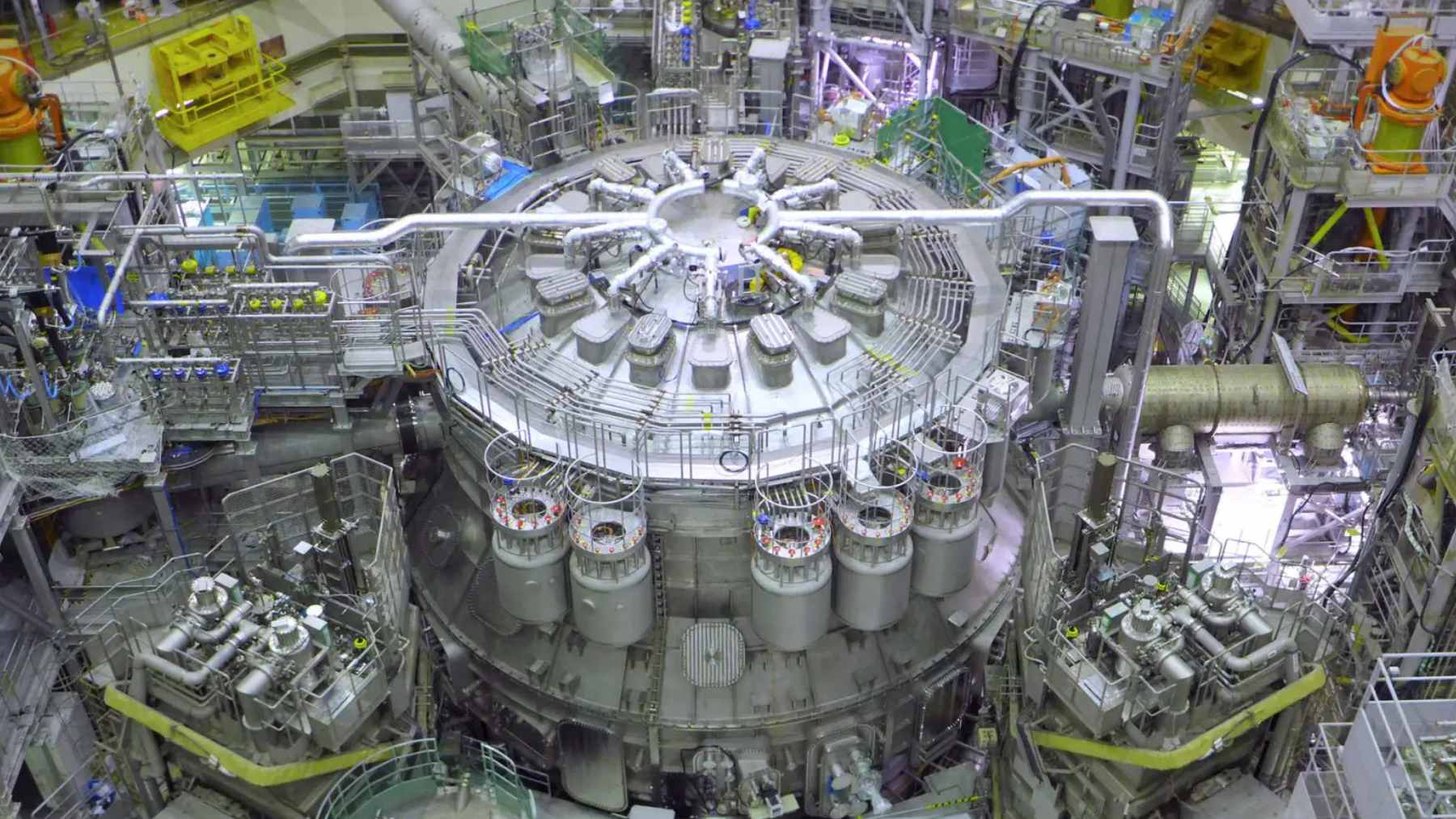
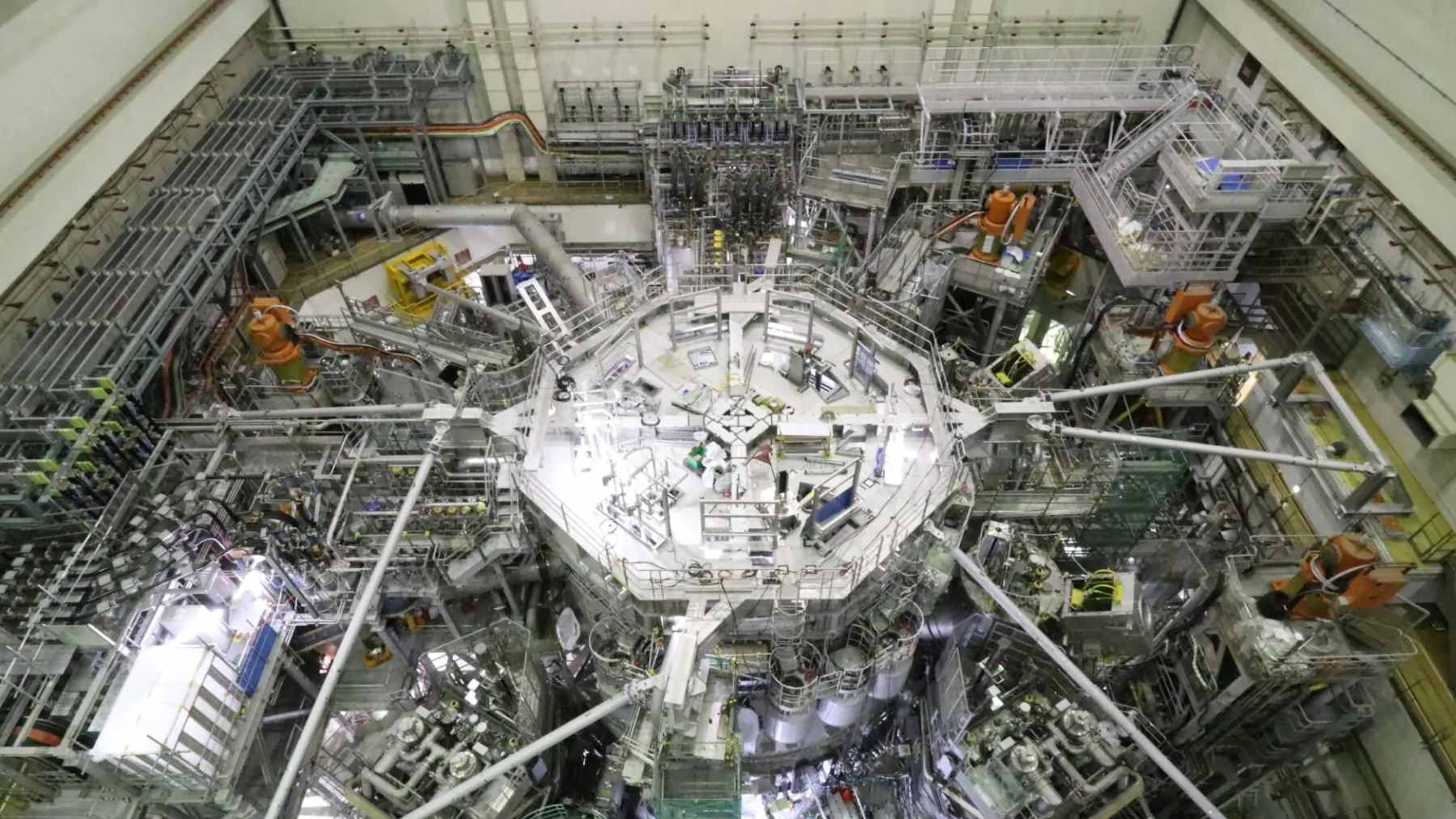
Europe and Japan have restarted integrated commissioning on JT-60SA, the world’s largest operating tokamak, as they prepare for a new round of plasma experiments expected to begin at the end of 2026 and run for about six months.
The restart follows a roughly two-year shutdown that allowed teams to install major upgrades, including two ring-shaped “in-vessel coils” that are 8 meters in diameter and were wound directly inside the machine.
Fusion is sometimes described as a climate “silver bullet.” But can it really help shrink the electric bill and the carbon footprint at the same time, especially when persistent summer heat keeps pushing demand higher? JT-60SA is a research device built to produce the kind of data that can inform ITER and future reactors, not to send electricity to your home today.
A six-month plasma run is the next milestone
The goal of the current commissioning phase is simple on paper and tough in practice: teams test the upgraded machine step by step before the next experimental campaign begins.
That ramp-up starts with systems that can be checked at room temperature and without vacuum, then moves toward high-vacuum conditions and finally the cool-down and energizing of the large superconducting magnets.
Behind that timeline is a crowded scientific agenda. The experiment team is reviewing more than 150 research proposals from scientists in Europe, Japan, and the ITER Organization, and experts from EUROfusion laboratories and ITER are expected to participate on-site in Naka during the campaign.
It is the kind of committee work that sounds dull until you remember it shapes what the machine will try first.
For Fusion for Energy, the restart also marks a delivery milestone. “Our enormous efforts to deliver all components on schedule are coming to fruition,” project manager Valerio Tomarchio said, as F4E stations staff alongside Japan’s QST to help operate the upgraded systems.
The 8-meter coils are a reminder that fusion is hardware-heavy
JT-60SA first achieved low-power plasma operations in late 2023, then was switched off shortly after for the upgrade period. During the shutdown, assembly teams worked through a long checklist of new parts designed to support hotter plasmas and handle higher heat loads.
The most eye-catching change is the set of in-vessel coils, including “two ring-shaped coils” designed to control plasma position at high speed. Fusion for Energy says the coils are 8 meters across and were wound directly inside the tokamak, and they are connected to Europe’s power supplies and among the first components being commissioned.
Other upgrades are just as important even if they are less photogenic.
The inside of the machine now includes a new first wall and a divertor with carbon-based armor, plus new diagnostics, cryopumps from Europe, and additional heating systems, which JT-60SA project leader Jerónimo García described as “key to achieving hotter, more powerful plasmas.”
AI and supercomputing move closer to the control knobs
One detail that stands out in the commissioning plan is the explicit test of new artificial intelligence and high-performance computing tools. Fusion for Energy says these tools “could enhance plasma simulations and speed up operations,” which is a practical promise when you are trying to learn as much as possible from each day of machine time.
Why does that matter outside a lab? Tokamak experiments generate floods of data and require fast decisions to keep the plasma stable and the hardware safe. AI will not replace experiments, but it can help researchers compare scenarios, spot anomalies, and decide what to try next, especially when each run is expensive and tightly scheduled.
Climate goals, business contracts, and strategic interest collide
If fusion ever becomes a steady source of power, it could change how countries think about decarbonization, energy security, and industrial planning. Fusion for Energy argues that fusion can be part of “tomorrow’s sustainable energy mix” and that it “does not emit any greenhouse gases,” while also pointing to widely available fuels.
But the near-term story is still about building capability, not flipping a switch. JT-60SA’s goal is to explore advanced fusion technologies and plasma physics in support of ITER and future reactors, and that work depends on a cross-border supply chain of magnets, cryogenics, power systems, and control software that both industry and governments watch closely.
And in the defense world, energy resilience is increasingly treated as part of the security picture, especially as climate extremes threaten infrastructure and operations.
The official statement was published on Fusion for Energy.