China is preparing to make its Tiangong space station much bigger, and the timing is hard to ignore. NASA’s Artemis II mission has just brought astronauts around the Moon and back, the International Space Station is moving toward retirement, and low Earth orbit is becoming one of the most valuable pieces of real estate humans have ever touched.
The move is not just about space pride. It is about science, access, business, national strategy, and the fragile orbital environment above our heads. After all, space may look empty from the ground, but up there, every module, spacecraft, rocket body, and piece of debris has to share the same crowded lanes.
Tiangong gets more room
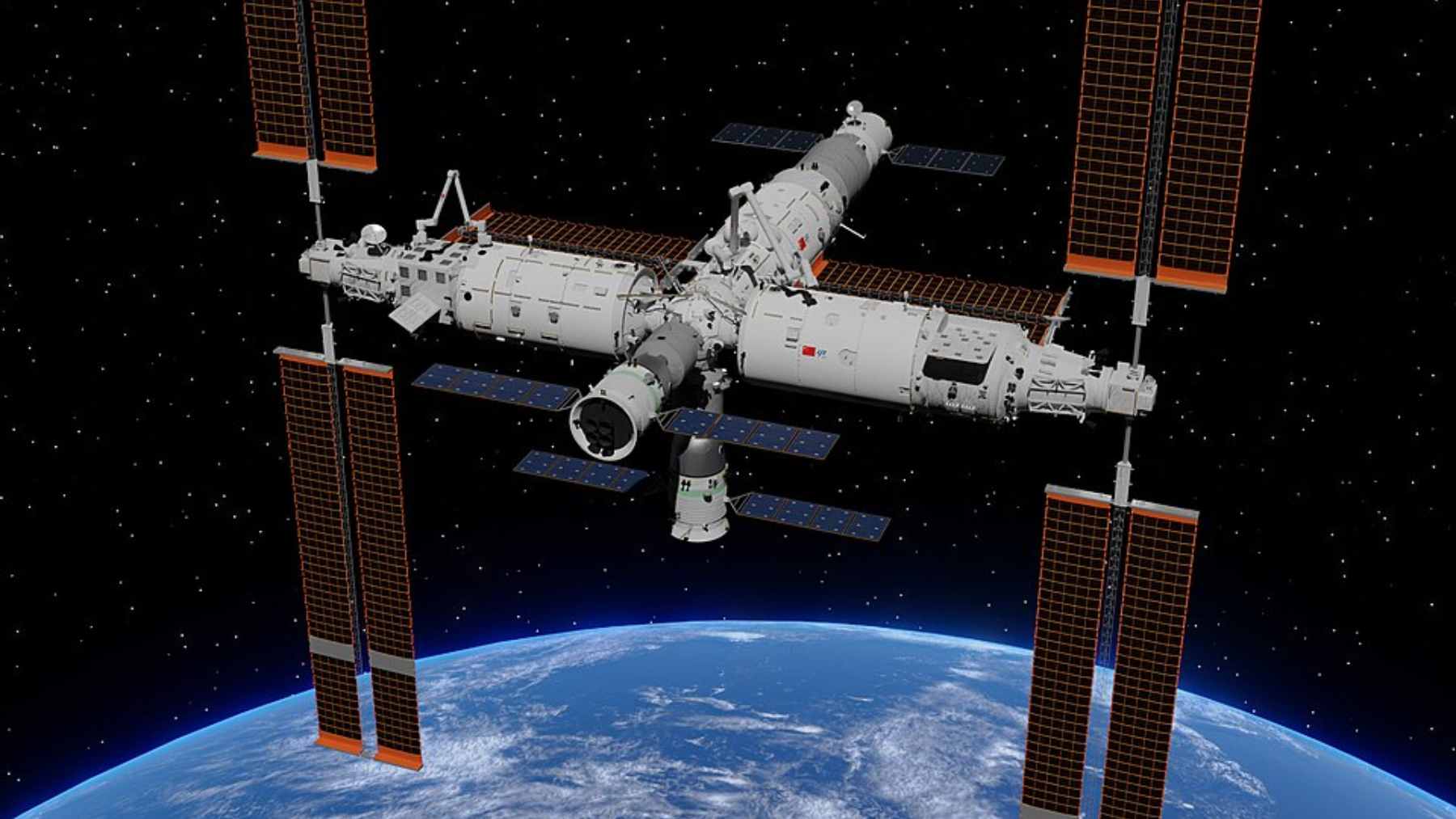
China’s current station has a stable “T” shape, built around the Tianhe core module and two laboratory modules. According to reporting sourced to CCTV News, the next step is to add a new extension module to the front docking port of the core module, turning the station into a cross-shaped structure.
That new module is expected to be larger than Tianhe and will provide multiple docking ports, plus an extra hatch for spacewalks. This will provide more room for crew movement, more visiting spacecraft, and more ways to attach future lab sections.
China has not released a full timeline for completing the expansion. Still, South China Morning Post reported that the plan could lead to a six-module station with a total mass of about 200 tons, which would more than double Tiangong’s current scale while still keeping it smaller than the ISS.
Why the timing matters
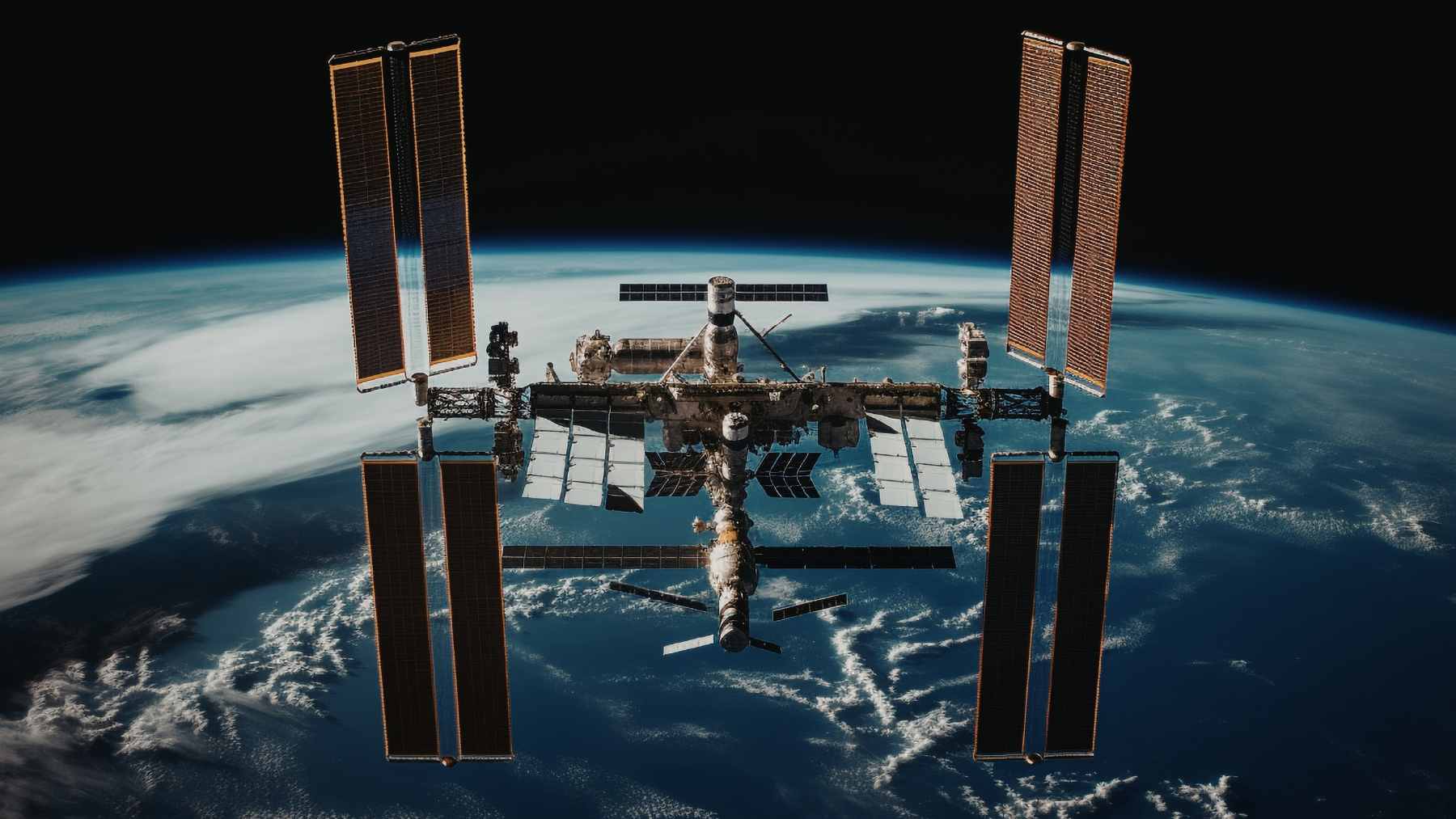
The expansion comes as NASA and its partners prepare for the end of the International Space Station’s operational life in 2030. NASA has selected SpaceX to build the U.S. Deorbit Vehicle, which is meant to guide the ISS into a controlled reentry and reduce risk to populated areas.
That leaves a big question hanging over low Earth orbit: what happens if the old ISS comes down before private Western space stations are fully ready? For a time, Tiangong could become the most important crewed orbital laboratory in service.
This is where the story moves beyond engineering. A space station is a research platform, but it is also a diplomatic door, a business magnet, and a strategic asset. Whoever controls access controls who gets to run experiments in microgravity.
China opens the door
China says Tiangong has already supported 267 scientific and application projects. That number is significant because station time is scarce, and microgravity research can touch everything from materials science to medicine, fuel behavior, plant growth, and spacecraft technology.
The station is also becoming more international. The China Manned Space Agency announced in April that two Pakistani candidates had been selected for training, with one expected to fly as a payload specialist and become the first foreign astronaut aboard Tiangong.
The agency called the selection a sign of China’s “open attitude” toward sharing its space achievements. That may be true to a large extent, but access will still run through Beijing. The front door is opening, but China is holding the key.
The environmental problem overhead
Low Earth orbit is not a wilderness anymore. ESA’s latest space environment statistics say about 44,870 space objects are regularly tracked, while models estimate 1.2 million debris objects between 1 and 10 cm. and 140 million between 1 mm. and 1 cm.
That sounds abstract until you picture a tiny metal fragment hitting a spacecraft at orbital speed. It is not like a pebble tapping a windshield–it is more like a bullet, and astronauts cannot simply pull over on the shoulder.
This is why a larger Tiangong is also an environmental story. More docking, more flights, and more infrastructure can produce more science, but they also demand stricter debris prevention, better traffic coordination, and responsible end-of-life plans.
Artemis raises the stakes
NASA’s Artemis II crew splashed down on April 10, 2026, after a nearly 10-day journey around the Moon, marking the first astronaut trip to the Moon in more than half a century. NASA said the mission showed Orion, SLS, and related systems could support deeper human exploration.
For China, that success is a reminder that the new space race is not happening in one place. The Moon, low Earth orbit, and future commercial stations are all part of the same bigger contest.
At the end of the day, Tiangong’s expansion is China’s way of saying it does not plan to be a guest in that future. It wants to own one of the main laboratories where that future gets tested.
What to watch next
The next key detail is the schedule. Until China says when the new extension module will launch, the expansion remains a confirmed direction rather than a dated construction plan.
The second thing to watch is who gets invited. If more countries send astronauts or experiments to Tiangong, China could turn its station into a global research hub at the exact moment the ISS era winds down.
And the third issue is orbital sustainability. A bigger station may be an impressive achievement, but in a crowded orbit, success is not only measured by what gets launched. It is also measured by what does not become junk.
The report was published on Science and Technology Daily.