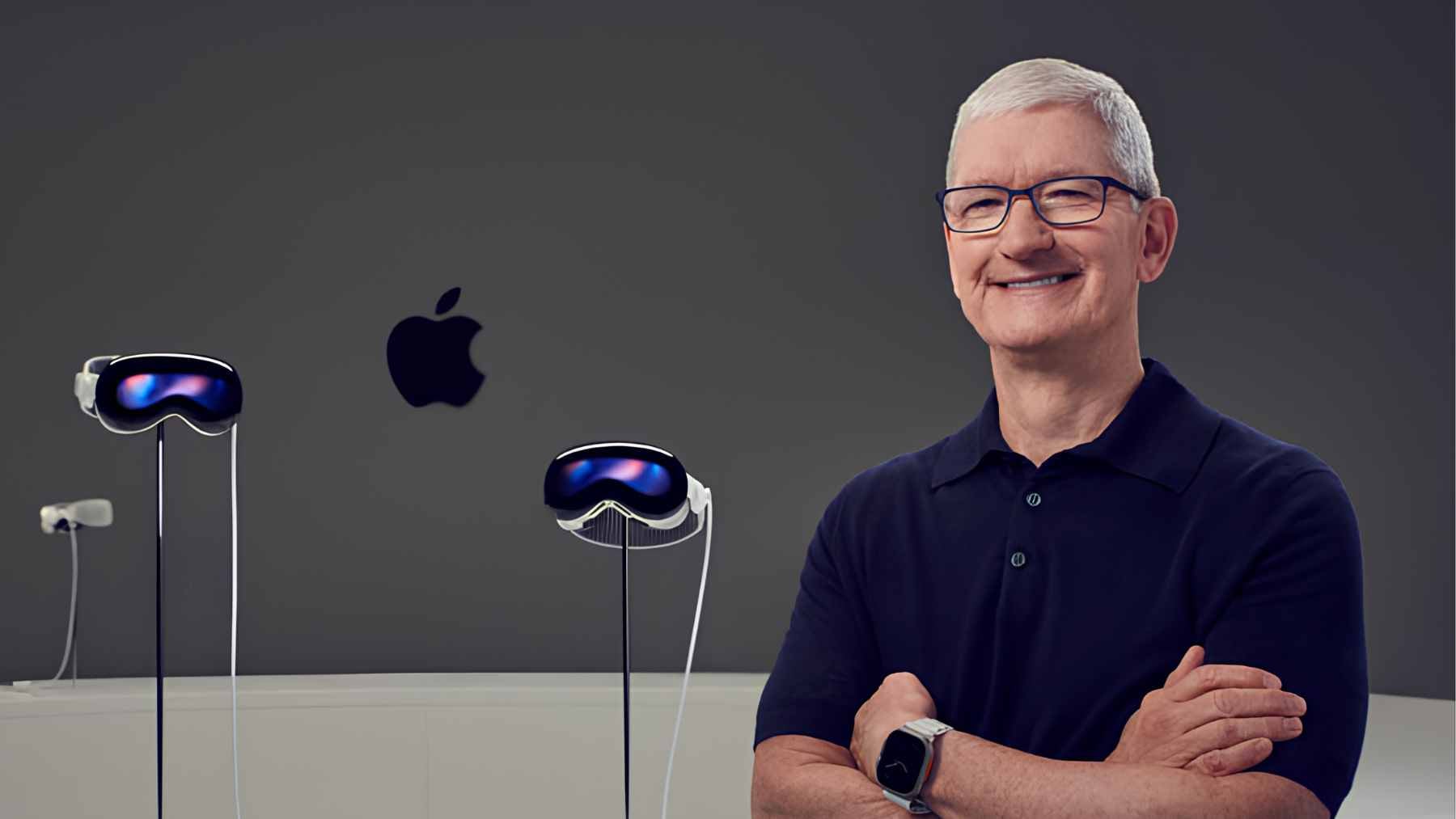
Apple is entering one of the most important leadership changes in its modern history. Tim Cook will become Apple’s executive chairman, while John Ternus, the company’s longtime hardware chief, is set to become CEO on September 1, 2026.
For many people, the obvious question is whether Apple can move faster in artificial intelligence after delays around Siri and Apple Intelligence. But there is another question sitting right beside it: can Apple chase the AI future without weakening the environmental promises that became a major part of Cook’s legacy?
A handoff with real stakes
Cook’s run at Apple is hard to dismiss. Apple says its market capitalization grew from about $350 billion to $4 trillion during his time as CEO, while yearly revenue rose from $108 billion in FY2011 to more than $416 billion in FY2025.
That kind of growth changes a company. It also changes the size of its environmental footprint, from factories and chips to packaging, shipping, repairs, and the electricity used by millions of devices every day.
Ternus is not arriving from outside. He has spent 25 years at Apple and has led major hardware work, including efforts tied to durability, materials, repairability, and lower-carbon product design.
AI is the new pressure point
Apple’s next CEO inherits a company that is under pressure to move faster in AI. Reuters reported in 2025 that some Siri improvements were delayed to 2026, with Apple saying it would take “longer than we thought” to deliver more personalized features.
That delay matters because AI is now shaping phones, laptops, search, cloud services, and even the way people write a quick email before work. Apple can’t afford to look slow in a market where rivals are trying to make AI feel like part of everyday life.
But AI is not weightless. The International Energy Agency says global data center electricity use was about 415 terawatt-hours in 2024 and could reach around 945 terawatt-hours by 2030, with AI as a key driver.
Apple’s green scorecard
Apple has made real progress it can point to. In April 2026, the company said its greenhouse gas emissions in 2025 remained more than 60% below 2015 levels, even as the business grew.
The company also said 30% of the material in products shipped in 2025 came from recycled content. Apple now uses 100% recycled cobalt in all batteries it designs and 100% recycled rare earth elements in all magnets.
Those numbers are more than a glossy Earth Day message. In practical terms, they affect the metals inside phones, the boxes that land on doorsteps, and the old devices people bring back instead of leaving them in a drawer.
The carbon label problem
Still, Apple’s climate story is not perfectly tidy. The company’s broader Apple 2030 plan aims to cut greenhouse gas emissions by 75% compared with 2015 before balancing remaining emissions with carbon credits.
That last part is where things get tricky. In 2025, a German court ruled that Apple could no longer advertise its Apple Watch as a “CO2-neutral product” in Germany, after a complaint focused partly on the reliability of an offset project. Reuters also reported that Apple planned to phase out that label to comply with coming EU rules.
This does not erase Apple’s progress, but it does show why the next CEO will have to make the climate math easy to understand, not just impressive on a slide.
Ternus must connect hardware and climate
Ternus may be well placed for that job. A hardware leader knows that environmental gains often start with physical choices, such as less raw material, easier repair, better battery design, cleaner manufacturing, and packaging that does not waste space in trucks or planes.
Apple says it completed its move to 100% fiber-based packaging and avoided more than 16,500 tons of plastic over the past five years. It also says suppliers redirected more than 660,000 tons of waste from landfills in 2025.
That is the less glamorous side of tech. No keynote crowd cheers for a smaller box. But these choices are where a company’s environmental promises either become real or start to drift.
The clock is moving fast
The trouble is timing. Ternus takes over in September 2026, which leaves just over four years before Apple’s 2030 climate deadline arrives.
At the end of the day, his challenge is simple to describe and hard to execute. Apple must make AI feel powerful, private, and useful while keeping pressure on emissions, suppliers, materials, and energy use.
If he gets it right, Apple’s next era could prove that faster technology and cleaner technology can move together. If he doesn’t, Cook’s environmental legacy may become less of a foundation and more of a difficult promise left for someone else to defend.
The official statement on the leadership transition was published on Apple Newsroom.