Libya built one of the most ambitious water systems on Earth under the Sahara, a hidden network that carries ancient groundwater from the desert to cities and farms along the Mediterranean coast.
It is often called the Great Man-Made River, and for decades it has helped turn parts of one of the driest countries in the world into land that can support crops, homes, and industry.
But here is the rub: the water is not coming from a river that refills every season. It is “fossil water” stored deep underground for thousands of years, and Libya’s latest national water strategy now makes clear that the country must move away from relying so heavily on non-renewable groundwater.
The river under the sand
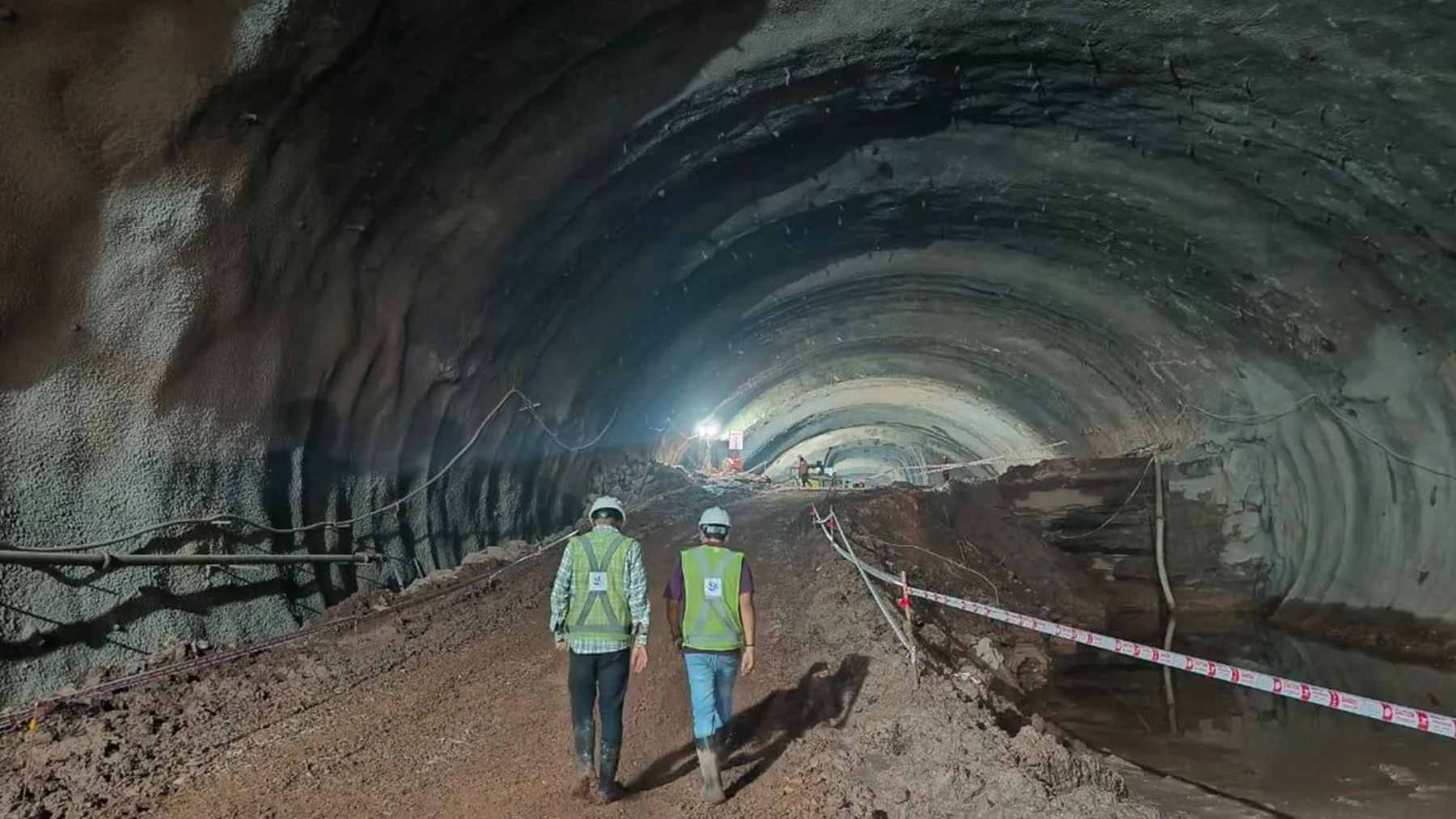
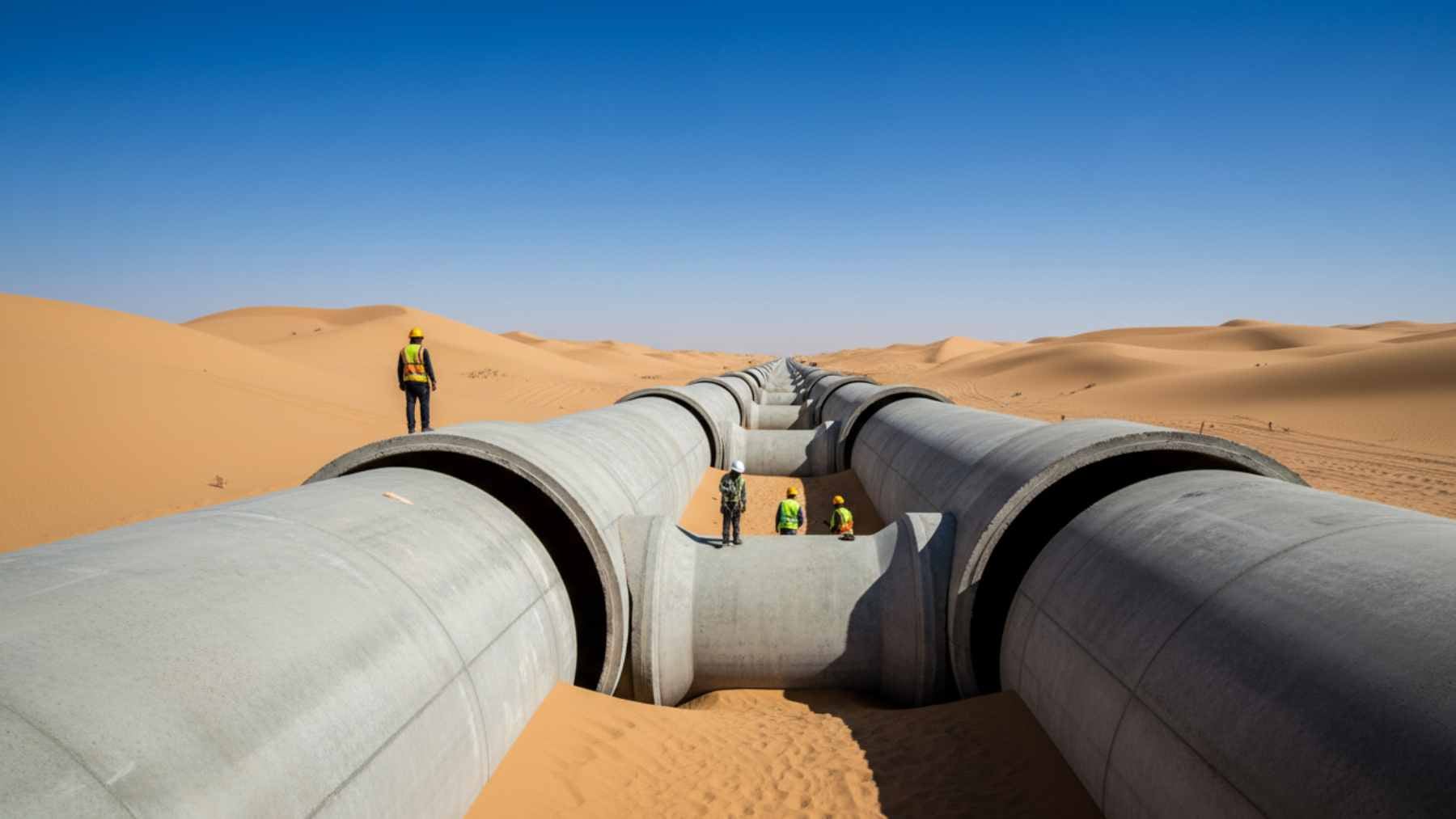
The Great Man-Made River is not a river in the usual sense. It is a vast system of underground pipelines and aqueducts that moves water from ancient aquifers in the Sahara to northern Libya, where most people live.
At full scale, the complete network was designed to include about 4,000 km. (2,500 miles) of pipeline and a total capacity of roughly 6.5 million cubic meters of water per day. That is a staggering amount of water, especially in a place where a dry tap can quickly become a national emergency.
The project began taking shape in the 1980s, under Muammar Gaddafi, and Libya’s government promoted it as the “Eighth Wonder of the World.” Big claim? Absolutely. Still, the scale of the engineering makes it easy to see why the label stuck.
Water from another climate
The source is the Nubian Sandstone Aquifer System, a massive underground reserve shared by Chad, Egypt, Libya, and Sudan. The International Atomic Energy Agency describes it as the world’s largest “fossil” groundwater aquifer, covering around 2 million km² (770,000 miles²)
This water collected long ago, when the Sahara was much greener than it is today. In other words, Libya is drawing on a natural savings account built by a climate that no longer exists.
That is the environmental dilemma at the heart of the story. The system can deliver water, grow food, and support cities, but every cubic meter pumped from non-renewable reserves brings the country a little closer to a harder future.
A lifeline for cities and farms
Since 1991, the Great Man-Made River has supplied drinking water and irrigation to cities and farming areas in Libya’s north. Before that, many coastal areas depended on desalination plants and declining rain-fed aquifers, which were already under pressure.
For families, this is not an abstract engineering story. It is water for kitchens, fields, livestock, and neighborhoods where summer heat can be unforgiving.
For farmers, the project opened the door to growing cereals and fruit in places where large-scale cultivation would have seemed almost impossible. Still, turning desert into farmland with ancient groundwater raises a difficult question: what happens when the “miracle” water is no longer easy to reach?
The security problem
Libya’s water system also shows how infrastructure can become a security issue. The Great Man-Made River physically links distant parts of the country, but years of political instability have exposed how vulnerable that link can be.
The Middle East Institute has reported that the project has faced vandalism, attacks on network locations, security breaches, and delays to unfinished phases since the fall of Gaddafi’s regime in 2011. In 2019, an attack that blocked water from reaching the capital showed how access to water can be weaponized during conflict.
That matters far beyond Libya. Around the world, governments are learning that water pipes, wells, pumps, and power supplies are not just public works. They are part of national resilience, much like roads, ports, and electric grids.
Libya’s new water warning
Libya’s government endorsed a National Water Security Strategy in Tripoli on April 21, 2026, with support from the United Nations Development Programme and Italy. The plan looks ahead to 2050 and aims to balance water demand with more sustainable resource management.
The warning inside that announcement was blunt. Libya is among the world’s most water-scarce countries, and more than 90% of its water supply comes from non-renewable groundwater, while climate change, aging infrastructure, water loss, and rising demand are making the challenge tougher.
Prime Minister Abdulhamid Dbibah called water security “a sovereign matter of national security.” Minister of Water Resources Hosni Awedan said the strategy targets lower individual consumption, less dependence on non-renewable groundwater, and water network losses below 25%.
The future of the artificial river
The Great Man-Made River remains one of modern engineering’s most striking achievements. It brought water across the desert at a scale few countries have attempted, and for many Libyans it has been less like a monument and more like a daily necessity.
But the future cannot rest on the same idea forever. Libya will likely need better leak control, more efficient irrigation, stronger protection for water infrastructure, and renewed attention to desalination and other technologies that can reduce pressure on fossil groundwater.
At the end of the day, the Great Man-Made River is both a lifeline and a warning.
The official statement was published on UNDP Libya.