A strange 2018 email exchange made public in the Musk v. Altman case has pulled Hideo Kojima, Gabe Newell, Elon Musk, SpaceX, and OpenAI into the same orbit.
What started as Valve’s cofounder trying to help the creator of Metal Gear and Death Stranding visit a rocket factory now reads like a snapshot of how tightly gaming, AI, and private space ambitions have become connected.
The emails do not show that Kojima actually went to space or even completed the SpaceX tour. But they do raise a bigger question that is easy to miss in the celebrity-tech glow. As private spaceflight becomes a dream for creators, billionaires, and eventually paying customers, who is keeping one eye on the atmosphere above us?
A strange email from a serious lawsuit
Kojima visited Valve headquarters in 2018 to talk about Death Stranding, according to the now-public reporting on the emails. After that meeting, Newell wrote to Musk that Kojima cared about future work in AI and wanted an introduction to OpenAI.
Then came the space request. Newell told Musk that Kojima was talking about how much he wanted to go into space and wrote, “He’d love to get a SpaceX tour.” Musk answered warmly, saying Kojima was “welcome to see the rocket factory.”
The exchange surfaced as Exhibit No. 844 in the Musk v. Altman evidence, according to The Verge. The broader court filing is part of a case centered on whether OpenAI moved away from its original mission of ensuring that artificial general intelligence benefits humanity.
Why Kojima’s dream matters
For Kojima, space has never sounded like a casual bucket-list item. In his book The Creative Gene, he described wanting to go to space before he dies, even if it were only a brief trip beyond Earth’s atmosphere.
There is something very human in that. Plenty of people have stared at the night sky and imagined leaving Earth behind for a little while, even if most of us are stuck with traffic jams, noisy commutes, and the electric bill waiting at home.
The difference now is that private space companies can turn that dream into a meeting, a tour, a brand partnership, or perhaps one day, a ticket. That is exciting, but it also means space is no longer just a national science project. It is becoming a business platform.
The atmosphere is not empty
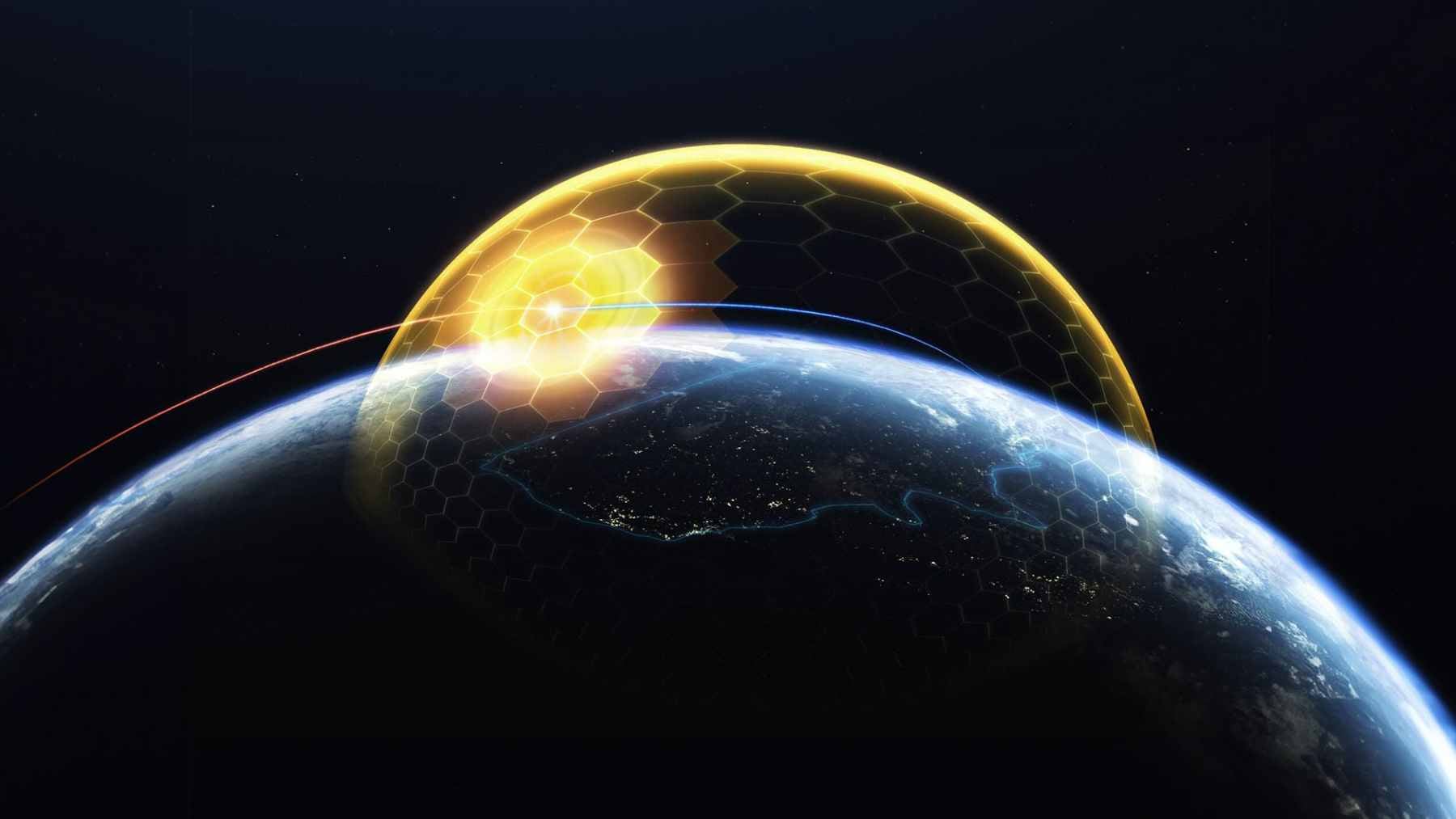
That is where the environmental question comes in. A NASA technical memorandum says rocket launches and reentering satellites and upper stages emit gases and aerosols into every layer of the atmosphere, from Earth’s surface to low Earth orbit.
The same NASA document warns that these emissions could affect climate, ozone levels, mesospheric cloudiness, ground-based astronomy, and the upper atmosphere. It also notes that launch and reentry mass flows have recently been doubling about every three years.
In practical terms, the issue is not just one artist dreaming of a SpaceX visit. NASA cited projections that space activities could grow by at least an order of magnitude by 2040, with planned low Earth orbit systems requiring more than 10,000 satellites to be launched and disposed of into the atmosphere each year.
What studies warn
A 2026 study in Atmospheric Chemistry and Physics looked at rocket-emitted chlorine and its potential effect on stratospheric ozone. The paper notes that as national and private space organizations grow and launch costs fall, rocket activity is expected to rise significantly.
In scenarios cited by the study, researchers predicted 884 and 2,040 launches per year by 2030, equal to 9 and 21 times a 2019 benchmark.
They found near-global annual mean ozone decreases of 0.17% and 0.29%, while the more ambitious scenario produced up to 3% depletion in the upper stratosphere and a 3.9% additional depletion in Antarctic spring.
Those are not doomsday numbers, and scientists are still working through major knowledge gaps. But they are warning flags. The trouble is, the space industry is moving faster than the public conversation around its environmental footprint.
AI, rockets, and influence
The emails also show how easily today’s tech worlds overlap. In the same exchange about Kojima, SpaceX, and OpenAI, Musk discussed Neuralink’s progress, while Newell asked about neuromodulation and possible consumer markets.
That matters because AI labs, rocket companies, brain-computer interfaces, and game studios may look like separate lanes from the outside. Behind the scenes, the same small network of powerful people can move ideas, introductions, and money between them very quickly.
This starts as a fun story about Kojima wanting to visit a rocket factory. But it is also a reminder that private dreams can become private infrastructure, and private infrastructure can create public consequences.
The bigger question
There is no public confirmation in the materials reviewed here that Kojima eventually took the SpaceX tour. By 2020, he was still talking about wanting to go with Newell, and Musk replied online that he was welcome anytime.
At the end of the day, the real story is not whether one famous game designer got close to a rocket. It is whether the rush to make space feel personal, commercial, and creative can grow without leaving the environment behind.
The official court filing was published on CourtListener, and the rocket-emissions study was published on Atmospheric Chemistry and Physics.