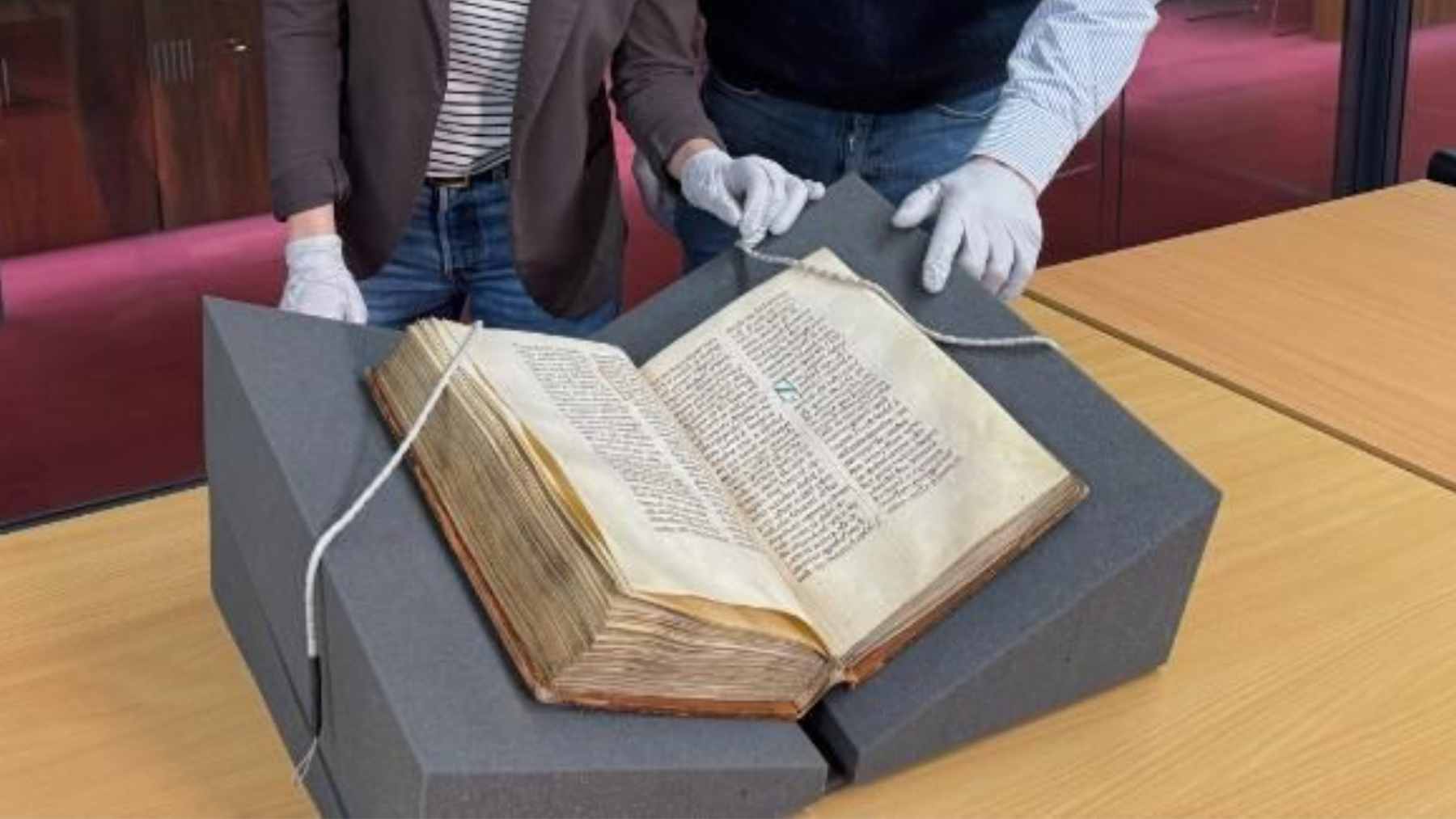
A manuscript tucked away in Rome has turned into a major discovery for anyone interested in where English literature began.
Researchers from Trinity College Dublin have identified an early ninth-century copy of “Caedmon’s Hymn,” widely regarded as the first known poem in the English language, inside a Latin manuscript held at the National Central Library of Rome.
The big twist? This was not only old-fashioned scholarly detective work. Digital access helped bring the page back into view, showing how library technology can uncover history that has been sitting quietly on a shelf for generations.
A hidden poem in plain sight
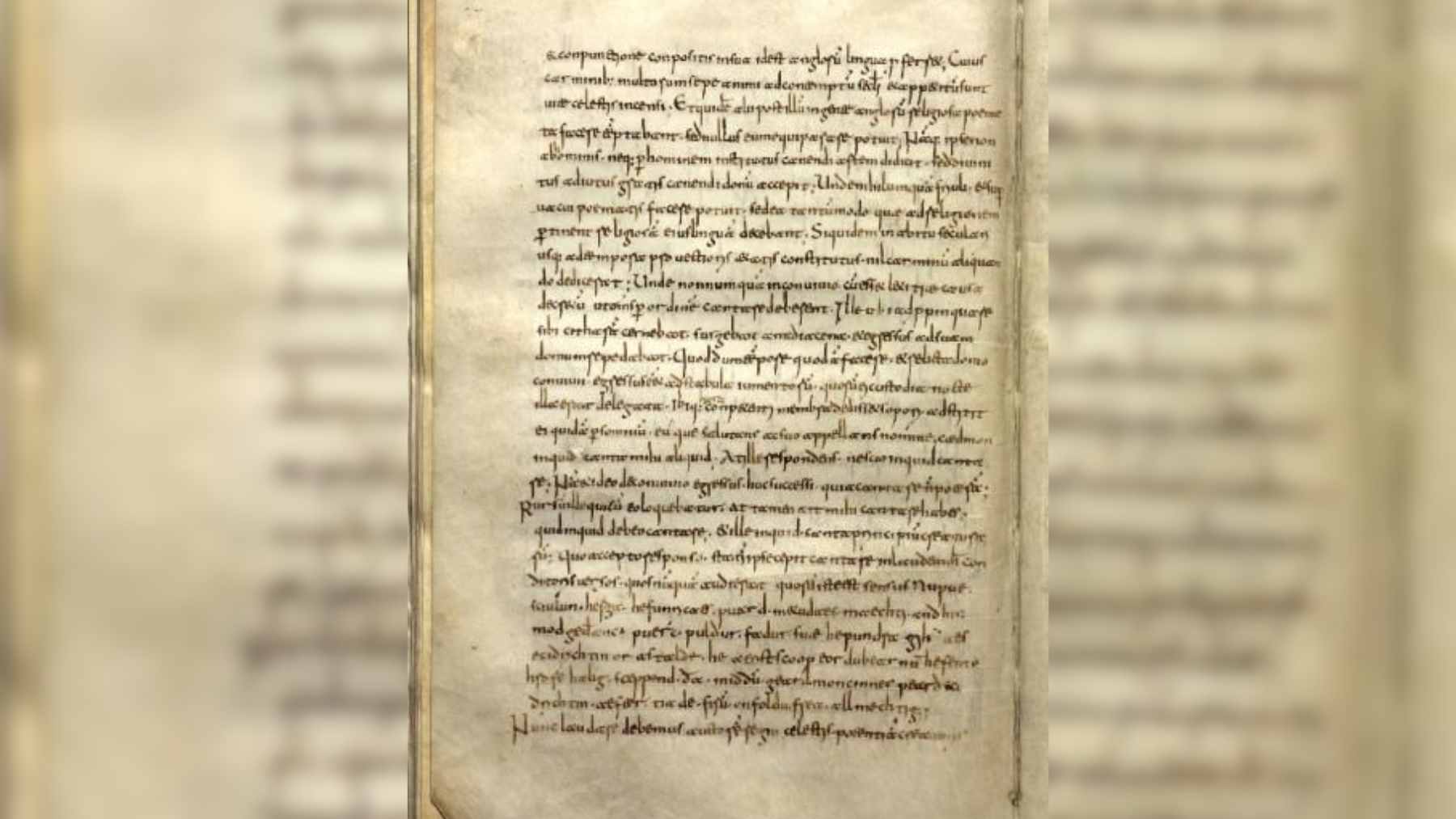
The newly identified manuscript dates from between 800 and 830, making it the third-oldest surviving version of “Caedmon’s Hymn.” It was produced at the Abbey of Nonantola in north-central Italy and is now kept in the National Central Library of Rome.
What makes this copy stand out is where the Old English appears. In the two older copies, held in Cambridge and St. Petersburg, the English text was added in the margin or at the end, but the Rome copy places it in the main body of the Latin manuscript.
That matters more than it might sound. In practical terms, it suggests that a monk copying the text believed the English poem belonged there, not as a side note, but as part of the story itself.
Why Caedmon still matters
According to the tradition preserved by Bede, Caedmon was an agricultural laborer connected to Whitby Abbey in North Yorkshire. The poem is only nine lines long, but it praises God’s creation of the world and has long been celebrated as a starting point for English literature.
For modern readers, the language may look almost like a code. Still, this is the deep root of the English used today in books, texts, search bars, and everyday conversations.
Dr. Mark Faulkner of Trinity College Dublin explained why the discovery is so valuable, saying, “About three million words of Old English survive in total.” He added that most of those surviving texts come from later centuries, while “Caedmon’s Hymn” connects scholars to the earliest stages of written English.
A tiny dot with a big story
One unusual detail in the Rome manuscript is its punctuation. The Cambridge University Press study notes that the text appears to use interword interpuncts, meaning small marks placed between words.
Why care about dots? Because word spacing was still developing, and these marks show writing slowly moving toward the kind of page layout we take for granted today.
It is a small thing, almost easy to miss, but anyone who has ever struggled to read a messy group chat knows that spacing changes everything.
Digitization changes the hunt
The discovery also shows how digital libraries are changing research. Trinity said the manuscript’s complicated ownership history meant it had been regarded as lost by Bede scholars since 1975, and no one realized it contained “Caedmon’s Hymn” until the National Central Library of Rome digitized it.
That is the tech angle hiding in the parchment. Scanners, catalogues, metadata, and online access are not flashy gadgets, but they are becoming powerful tools for rediscovering the past.
Andrea Cappa, head of the Manuscripts and Rare Books Reading Room at the Rome library, said the institution is expanding free access to digital resources.
The library has already made about 500 manuscript copies available and is working on a project involving microfilm reproductions of roughly 110,000 manuscripts from 180 Italian libraries, which could give scholars access to more than 40 million images.
What scholars found
The Cambridge study describes the manuscript as a copy of Bede’s “Historia ecclesiastica gentis Anglorum” made in the first third of the ninth century. It also identifies the Rome version as the earliest surviving text of the Northumbrian “eordu” recension of the hymn.
That may sound highly specialized, and it is. But at the end of the day, it means scholars now have a new witness to compare when studying how Old English poetry was copied, valued, and transmitted across medieval Europe.
A 1,200-year-old page still had something to say.
The study was published on Cambridge Core.