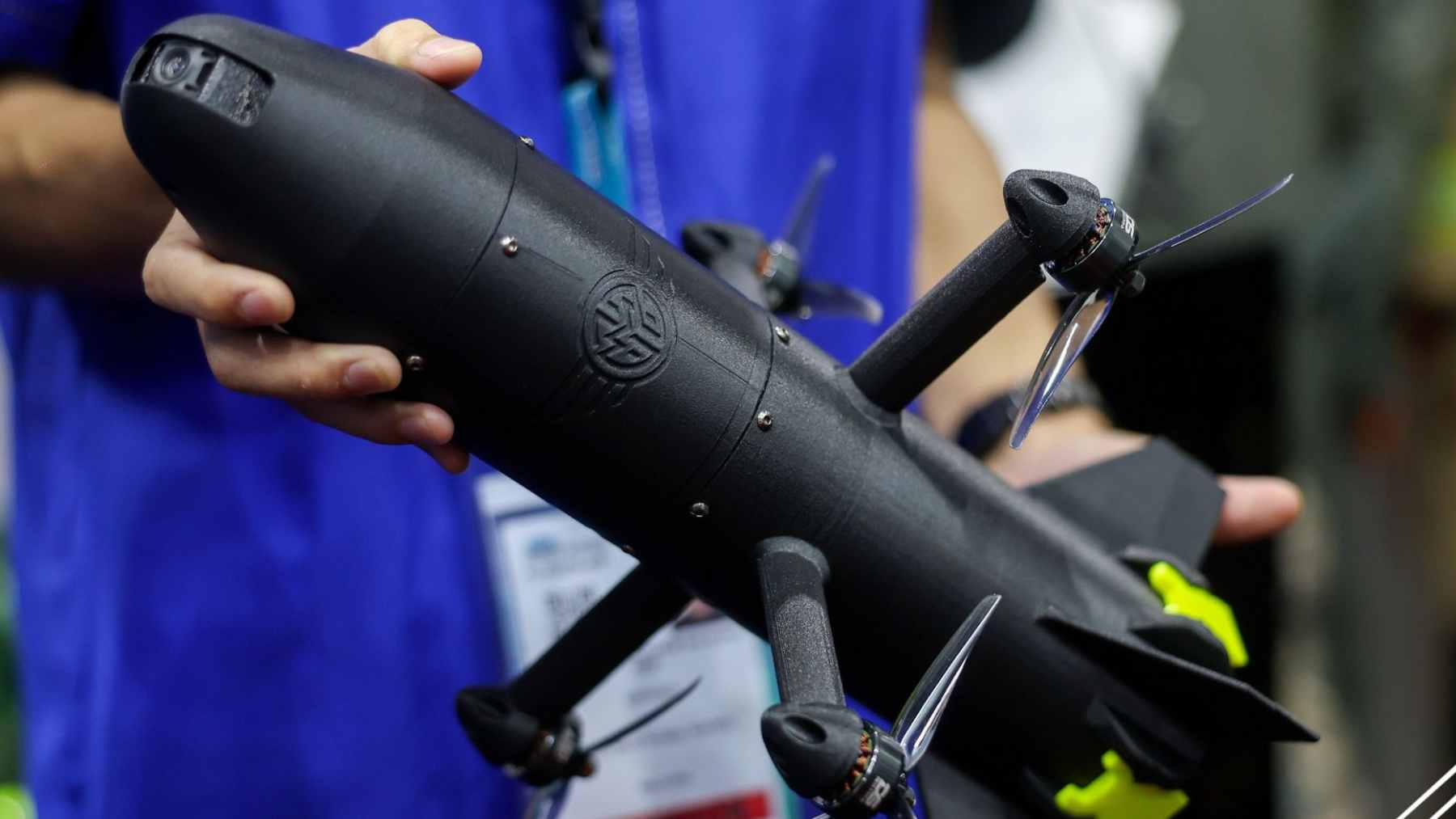
A Malaysian company has used the Defence Services Asia and NATSEC Asia 2026 show in Kuala Lumpur to showcase a new interceptor drone called “The Ghost,” pitching it as a fast response to the growing problem of unauthorized drones. So why should anyone outside the defense world care?
The big takeaway goes beyond a single product launch. Counter-drone systems are becoming a fast-growing security market, but their environmental footprint is rarely discussed, even as researchers warn that military and security emissions remain underreported worldwide.
The Ghost and the new counter-drone race
Director Syarifah Nur Anissa Syed Shabahar said her firm began by supplying aviation gear and then expanded into defense products, including items like pilot helmets and tactical clothing. She also urged more women to enter the field, calling for healthy competition rather than self-imposed limits.
Coverage around the launch describes “The Ghost” as a lightweight interceptor drone, around 1.4 lbs., built to fly up to about 5 kilometers (roughly 16,400 feet) with a reported range of 6 to 9 miles. Reports also cite a top speed of 300 kilometers per hour (about 186 mph), which is the kind of number that makes you picture a quick chase, not a slow patrol.
Local reporting also says Anissa described the drone as equipped with an artificial intelligence system and that it had completed a training phase. That matters because AI is now part of how many drones detect targets, choose routes, and react to fast-moving threats.
Why airspace security is turning into big business
The money is moving just as quickly as the technology. MarketsandMarkets projects the anti-drone market could rise from about $4.48 billion in 2025 to $14.51 billion by 2030, while other estimates cited by MarketWatch point to a counter-drone market heading toward $20 billion by 2030.
Policy is catching up, too, sometimes in a hurry. The European Commission has published an action plan to counter drone threats, and Reuters reported that Romania recently tested an AI-powered interceptor-drone defense system as drone incursions near its border with Ukraine keep raising alarms.
This is not only about faraway conflict zones. Reuters has also reported on drone disruptions that spilled into civilian life, including incidents that stranded large numbers of passengers at airports, which can ripple into delayed deliveries and missed connections.
A climate blind spot hiding in defense budgets
Then there is where the environment comes in. Scientists for Global Responsibility and the Conflict and Environment Observatory have estimated that global military emissions, including supply chains but excluding active war impacts, were around 5.5% of global greenhouse gas emissions in 2019, and researchers note wide uncertainty because the data is incomplete.
The incomplete data is not an accident of math. Under the Paris Agreement, military emissions reporting is voluntary, and advocates have argued that the lack of consistent disclosure makes it hard to understand the true climate impact of the sector.

So when counter-drone spending rises, the climate discussion often lags behind. Interceptor drones may be small, but the wider counter-drone stack includes detection and disruption equipment and the electricity needed to keep it ready, and all of it eventually shows up on someone’s utility bill.
Dual-use drones and the green opportunity
Drones can also be part of the solution, depending on how they are used. TotalEnergies has described a worldwide drone-based methane detection campaign as one tool to help meet its methane reduction targets, and independent research has tested drone and other methane monitoring systems under controlled conditions at the company’s TADI site in France.
In the US, regulators are starting to recognize drone-based monitoring as more than a “nice to have.”
Reporting cited by MRT says the Environmental Protection Agency approved an autonomous optical gas imaging drone system for federal emissions inspections, which could speed up how quickly operators find and fix leaks.
At the end of the day, the same autonomy, imaging, and AI that helps protect airspace can also support emissions cuts if it is built and deployed responsibly. Life cycle research on civilian drone delivery suggests emissions benefits can be real, but they depend heavily on design choices and operations, not just the fact that something flies.
The official statement was published on DSA Exhibition.