In April 2026, physicists led by University of Pennsylvania researcher Patricio A. Gallardo used observations from the Atacama Cosmology Telescope to test whether gravity still behaves the same way across galaxy clusters separated by hundreds of millions of light-years.
In what the team describes as the largest-scale probe of gravity to date, they found that the force weakens with distance almost exactly as Isaac Newton described and Albert Einstein later embedded in general relativity, with the results published in Physical Review Letters.
So why should anyone worried about drought, ice loss, or rising seas care about a study that starts with the oldest light in the universe? Because gravity is the quiet connector between deep-space research and the environmental data that shapes policy, business risk models, and even some of the navigation tools we use in everyday life.
How the team tested gravity at scale
The researchers leaned on the cosmic microwave background, the faint afterglow of the Big Bang, and on a subtle signature called the kinematic Sunyaev-Zel’dovich effect.
In plain terms, when that ancient light passes through hot gas around moving galaxy clusters, the clusters’ motion leaves a tiny imprint that can be teased out with careful statistics.
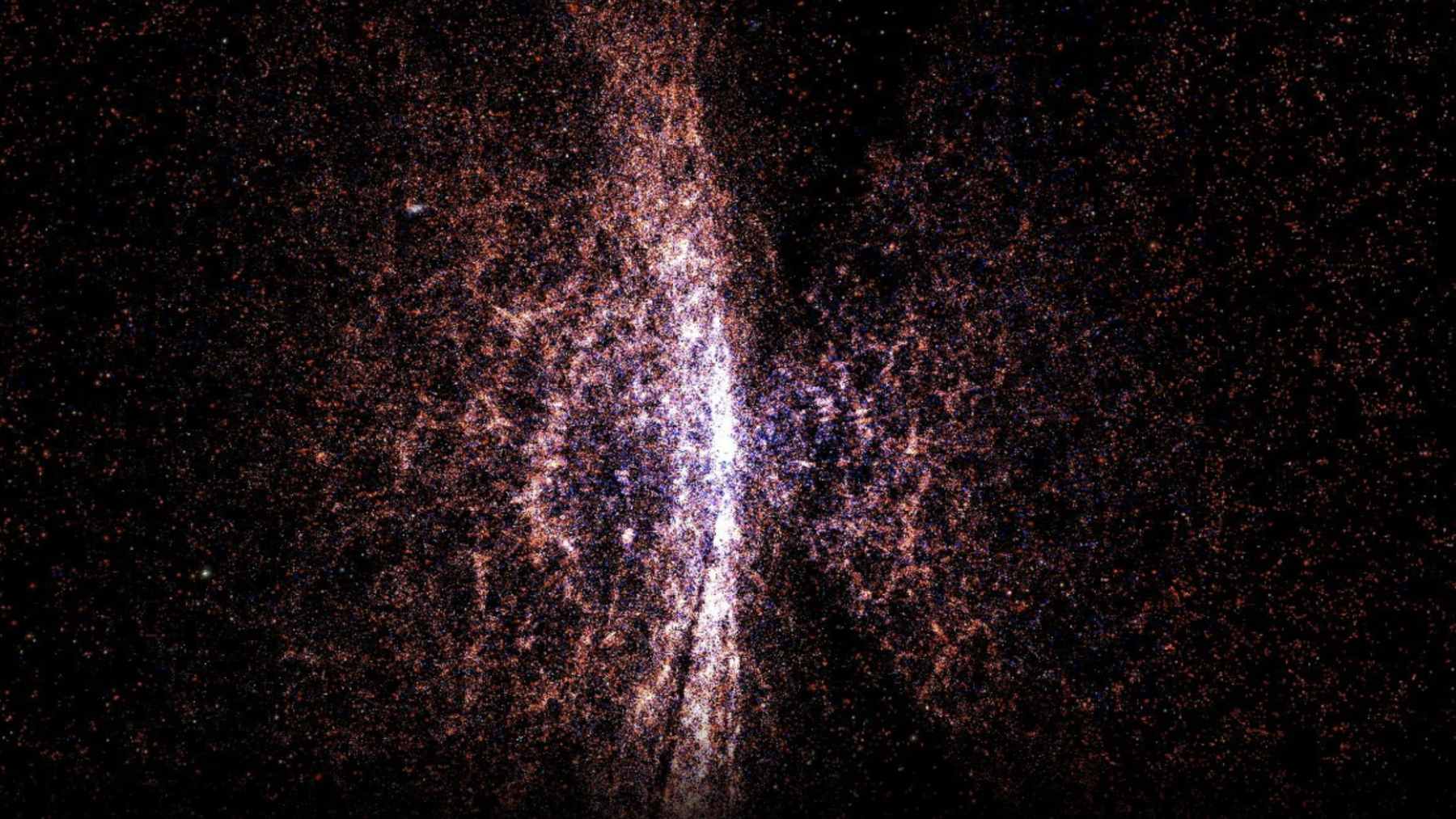
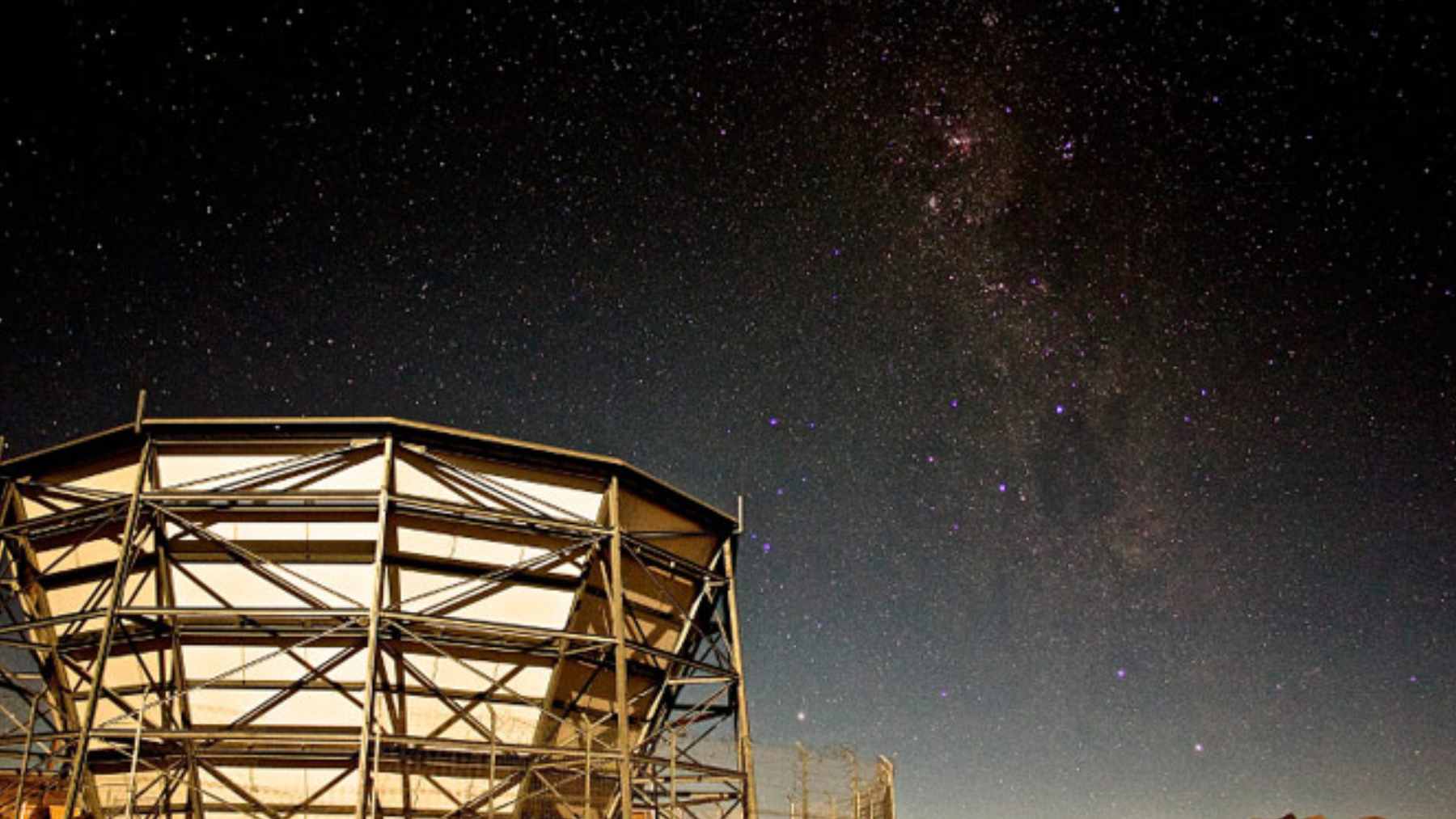
They combined cosmic microwave background intensity maps from ACT, a six-meter telescope in Chile’s Atacama region, with a galaxy catalog from the Sloan Digital Sky Survey. On scales from 30 to 230 megaparsecs, they found gravitational acceleration follows g ∝ 1/r^n with n = 2.1 ± 0.3, which is consistent with the inverse-square expectation.
What the result does and does not prove
This is not a direct detection of dark matter, and the researchers are careful about that point. What it does is shrink the space for ideas that try to explain galaxy motions by changing gravity itself on large scales, including versions of Modified Newtonian Dynamics.
Gallardo summed up the main takeaway in a line that feels almost too simple for a 21st-century measurement: “Our results suggest that the standard theory of gravity works really well,” he said, adding that this pushes the mystery back toward unseen mass rather than rewritten physics.
From dark matter to drought maps
Here is the part with a direct line to ecology and the environment: NASA’s GRACE mission measured changes in the local pull of gravity as water shifts around Earth due to seasons, weather, and climate processes, with observations delivered nearly every month from 2002 to mid-2017.
GRACE-FO continues that work by tracking water movement and surface mass changes across the planet, helping scientists monitor ice mass loss, changes in groundwater storage, and signals linked to drought and sea level rise.
If you have ever watched a city tighten water restrictions or farmers brace for a dry season, this kind of measurement is part of the early-warning toolkit, even if it is happening far above our heads.
Why business and defense keep an eye on the same signals
In practical terms, gravity-based observations have become an input for decisions that look nothing like astronomy. Water stress can hit agriculture, hydropower, ports, and insurance, and the appetite for reliable Earth data grows when climate volatility starts showing up on balance sheets and in your monthly electric bill.
Defense and emergency planners are watching, too, mostly because climate shocks can strain logistics and civil preparedness in ways that are hard to improvise around. NATO, for example, has said accelerating climate change has “a profound impact on Allied security” in its annual Climate Change and Security Impact Assessment.
And on the space side, even GPS depends on Einstein’s relativity corrections, since clocks tick differently under different gravitational conditions and the system has to account for that to stay accurate. That may sound abstract, but without those adjustments, small timing differences add up quickly and positions drift.
What to watch next
The study also hints at where the next round of innovation will land.
The authors note that upcoming surveys could push these tests further and potentially rule out a much flatter force law, like n = 1, at very high statistical significance, which would tighten the squeeze on alternative gravity models even more.
All of that sounds cosmic, but the theme is familiar. The more confidence we have in the underlying physics, the more we can trust the tools built on top of it, whether they are probing dark matter or tracking Earth’s shifting water and ice.
The study was published on arXiv.