Here we’ll talk about a simple body language that might have a deeper meaning than you think. It turns out that the way you sit or stand can impact your feelings of power and control, as well as the way you are perceived.
In a study led by a psychologist from the University at Buffalo, researchers looked at different “expansive” postures. They compared poses like spreading your hands on a desk, sitting upright with your legs crossed, and the classic feet-on-desk move. The goal was to see how these positions affect your inner sense of power. But the twist is that the same posture does not have the same effect everywhere. Let’s see this more in detail.
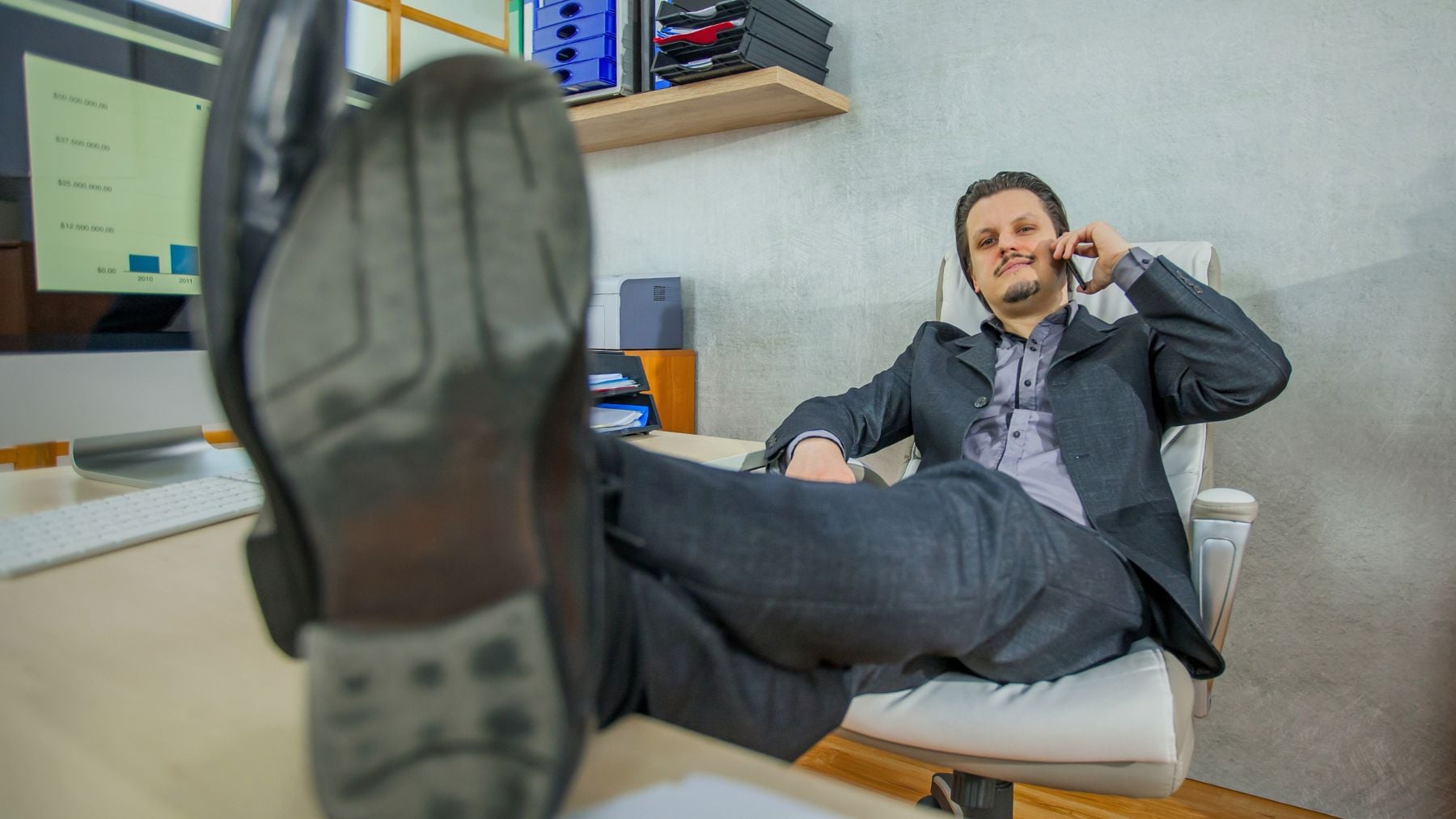
The message of a feet-up gesture
When you put your feet on the table, it sends a clear nonverbal message. This gesture is part of what experts call “expansive postures”, where you open up your body to take up more space. In many cases, opening up physically can help boost your feelings of confidence and control. But it’s not always so straightforward.
The study found that while some expansive poses make people feel more powerful, the feet-on-desk move can be mixed. Especially in the U.S., the gesture may signal confidence and a readiness to take risks. Yet in cultures with strong traditions of modesty and restraint, like many East Asian societies, it can seem too casual or even disrespectful.
How others might read the gesture
The way a feet-up gesture is seen depends on where you are and who you’re with. In American work culture, a bold display of body language might be a sign of self-assurance and leadership. But in other settings, it might be taken as a breach of etiquette. Take these points into account:
- Confidence and dominance: In many circles, putting your feet on the desk can suggest you’re in charge and comfortable in your space.
- Casual or defiant: For some, especially in cultures that value restraint, this move might look disrespectful or rebellious.
- Risk-taking: The posture has been linked to a greater willingness to take risks, which may be important for those making bold moves in business or personal projects.
- Breaking social norms: In environments where traditional etiquette matters, this gesture can be seen as too informal or even off-putting.
Even within the U.S., reactions may vary. In creative or startup spaces, a relaxed body language might be celebrated as a mark of innovative thinking. In more traditional offices, however, such behavior might raise eyebrows. The key is knowing your audience and the context.
So, what does it really mean to put your feet on the table? According to psychology, it’s more than just a relaxed way to sit. It’s a nonverbal cue that can boost your sense of power and prompt bolder decisions. Yet, its impact is not universal. Cultural values and social norms shape how this posture is read by others.
For Americans, especially in settings that prize independence and risk-taking, this gesture can be a subtle nod to confidence and leadership. But in cultures where humility and formality rule, it might not have the same positive effect. Understanding these differences can help you navigate social situations better.