Nearly 2,000 years before group chats, doomscrolling, and late-night worry spirals, Seneca put a sharp sentence to a very familiar problem. “We suffer more often in imagination than in reality,” he wrote to his friend Lucilius in Letter 13 of Moral Letters to Lucilius, a text often titled “On Groundless Fears.”
His point was not that pain is fake or danger is harmless, it was that the mind often starts paying the emotional cost of disaster long before the bill arrives. That idea still lands today, when anxiety disorders affected 359 million people worldwide in 2021, according to the World Health Organization.
A letter written under pressure
Seneca was not writing from a quiet study, safely removed from danger. The Stanford Encyclopedia of Philosophy identifies him as a major Stoic figure of the Roman Imperial Period, and his work shaped later understandings of Stoicism.
The University of Chicago Press describes Letters on Ethics as advice written in the informal shape of letters, with topics ranging from everyday annoyances to sickness, pain, and death.
That matters because the letters came from Nero’s Italy, a world where power and fear were not abstract ideas. Lucilius was not just a name on the page, he was the friend being coached through fear.
The fear before the blow
Seneca’s argument is simple enough for a teenager to grasp and uncomfortable enough for adults to recognize. A thing may happen, but that does not mean it will happen. Yet the mind often treats “maybe” like a verdict.
That is where fear starts to swell. In Letter 13, Seneca says people exaggerate sorrow, imagine it too vividly, or suffer it too early. In plain English, he is describing the habit of turning a possible setback into a full disaster movie in the head.
Modern psychology has a name for part of this pattern. The American Psychological Association describes anticipatory anxiety as fear or dread tied to an expected event or situation. So when Seneca warns against being miserable before the crisis comes, the ancient line suddenly sounds very current.
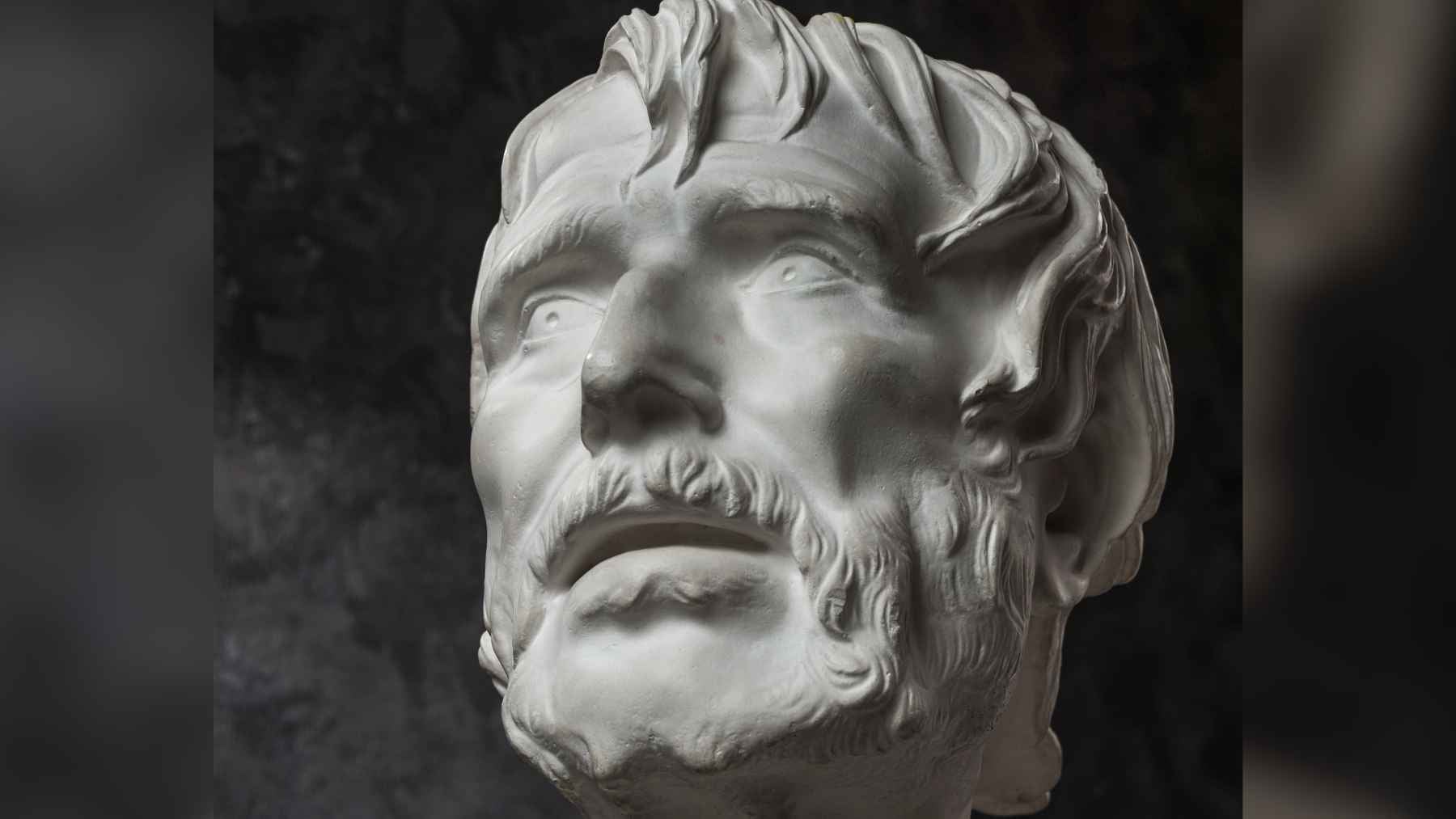
A marble profile of Seneca, the Roman philosopher whose Letters to Lucilius continue to inspire readers with timeless advice about fear, resilience, and the power of rational thinking.
Opinion changes the pain
One of Seneca’s most useful moves is separating the event from the story we tell about it. Losing a job, failing an exam, or facing a hard conversation may hurt, but the second wound often comes from the verdict we add to it, such as “this ruins everything” or “I will never recover.”
That fits the Stoic view that emotions are closely tied to judgments. Stoicism, in simple terms, asks people to look at their judgments before surrendering to them. What happens matters, but so does the meaning the mind attaches to it.
This is not coldness, and it is not pretending the rent is paid when it is not. It is also not smiling through bad news like nothing happened. In practical terms, it is asking, “what is the fact, and what is my fear adding?”
A hard look at the worst case
Seneca does not recommend soft comfort. He tells Lucilius to test rumors, examine evidence, and stop treating uncertainty as proof. Anyone who has ever refreshed a message thread for bad news knows the trap.
Then comes the harder exercise. If fear still wins, Seneca suggests looking directly at the worst case and asking what would remain. The goal is not to rehearse misery for fun, but to shrink the monster back to its real size.
That practice is often called “premeditation of evils,” or calmly imagining hardship before it arrives. Done carefully, it can reveal that even loss may leave a person with judgment, dignity, and the ability to choose the next step. Not everything survives, but more survives than panic admits.
Why it still matters
The modern world did not invent fear, but it has given fear new roads to travel. Alerts, rumors, workplace pressure, health worries, and financial stress can keep the mind running like a radio left on all night. The old Roman problem now has a very modern soundtrack.
Health experts also warn that anxiety is not just ordinary worry when it becomes intense, hard to control, and disruptive. Cognitive behavioral psychotherapy focuses on automatic thoughts and ways to challenge them, including reality testing, according to the American Medical Association.
There is a clear echo here, though it should not be overstated. Seneca was a philosopher, not a clinician. Still, his advice to examine fear, test assumptions, and return to the present overlaps with today’s effort to stop catastrophic thinking before it takes over.
A sentence that survived Rome
So why does this one sentence keep circulating after nearly two millennia? Probably because it captures a private experience most people recognize but rarely name. The imagined disaster can feel heavier than the real task in front of us.
Seneca’s answer is not “never be afraid.” It is closer to “do not give tomorrow more pain than it has earned,” blunt advice that is also strangely humane. Fear may be loud, but reality, for the most part, is easier to measure.
Readers who want the source should go back to the letter itself rather than the quote alone.
The main work has been published by Harvard University Press in the Loeb Classical Library as Seneca’s Epistles, Volume I.