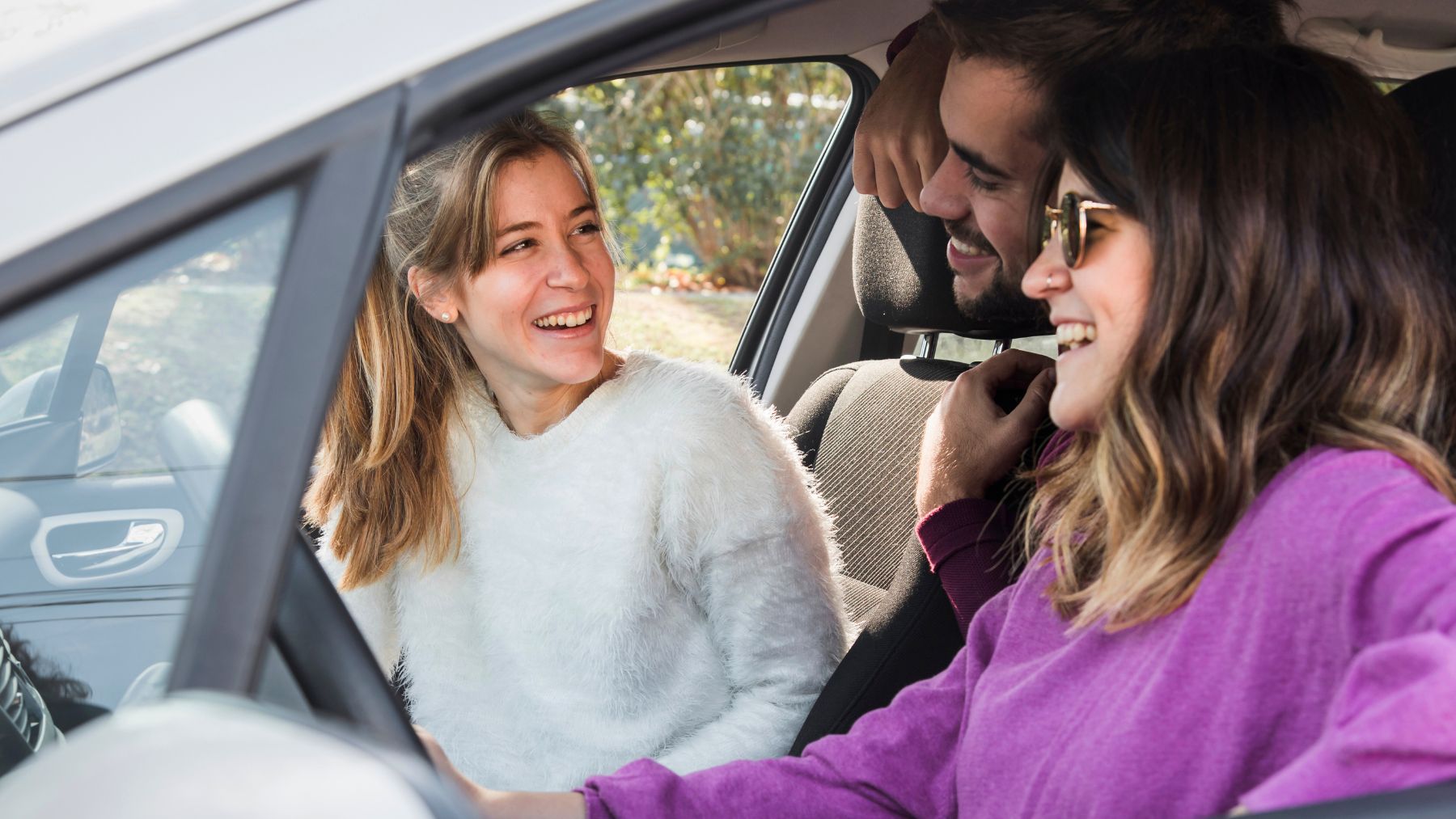
You have probably noticed that conversations flow more naturally when you’re in a car. Perhaps you have confided in a close friend during a late-night drive or finally asked your teenager about their day on the way home from practice. There is something about the dynamic, enclosed environment of the road that encourages openness. However, it’s not only the shifting scenery that creates this effect.
The combination of close physical proximity, diminished eye contact, and a shared focus on navigating the road helps to lower emotional barriers and stimulate candid dialogue. There are many different contexts that can prompt us to be more talkative while driving. Let’s explore them here.
Why do you talk more in the car?
The design of the seating arrangement (side-by-side instead of face-to-face) and the anticipated end point of every journey combine to influence our communication in the car. These are three common scenarios.
The parent-child connection
Car rides provide a prime opportunity for meaningful exchanges with children. Many parents observe that their kids tend to open up more during a short 10-minute drive than they do at dinner. Psychologists suggest two key reasons for this phenomenon.
First, sitting beside or slightly behind a parent creates an environment that feels less confrontational than direct face-to-face interaction. Second, knowing that the conversation is time-limited reduces pressure, as a child understands that the discussion will not drag on indefinitely before reaching the destination.
Studies also indicate that potential distractions, such as mobile phones, are easier to manage in the confined space of a car. Unlike at home, where televisions or siblings compete for attention, the vehicle setting allows parents to focus on asking open-ended questions that foster genuine dialogue.
Friends and partners in the passenger seat
Have you ever noticed sharing more openly with a friend during a drive? The physical setting of a car often transforms into a private sanctuary reminiscent of a casual therapy session. When seated side-by-side rather than directly facing each other, the arrangement reduces feelings of vulnerability and softens the intensity of self-consciousness.
This more relaxed posture creates a subtle buffer, making it easier to open up and reveal personal thoughts.
When conversations turn heated
But there is a catch: heated conversations can backfire. Research from Heriot-Watt University indicates that engaging in fiery arguments while driving significantly increases crash risks compared to distractions like phone use.
A 2016 study involving couples discussing disagreements during simulated drives found that in-person arguments resulted in compromised driving performance compared with phone-based disputes. One reason is that passengers are often unaware of immediate road hazards, making it difficult to pause an escalating conversation in time.
Psychologists recommend postponing difficult discussions until the vehicle is safely stationary. If tensions rise mid-drive, one useful strategy is to say, “Let’s hold this conversation until we park the car”, maintaining focus on safety while acknowledging that the pressing issues can be revisited later.
Use drive time to check in with children or bond with friends, but steer clear of diving into intense disputes. The very elements that promote relaxed, casual chats—the limited eye contact, the shared journey, and the natural momentum—can become liabilities when emotions run high.