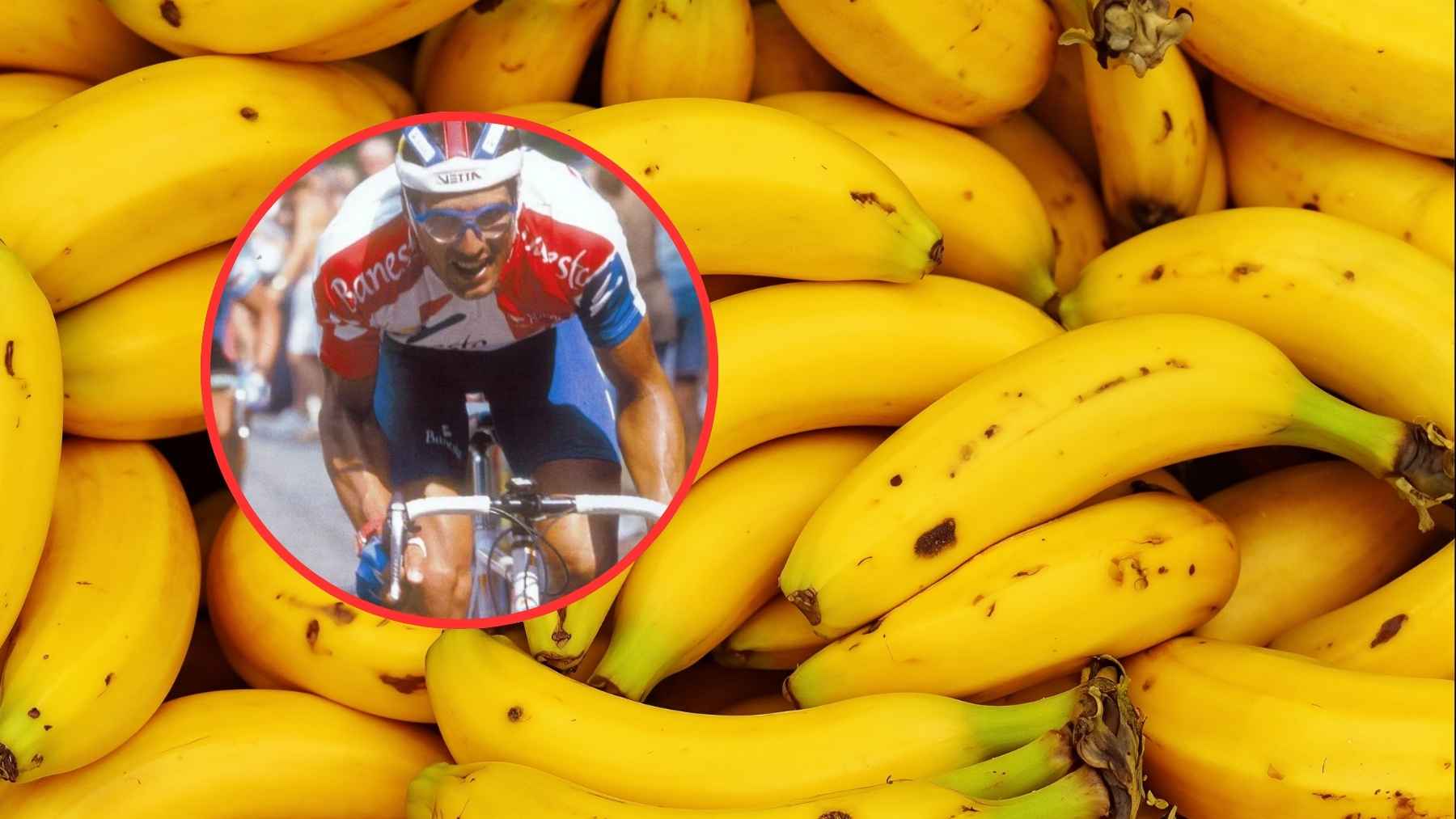
At 62, Miguel Induráin can describe a Tour de France routine that sounds almost impossible in today’s peloton. During the 1990s, he says riders reached into their jerseys for bananas, pastries, quince-paste bread, and ham-and-cheese sandwiches instead of following a carefully timed fueling plan.
That simple approach did not stop the Spanish cyclist from winning five consecutive Tours from 1991 through 1995.
His memories, however, reveal a much bigger change in professional cycling, where nutrition has moved from personal instinct and pocket food to a performance system built around measured carbohydrate, hydration, and timing.
That change affects not only what riders eat, but also when they eat it and how teams prepare for each climb.
A sandwich in the jersey pocket
“During the stage, we did not take bars or gels, but ham-and-cheese sandwiches or pastries that the team’s massage therapists bought for us,” Induráin recalled.
Food was familiar, solid, and easy to hand out from a roadside feed bag. “The only concern was remembering to eat a sandwich,” he said about avoiding an energy collapse.
That sounds casual, but forgetting could be costly during a stage stretching well beyond 120 miles. Cyclists call the collapse “bonking,” while Spanish riders often call it “la pájara.”
When available carbohydrate falls too low, the legs can feel heavy, concentration can fade, and a mountain climb can suddenly look like a wall.
Why those foods could work
Bananas, bread, quince paste, and pastries all provided carbohydrate, a major fuel for hard endurance exercise. Even the bread in a ham sandwich contributed energy, while the filling added salt, fat, and protein.
It was not precision nutrition, but it was not nonsense either, and the real weakness was consistency.
Solid food can be useful early in a long stage, when the pace is steadier and the stomach is more settled. The trouble is that sandwiches and pastries vary in size and composition, making intake harder to measure. They can also feel heavy when the race accelerates and every breath matters.
The science behind carbohydrate fueling was already developing before Induráin’s dominant years.
In 1967, Jonas Bergström and fellow researchers connected diet, muscle glycogen, and prolonged performance, helping establish the logic behind carbohydrate loading. But a laboratory finding does not instantly change what teams put in a rider’s jersey pocket.
How cycling became a nutrition lab
Today, elite riders rarely wait for hunger. Nutrition staff build plans around the length, climbing, weather, and expected intensity of each stage, with reminders telling riders when to drink and eat.
On the hardest days, intake can approach roughly 3.2 ounces of carbohydrate every hour, which can mean several gels and drink servings.
That amount may come from drink mix, gels, chews, and small portions of real food. Researcher Asker Jeukendrup has helped explain why longer events require more carbohydrate and why athletes must practice high intakes in training.
More fuel helps only when the digestive system can absorb it without causing nausea or cramps.
Teams also use a strategy known as “fuel for the work required”. A framework led by Samuel Impey at Liverpool John Moores University describes how carbohydrate availability can rise for demanding sessions and fall when the workload is lighter.
A major mountain stage therefore receives a very different plan from an easy recovery ride.
What the old era still teaches
Induráin’s comments are not a call for cycling to abandon modern science. He acknowledges that performance tools are part of the sport’s evolution, although he also misses some of the natural feel of his generation.
That nuance matters because nostalgia can make a ham sandwich sound like a secret weapon when it was really one tool in a less controlled system.
Modern planning can reduce guesswork, but it cannot pedal the bicycle or guarantee that every stomach responds the same way, especially after hours of racing. Heat, race stress, appetite, and individual tolerance still matter. Data provides the map, while the rider must keep listening to the engine.
At the end of the day, the oldest rule has survived inside the newest science. The sandwich has become a gel and the memory cue has become a detailed schedule, but the rider still has to take the fuel.
The interview excerpts were published by Woman Madame Figaro.