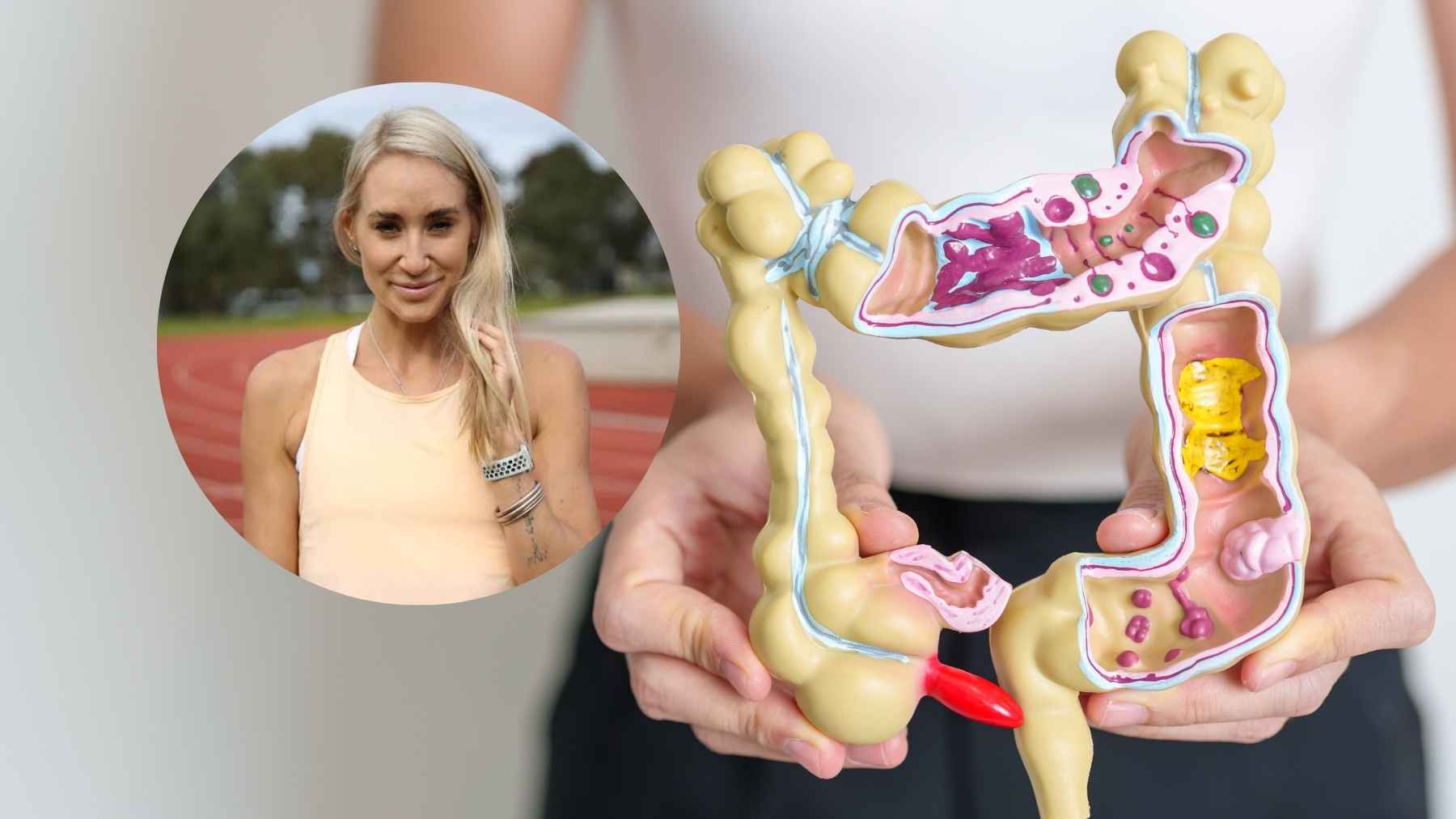
At 39, Melbourne fitness coach Danni Duncan expected to have decades of healthy life ahead of her.
Then months of fatigue and medical testing led to a stage 2 colorectal cancer diagnosis in 2025, pushing her to look back at the sugary cereals, packaged snacks, white-bread sandwiches, and fast food she ate as a child.
Danni has since removed nearly all ultra-processed foods from her kitchen. But her story also exposes a more complicated truth.
Research is raising serious questions about diets dominated by these products, yet scientists have not proved that ultra-processed food caused her cancer, and not every food placed in the category is nutritionally poor.
A diagnosis changes the menu
“I always said I was going to live to 100,” Danni recalled after receiving the diagnosis. She began researching possible contributors to colorectal cancer and wondered whether the rapid spread of ultra-processed products during the 1990s had played some part alongside other risks.
Her childhood breakfasts often included sweetened cereal, while snacks and meals featured cookies, potato chips, chocolate spread, processed ham, white bread, and fast food.
Her scans were clear in October 2025, although her doctors continue monitoring her and are investigating a rare genetic mutation found in the tumor.
What ultra-processed food means
Food processing itself is not new or automatically harmful. Cooking, freezing, canning, fermenting, and adding salt or oil can make food safer, easier to store, and more convenient.
Ultra-processed foods are different because they are usually industrial formulations with several ingredients, little intact whole food, and additives such as flavorings, emulsifiers, or modified starches.

The Nova system, introduced by Brazilian researchers in 2009, divides food into four groups. They range from minimally processed foods, such as fruit, eggs, and milk, to industrial ultra-processed products.
Public health researcher Phillip Baker of the University of Sydney estimates that Australians receive roughly 40 to 50 percent of their calories from the last group.
The cancer link needs careful wording
A study led by Andrew Chan at Mass General Brigham followed nearly 30,000 women who underwent bowel examinations before age 50. Women reporting the highest intake of ultra-processed food had a 45 percent higher risk of conventional adenomas than those with the lowest intake.
These growths are polyps that can sometimes develop into colorectal cancer.
The finding was an association, not proof that the food caused the polyps. Diet was self-reported, the participants were female nurses, and researchers found no association with another type of growth called a serrated lesion.
The team also stressed that diet cannot fully explain the increase in colorectal cancer among younger adults.
Evidence is stronger for some other outcomes. In a tightly controlled National Institutes of Health trial involving 20 adults, people ate about 500 more calories a day and gained weight on an ultra-processed diet compared with a minimally processed one.
That supports a causal effect on overeating and short-term weight gain, but it does not prove a causal link with cancer.
Healthy choices are not equally available
For Janine Petherick, avoiding ultra-processed food is not simply a matter of discipline.
She lives on a disability pension in a small community north of Brisbane, where grocery options are limited and food banks often provide products that can remain on shelves for a long time. Fresh fruit and vegetables are available sometimes, but they disappear quickly.
“It’s what we need, not what we want,” she said of the household shopping decisions. Her experience shows why public health advice can sound detached from everyday life. Price, income, disability, local stores, and food availability can narrow the menu long before someone reads an ingredient label.
Time creates another barrier. Chef Angie Prendergast Sceats knows how to prepare whole foods, but she cannot spend every weekend making every snack her six-year-old will eat. Packaged cookies, pea snacks, and crackers are convenient and familiar, which is a powerful combination on a busy school day.
Why the Nova label is debated
Nutrition scientist Flavia Fayet-Moore argues that Nova can be too blunt for everyday decisions. A fiber-rich commercial bread or yogurt may qualify as ultra-processed because it contains certain additives, even though it can still provide useful nutrients in an otherwise balanced diet.

That does not erase concerns about soda, candy, many packaged snacks, and heavily formulated ready meals. It does mean the label should not replace basic nutritional judgment. In practical terms, shoppers may need to look beyond the category and consider what a product contributes to their overall diet.
Moderation without panic
Danni now bases most family meals on whole or minimally processed foods, but she has not adopted an all-or-nothing rule. She still enjoys chocolate with tea and sometimes shares a bag of potato chips with her family on the weekend.
That may be the most practical takeaway. One packaged snack does not determine a person’s health, and one childhood diet cannot explain an individual cancer diagnosis.
But when ultra-processed foods crowd out varied, minimally processed meals day after day, the balance can shift in ways that deserve attention.
The study on ultra-processed food consumption and early colorectal cancer precursors was published in JAMA Oncology.