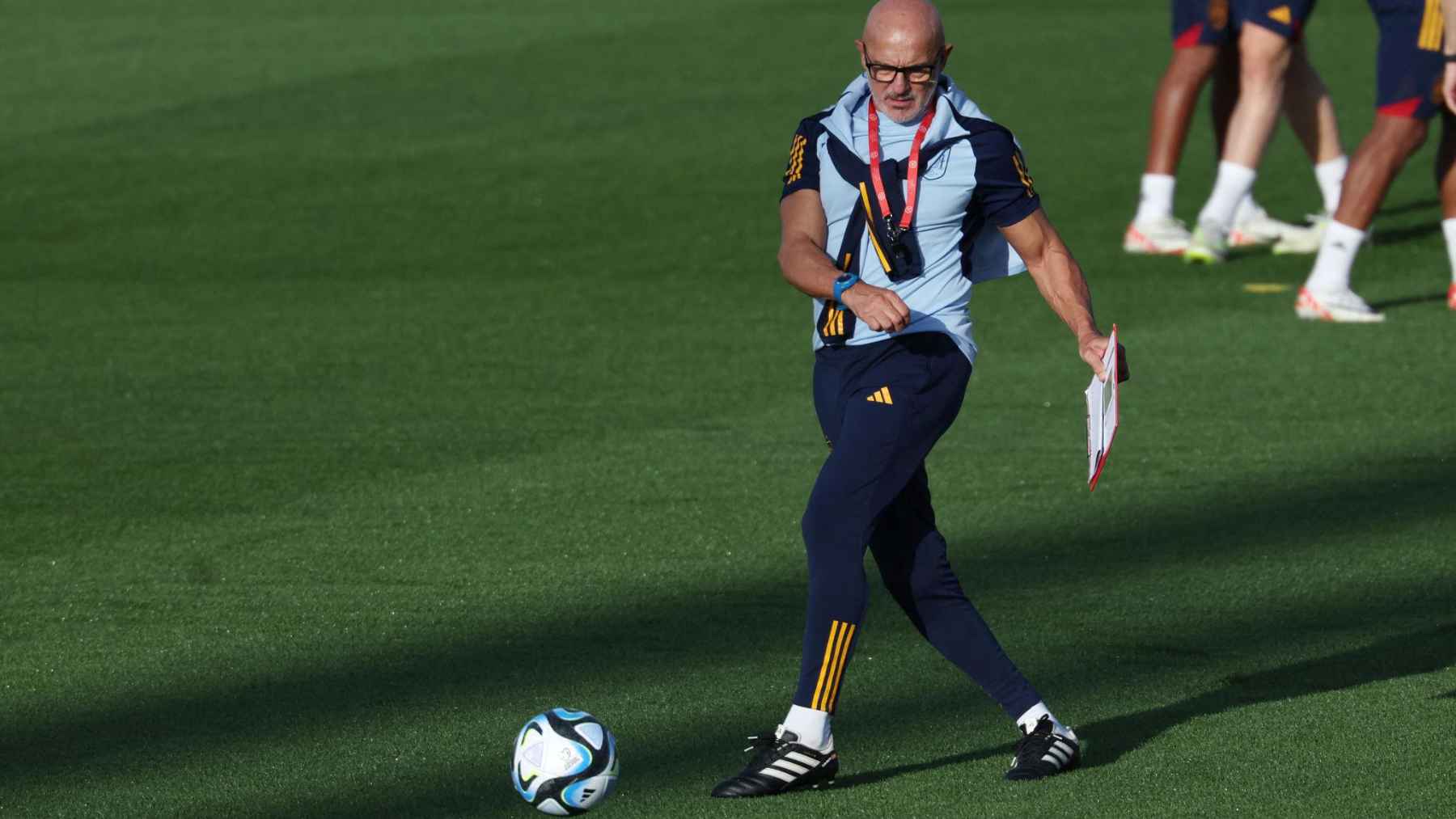
At 65, Spain men’s national soccer team coach Luis de la Fuente begins many training-camp days while the building is still quiet. He reportedly gets up around 6 a.m. and heads to the gym, where about an hour of weight training comes before meetings, tactical work, and the constant review of opponents.
The Royal Spanish Football Federation has him under contract through Euro 2028.
There is no miracle shake or rigid celebrity menu in the story. De la Fuente combines daily strength work with ordinary cafeteria meals and says, “I love fried eggs with potatoes,” often pictured with bread and a glass of wine.
Yet his claim that he sleeps only four hours on some nights makes the routine a revealing mix of solid habits and one major trade-off, not a health template to copy line by line.
A habit built around strength
The gym habit grew out of knee problems during his playing career. He began using weights to strengthen the muscles supporting his joints, then turned that practical response into a lasting part of his day. He has described the session as a quiet hour when he can think about work or think about nothing.
His simplest rule is “one hour in the gym every day” and “full discipline.” When his schedule interrupts training, he has said he feels incomplete. In translated remarks, he has called sport “a way of life,” making clear that the habit is about more than looking muscular on the sideline.
Why weights matter after 60
Strength training can matter after 60 because it makes muscles work against resistance through dumbbells, machines, bands, or a person’s own body weight.
The National Institute on Aging says this type of exercise can build muscle and reduce age-related muscle loss, supporting mobility and independence as the years pass.
The Physical Activity Guidelines for Americans advise adults to combine 150 to 300 minutes of moderate aerobic activity each week with muscle-strengthening work on at least two days. Older adults should also include balance work and adjust their effort to their fitness and health conditions.
De la Fuente’s schedule clears the frequency minimum, but the reports cited here do not offer a complete picture of his loads, sets, or recovery plan.
That level of consistency is uncommon. In 2024, only 15.5% of U.S. adults age 65 and older met both the aerobic and muscle-strengthening targets. His example may be motivating, but the useful lesson is regularity, not copying a professional coach’s exact training volume.
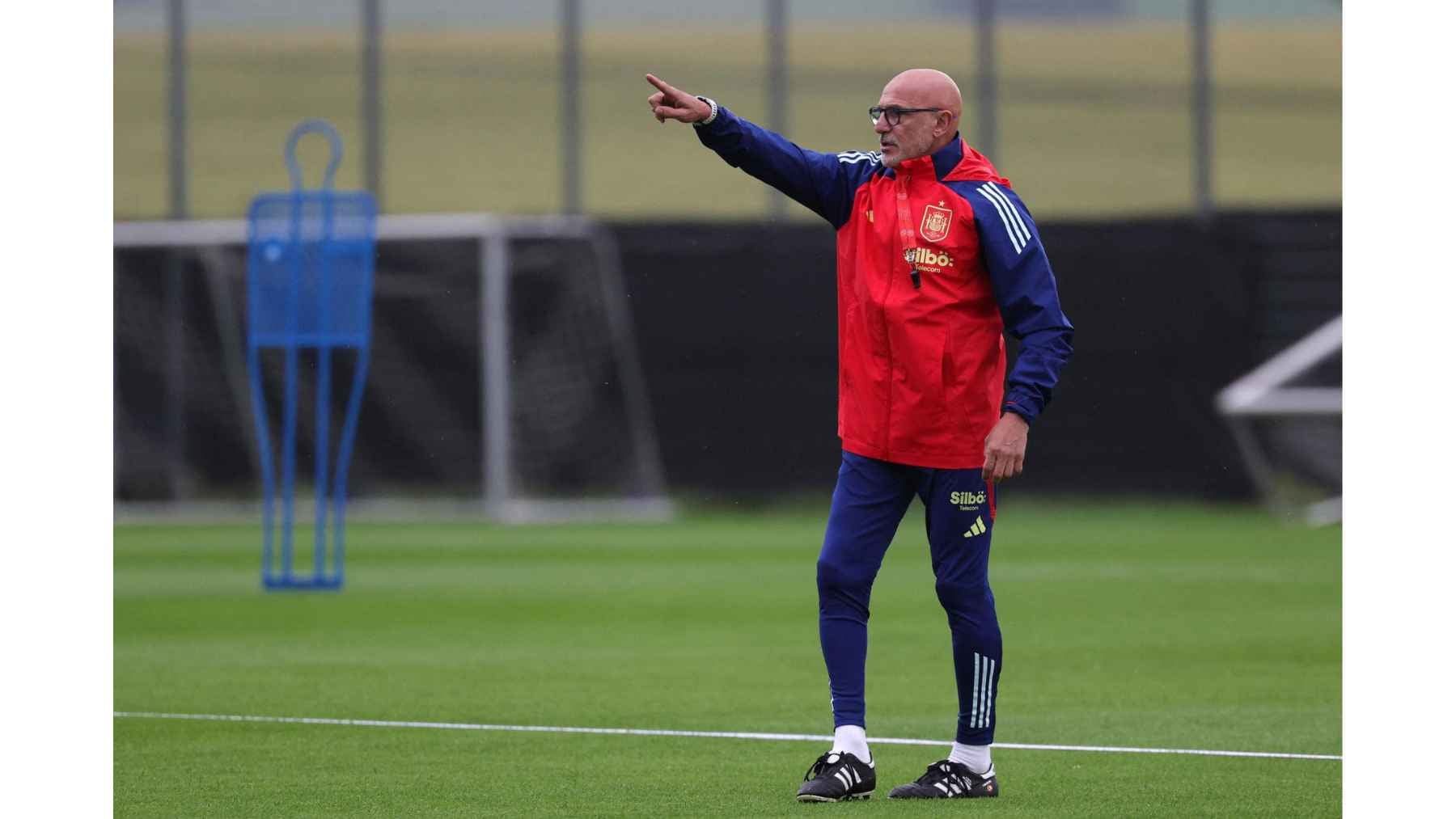
Luis de la Fuente leads a Spain national team training session. The 65-year-old coach says he spends an hour in the gym every day and follows a disciplined fitness routine.
The sleep gap
The weak point is sleep. De la Fuente has said some work-heavy nights bring only three, four, or five hours as he studies opponents, reviews games, and talks with his staff. That may sound like proof of dedication, but it should not be mistaken for a performance advantage.
The Centers for Disease Control and Prevention recommends seven to eight hours for adults age 65 and older. Sleep supports attention, memory, mood, heart health, and metabolism.
Even a strong gym routine cannot cancel out chronic short sleep, and feeling functional does not prove that the body is fully recovered.
Fried eggs fit the picture
At the training center in Las Rozas, De la Fuente eats the employee cafeteria menu rather than following a precisely weighed performance diet. He enjoys wine from his native Rioja and an occasional beer, while his favorite comfort plate is fried eggs and potatoes with bread for dipping. It sounds more like a family kitchen than a sports laboratory.
One indulgent dish does not explain a person’s overall health, either positively or negatively. The Dietary Guidelines for Americans emphasize an eating pattern centered on nutrient-dense foods and recommend choosing baked, roasted, broiled, grilled, or stir-fried cooking more often than deep-frying.
Frequency, portions, and the rest of the week matter more than one favorite lunch.
What his routine really shows
The most transferable part of De la Fuente’s routine is not the fried eggs, the early alarm, or even the hour under the weights. It is the way he has attached exercise to his identity and schedule. “Work, work, and work,” he has said, pairing discipline with effort and resilience, the same values he tries to carry into the locker room.
Still, discipline works best when it includes recovery. A sensible version of his approach would combine regular strength training, aerobic movement, balance work, varied food, and enough sleep, adjusted for age, injuries, and medical conditions.
De la Fuente’s story is compelling because it is imperfect, with a coach who lifts before dawn, enjoys a simple plate, and keeps showing up.