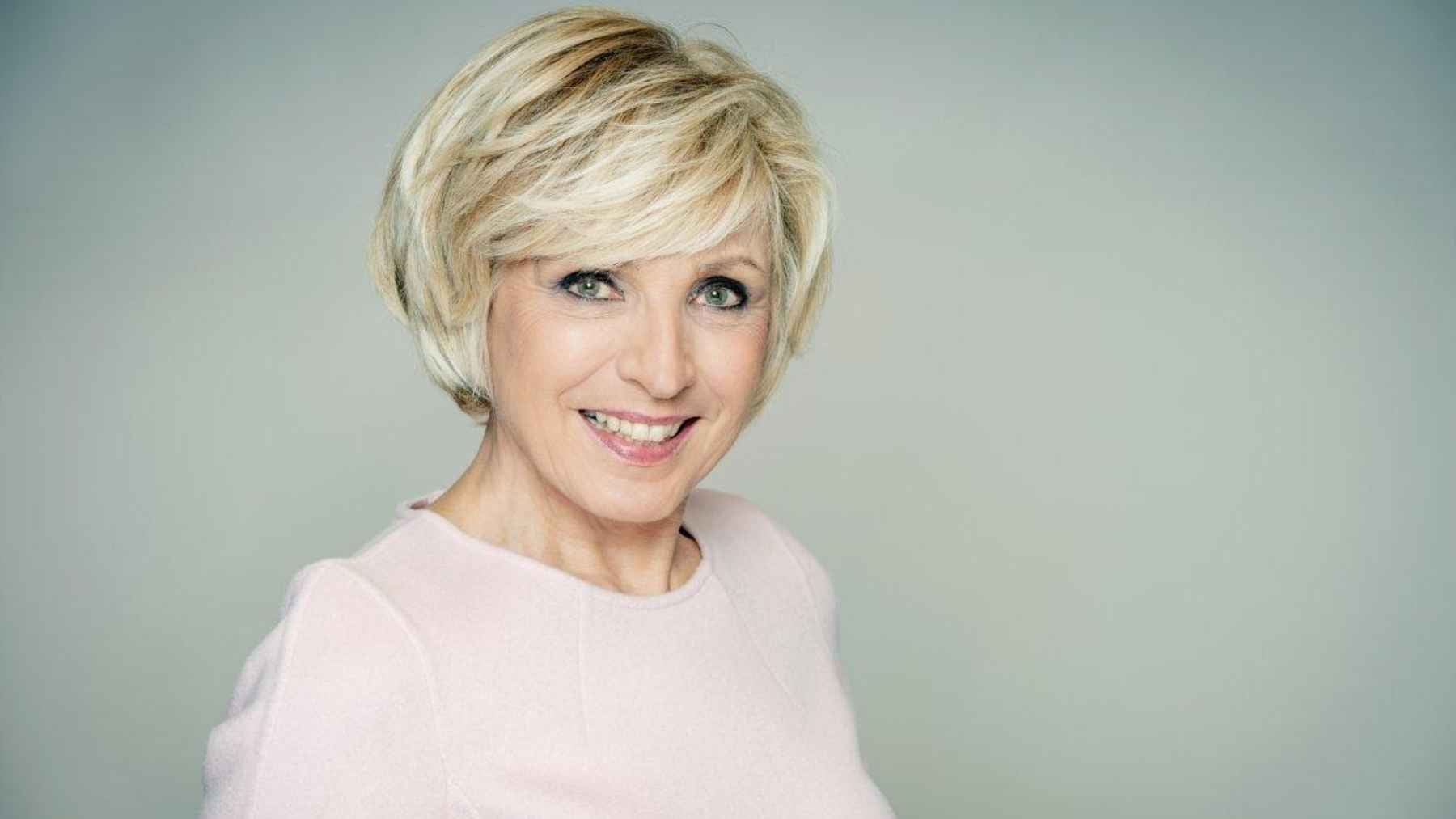
Fourteen years after she was diagnosed with breast cancer, Évelyne Dhéliat has recalled how she kept working on television during treatment. Diagnosed in June 2012 at age 64, the longtime French weather presenter underwent chemotherapy and radiation therapy, then returned to the screen in a wig while treatment was still part of her routine.
Her story is about more than a change in appearance. Why did it resonate? Viewers were watching a familiar forecast continue while her daily life had been turned upside down, and some patients later said seeing her return made them feel less alone.
A diagnosis that changed everything
When she was told she had breast cancer, Dhéliat said she felt as though the world had collapsed around her. She had never before had reason to spend time in a hospital, which made the diagnosis and the sudden treatment schedule even more disorienting.
She initially wanted the illness kept private. After viewers noticed her absence following the summer break, TF1 issued a short statement saying she had undergone surgery and needed treatment, but she did not offer further details at the time.
Treatment before the forecast
The U.S. National Cancer Institute explains that chemotherapy uses drugs to kill or slow fast-growing cancer cells, while radiation therapy uses high doses of radiation to target cancer cells in a defined area.
These treatments can cause fatigue, nausea, hair loss, and skin changes, although side effects differ greatly from one patient to another.
Dhéliat described going to the hospital early for radiation and heading straight to work afterward. “I presented my forecast wearing a wig,” she said, crediting the team around her for helping make the return possible.
Hair loss was especially difficult for her. It was not simply a cosmetic change, but a visible reminder of an illness she was still trying to keep out of public view.

Évelyne Dhéliat later spoke publicly about continuing her television career during breast cancer treatment, sharing how wearing a wig helped her return to the screen.
The day she removed the wig
At some point after her return, she stopped wearing the wig and appeared on television with short hair. She described it as a way of restarting and saying, “Here I am. This is how it is.”
That on-air moment mattered to some viewers. Dhéliat later heard from women who said they were living through the same thing and felt less alone after seeing her, giving an ordinary appearance before the camera a much wider meaning.
Why she began speaking out
For years, Dhéliat remained careful about discussing her cancer. That changed after the French nonprofit Ruban Rose invited her to become an ambassador and doctors told her that familiar public voices can help draw attention to screening.
She initially resisted, then accepted. that meant using the trust built through years of weather forecasts to encourage women to speak with health professionals rather than avoid the subject out of fear.
Why early detection matters
Her message sits inside a much larger public health problem. A 2025 global analysis led by Joanne Kim and published in Nature Medicine estimated 2.3 million new breast cancer cases and 670,000 deaths worldwide in 2022. The International Agency for Research on Cancer said annual cases could reach 3.2 million by 2050 if current trends continue.
In France, the French National Cancer Institute reports that about 60% of breast cancers are detected at an early stage. Its five-year net survival estimate is 88%, a measure designed to focus on survival from the cancer rather than deaths from unrelated causes.
Those figures cannot predict any one person’s outcome, but they show why earlier detection matters.
Screening advice is not identical everywhere. In the United States, federal guidance recommends a mammogram every two years for women ages 40 through 74 who are at average risk, while people at higher risk may need a different plan with their clinician.
Work was part of recovery
Dhéliat’s return to the studio clearly mattered to her, but she has chosen the word “remission” instead of the more final-sounding “cure.” Her experience should not be read as a rule for other patients. Some people can work during treatment, while others need time away because of fatigue, infection risk, pain, or the demands of their jobs.
Her story instead highlights the value of choice and support. A routine as familiar as checking tomorrow’s rain became an anchor, while the wig let her decide when and how much of her illness to reveal.
Years later, speaking publicly turned that private coping strategy into a message about visibility and early detection.
The original interview was published in Paris Match.