
Lowering “bad” LDL cholesterol can look easy on a lab report. In real life, many people at high risk of heart attack or stroke remain above their targets, while others cut back on statins because muscle pain makes daily treatment hard to tolerate.
A large randomized trial now points to a different way forward. Adding inclisiran, an RNA-based injection given at widely spaced intervals, helped 84.9% of patients reach their personal LDL goal within 90 days, compared with 31% receiving carefully optimized standard treatment alone. Muscle-related adverse events were also less common.
What the trial tested
The VICTORION-Difference trial enrolled 1,770 adults with high or very high cardiovascular risk at 133 medical centers in eight European countries. Principal investigator Ulf Landmesser of the German Heart Center at Charité in Berlin led the work, which focused on patients whose LDL remained too high despite the most tolerable statin dose.
One group received inclisiran plus individually optimized cholesterol treatment. The other received an inactive injection plus the same step-by-step adjustment of rosuvastatin and additional cholesterol medicines when needed. Neither patients nor the main study teams knew who received inclisiran during the blinded phase.
The numbers changed quickly
By day 90, 84.9% of people in the inclisiran group had reached the LDL target set for their level of risk. Only 31% reached that mark with optimized treatment alone, giving the inclisiran strategy roughly 12 times higher odds of success.
The difference lasted through the one-year follow-up. Average LDL fell 59.5% with the inclisiran strategy and 24.3% with standard optimization alone, while fewer inclisiran patients needed the highest rosuvastatin dose by the end. That matters when more medication can also mean more worries about side effects.
Why LDL matters
LDL carries cholesterol through the blood, but too much of it can enter artery walls and help build fatty plaques. This process is called atherosclerosis, and over time it can narrow an artery or trigger a clot that causes a heart attack or stroke.
The higher a person’s cardiovascular risk, the lower the recommended LDL target usually becomes. For someone who has already had a heart attack, stroke, or artery disease, months spent above target can add to years of exposure. The danger is quiet, even when the person feels fine.
How inclisiran works
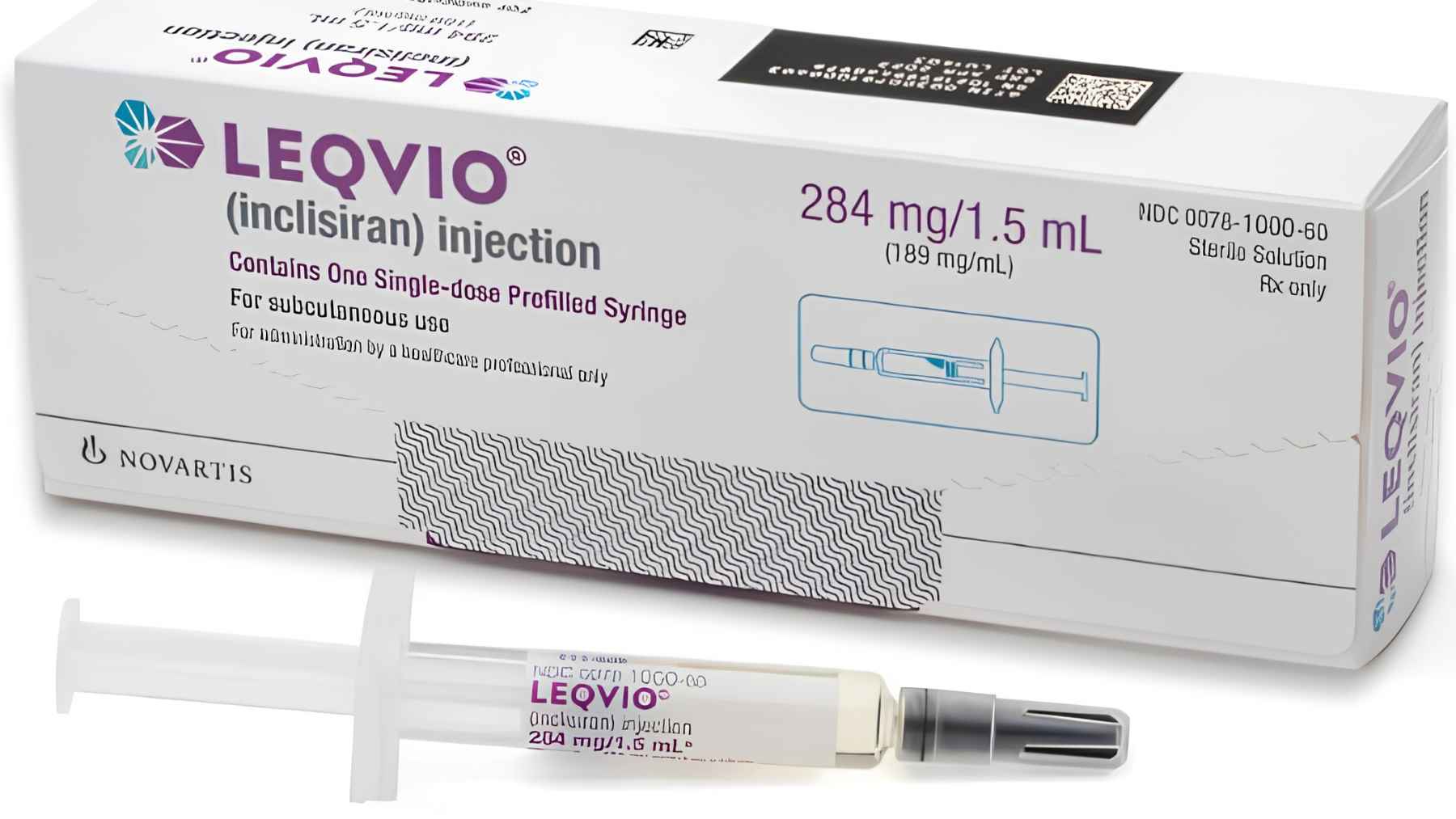
Inclisiran is not a statin, and it does not rewrite a patient’s DNA. It uses a small piece of interfering RNA to block a genetic message that tells liver cells to make PCSK9, a protein that reduces the liver’s ability to clear LDL from the bloodstream.
With less PCSK9, more LDL receptors stay available on liver cells and pull cholesterol out of the blood. Patients receive an injection under the skin, another dose three months later, and then maintenance doses every six months. In Brazil, the medicine is registered as Sybrava, and Anvisa has published instructions for its use.
Muscle pain was not worse
Muscle-related adverse events were reported by 11.9% of patients receiving inclisiran and 19.2% of those receiving optimized treatment alone. Some pain scores also moved slightly in favor of inclisiran, but the improvement was modest and several pain analyses did not show a clear statistical difference.
Overall adverse events were common in both groups and occurred at broadly similar rates. The study found no new safety concerns, but that does not mean the injection is risk-free or suitable for everyone. A prescription still requires a clinician to weigh benefits, symptoms, other medicines, and access.
What the study does not prove
The trial was designed to measure LDL goal achievement, cholesterol reduction, and tolerability over about one year. It was not designed to show that inclisiran directly prevents more heart attacks, strokes, or deaths. VICTORION-2 PREVENT is testing whether the medicine reduces major cardiovascular events.
There are other limits. Nearly 97% of participants were white, about 70% were men, and all were treated in Europe, which may reduce how well the results apply to more diverse populations. Novartis funded the trial, and several authors reported company employment or financial relationships.
Where it fits now
This is not a call to abandon statins. They remain the foundation of drug treatment for high LDL, with strong evidence behind them, while inclisiran may offer another route for high-risk patients who stay above target or cannot tolerate enough statin therapy.
The study supports acting earlier instead of letting LDL remain uncontrolled while treatments are adjusted for months. A twice-yearly maintenance schedule may also make care easier for people who struggle with daily pills. The shot simplifies the calendar, not the medical decision.
The main study was published in the July 1, 2026 issue of the European Heart Journal.