A woman in her 80s who had spoken mostly in single syllables for five years began sharing personal memories after receiving a high dose of psilocybin-containing mushrooms. About 19 hours later, she reportedly talked for roughly four hours, and improvements in walking, dressing, bladder control, and social engagement followed over the next several days.
That sounds like a reversal of Alzheimer’s disease. It was not, according to the researchers, but the unusual case raises a more careful question. Could some abilities in an advanced brain be blocked rather than completely erased?
A patient with severe decline
About 1.8 million people in Germany live with dementia, and Alzheimer’s disease is the leading cause, according to official German estimates. By the advanced stage, treatment largely focuses on comfort, safety, and daily support rather than restoring lost function.
The Japanese American patient had lived with a clinical Alzheimer’s diagnosis for about 10 years. Marcos Lago, Mariana Cerveira, and Joe Xavier Simonet of the Medical Department at Associação Cruz de Ankh in São Paulo reported that she also had swallowing problems, chronic incontinence, limited mobility, flat emotional expression, and heavy dependence on caregivers.
Her diagnosis fit the pattern of advanced Alzheimer’s, but it had not been confirmed with disease biomarkers or advanced brain scans. That leaves open the possibility of mixed dementia or another contributing brain disorder.
The first mushroom dose
During a supervised session, the woman swallowed about 0.18 oz. of Enigma mushrooms containing psilocybin. Because the paper gives only mushroom weight and no measured psilocybin content, the exact drug exposure is unclear.
The immediate reaction was not gentle. She sweated heavily, showed signs that clinicians suspected were overheating, and entered a long, deep sleep-like state. No exact temperature was recorded.
Then came the unexpected turn. Around 19 hours after dosing, she woke and began speaking about her own life for several hours. By the second day, the team recorded independent walking, followed by self-dressing and renewed initiative.
Gains reached everyday life
Within two to three days, her diapers were dry, including overnight, after more than five years of urinary incontinence. She also made sustained eye contact, smiled back at others, recognized relatives, and followed the context of everyday conversations.
One month later, the report says she remained continent and functionally better than her earlier baseline. A second supervised dose of about 0.11 oz. was followed by more expressive speech, spontaneous humor, livelier facial movements, and easier walking.
The patient even said, “It is pleasant to come here.” Researchers reported no severe or lasting complications during follow-up, but the earlier sweating and suspected overheating still make the safety question impossible to brush aside.
How psilocybin may affect the brain
Psilocybin is a psychedelic compound that activates a serotonin receptor involved in perception, mood, and communication between brain regions. A 2024 brain-imaging study in healthy adults found that it temporarily loosened the usual boundaries between large brain networks.
Other laboratory research has found that psychedelics can encourage nerve cells to grow branches and form new connections. This ability to change is called neuroplasticity, but findings in cells and animals do not prove that damaged human memory circuits can be rebuilt.
A useful picture is a city after a major storm. The roads may be badly damaged, yet a temporary rerouting can sometimes let traffic move again. The authors suggest psilocybin may have briefly reopened access to surviving networks rather than repaired the disease itself.
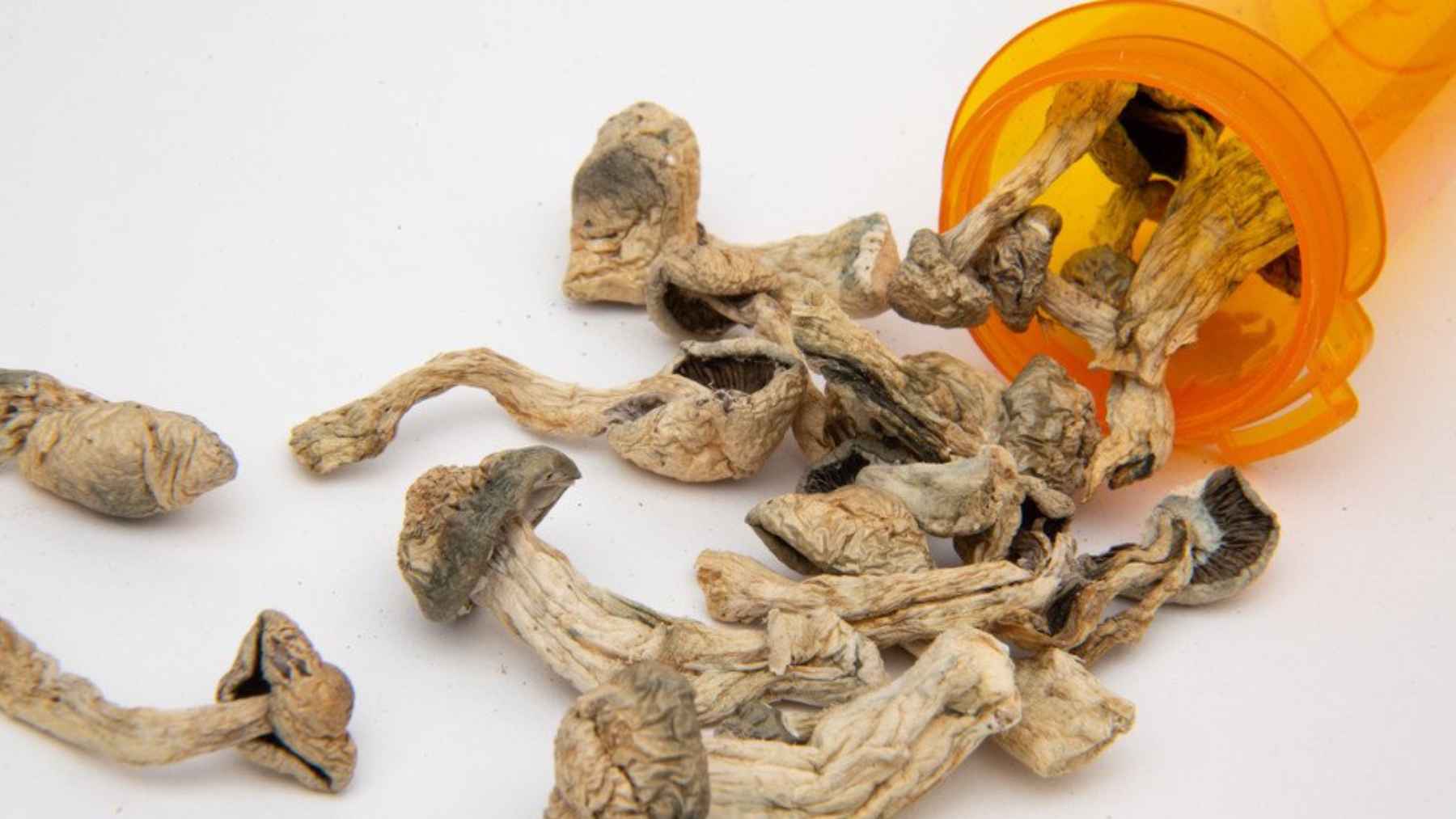
A case report describes unexpected improvements in memory, speech, and daily function in an Alzheimer’s patient after supervised psilocybin treatment.
Why this is not proof
This was one person, with no control group and no blinded comparison. The team did not use standardized cognitive scales, electrical brain recordings, formal sleep testing, or before-and-after brain imaging.
The report describes routine private clinical practice rather than a prospective research protocol, and the patient’s legal guardian consented to publication.
Symptoms can fluctuate in dementia, and caregivers who expect change may notice improvements differently. Without objective measurements, researchers cannot say psilocybin caused the gains or explain how long each one lasted.
Psilocybin also remains an investigational drug, and there is no established dose for advanced dementia. Current FDA guidance for psychedelic research stresses careful trial design, monitoring, and interpretable safety data. This is not a treatment families should attempt at home.
The question left behind
For families who have watched a loved one lose language and independence, the report is emotionally powerful. Scientifically, its value is narrower. It offers a hypothesis that late-stage Alzheimer’s may leave more usable capacity than outward behavior suggests.
Now the hard work begins. Controlled studies would need standardized psilocybin doses, confirmed diagnoses, objective brain and cognitive measures, close medical monitoring, and follow-up lasting months. Only then will researchers know whether this was a rare fluctuation, a drug effect, or something in between.
The full case report was published in Frontiers in Neuroscience.