
Scientists have identified a brain protein that appears to help toxic Tau move from damaged neurons into healthy ones. The study, published online on June 29, 2026, points to a possible way to slow Alzheimer’s disease by interrupting that transfer instead of shutting the protein down completely.
The discovery is not a treatment, and most experiments were done in mice. Still, it maps a specific step that researchers may be able to target, much like finding the delivery route used by harmful cargo before it reaches the next address.
What Tau does to neurons
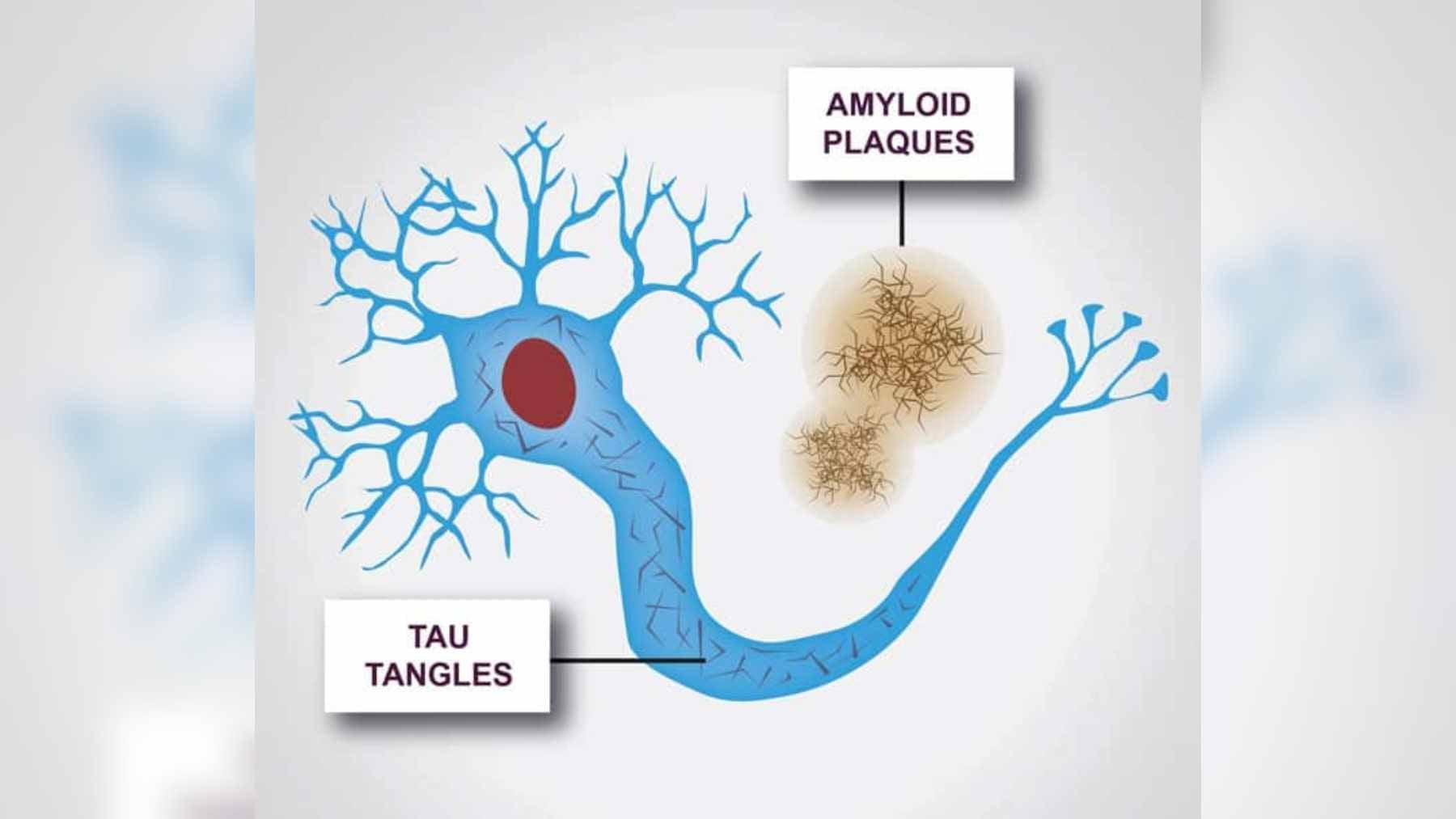
Tau normally supports the internal transport system of neurons. In Alzheimer’s disease, the protein can lose its proper shape, stick together, and form tangles that block the movement of nutrients and other materials inside the cell.
First author Mitali Tyagi, now a postdoctoral researcher at Washington University in St. Louis, compared the clumps to “glue monsters.” Smaller pieces can break away, enter another neuron, and push healthy Tau there to form more damaging tangles.
Arc becomes a hidden carrier
The newly identified carrier is Arc, a protein with an important job in the brain. It helps neurons communicate by packaging material into extracellular vesicles, the microscopic bubbles that cells release and send elsewhere.
Think of those vesicles as tiny delivery envelopes. Senior author Jason Shepherd, a professor of neurobiology at University of Utah Health, and his colleagues found that toxic Tau can bind to Arc, slip inside the envelopes, and ride toward neighboring neurons.
Mouse tests revealed the route
The team compared mice engineered to develop Tau disease with similar mice that lacked Arc. Without Arc, the vesicles contained very little Tau, had far less ability to start new tangles, and could barely spread damage to other cells.
Tyagi said the transfer was severely reduced. “It was almost gone.” That result makes Arc a central part of the route, rather than a bystander that happens to appear near diseased cells.
The researchers also found vesicles containing both Arc and Tau in human brain tissue. Arc levels in those vesicles rose alongside a disease-linked form of Tau, but that association does not yet prove the full process works the same way in living people.
Why blocking Arc could backfire
At first glance, the answer may sound simple: remove Arc and stop the traffic. But Arc also acts like a pressure-release valve by helping an already sick neuron push excess Tau outside.
When Arc was missing, more toxic Tau stayed trapped inside the original neurons, and those cells died faster early in the disease. A drug that switches Arc off everywhere could therefore slow the spread while making damaged cells less able to survive.
So where is the opening for treatment? Researchers are looking at the moment after a Tau-filled vesicle leaves one cell but before another absorbs it, a point they describe as catching the harmful package “mid-flight.”
A possible new treatment target
A future therapy might recognize and neutralize Tau-carrying vesicles in the space between neurons. That would leave Arc’s protective release function in place while trying to prevent toxic material from reaching healthy brain tissue.
“If we could stop the spread, then we could prevent further damage and cognitive decline,” Shepherd said. Such a treatment would not restore neurons that have already died, but it could, in theory, protect brain regions that have not yet been affected.
Next comes testing the mechanism in human cells, learning how healthy neurons take up the vesicles, and finding a drug that blocks harmful uptake without disrupting normal communication.
The project received support from the National Institutes of Health, the Alzheimer’s Association, and the Chan Zuckerberg Initiative, among other funders.
Why the finding matters now
The World Health Organization estimated that 57 million people were living with dementia in 2021, and Alzheimer’s disease may account for 60% to 70% of cases. The condition gradually damages memory, language, judgment, and the ability to handle familiar daily tasks.
Argentine neurologist Ricardo Allegri, a researcher with CONICET and head of cognitive neurology at Fleni, said the work helps answer a long-standing question.
Scientists knew abnormal Tau could travel along connected brain circuits, but they did not fully understand the vehicle carrying it between neurons.
The discovery also adds a different target to a field that has medicines aimed at beta-amyloid, another protein involved in Alzheimer’s. FDA-approved drugs such as lecanemab and donanemab can slow decline in selected patients with early disease, but they do not cure it and require medical monitoring.
Recognizing changes early
Warning signs can include recent memory loss that disrupts daily life, difficulty finding words, confusion in familiar places, trouble completing routine tasks, or noticeable changes in mood and personality.
One forgotten name is not enough to diagnose dementia, but repeated problems that interfere with normal life deserve medical attention.
An early evaluation can identify other treatable causes of memory problems and help eligible patients discuss current therapies, clinical trials, and future planning.
For the most part, that is where this Arc discovery could eventually have its greatest value, by helping preserve what remains before more brain networks are damaged.
The full study was published in Cell.