A famous line widely attributed to Sigmund Freud puts a hard idea in plain words. “Most people do not really want freedom, because freedom involves responsibility, and most people are frightened of responsibility.”
It sounds simple, almost like something you would hear in a classroom debate or during a late-night talk with a friend, but the thought behind it is sharp. Freedom is attractive until it asks us to own the results of our choices.
The weight behind the quote
Freud was an Austrian neurologist, physician, and the founder of psychoanalysis, the method that tried to understand human behavior by looking below the surface of conscious thought. The University of Vienna lists him as one of the major figures tied to medicine, neuropathology, and psychiatry.
His influence is hard to miss. Dreams, repression, the unconscious, the ego, and the idea that people sometimes hide motives from themselves are now part of everyday language, even for people who have never opened one of his books.
What freedom really asks
The line about freedom is usually read as a warning. It says that many people like the idea of choosing, but not the pressure that comes after the choice is made.
Think about ordinary life. Choosing a career, ending a relationship, changing a habit, or admitting a mistake can feel empowering at first.
Then comes the uncomfortable part, because there may be no one else to blame. That is why the phrase still travels so easily. It does not talk about freedom as a slogan, it treats freedom as a burden that can expose us.
Freud and the hidden mind
Freud’s larger theory was built around the claim that people are not always transparent to themselves. The Library of Congress explains that he became interested in unconscious life while studying symptoms, dreams, and slips of the tongue that seemed to express hidden conflict.
That matters here. If a person avoids responsibility, Freud might not see it only as laziness or weakness.
He would likely ask what fear, wish, guilt, or inner conflict is working underneath the decision. In other words, the fear of freedom may be less obvious than it looks.
The ego in the middle
One of Freud’s best-known ideas divides the mind into the id, ego, and superego. In simple terms, the id pushes for desire, the superego carries rules and conscience, and the ego tries to manage both while dealing with real life.
That inner tug-of-war helps explain why responsibility can feel so heavy. Wanting something is one thing. Choosing it, defending it, and living with the outcome are much harder.
Who has not felt that tension? It can show up in a small decision, like apologizing first, or in a bigger one, like leaving a stable job for something uncertain.
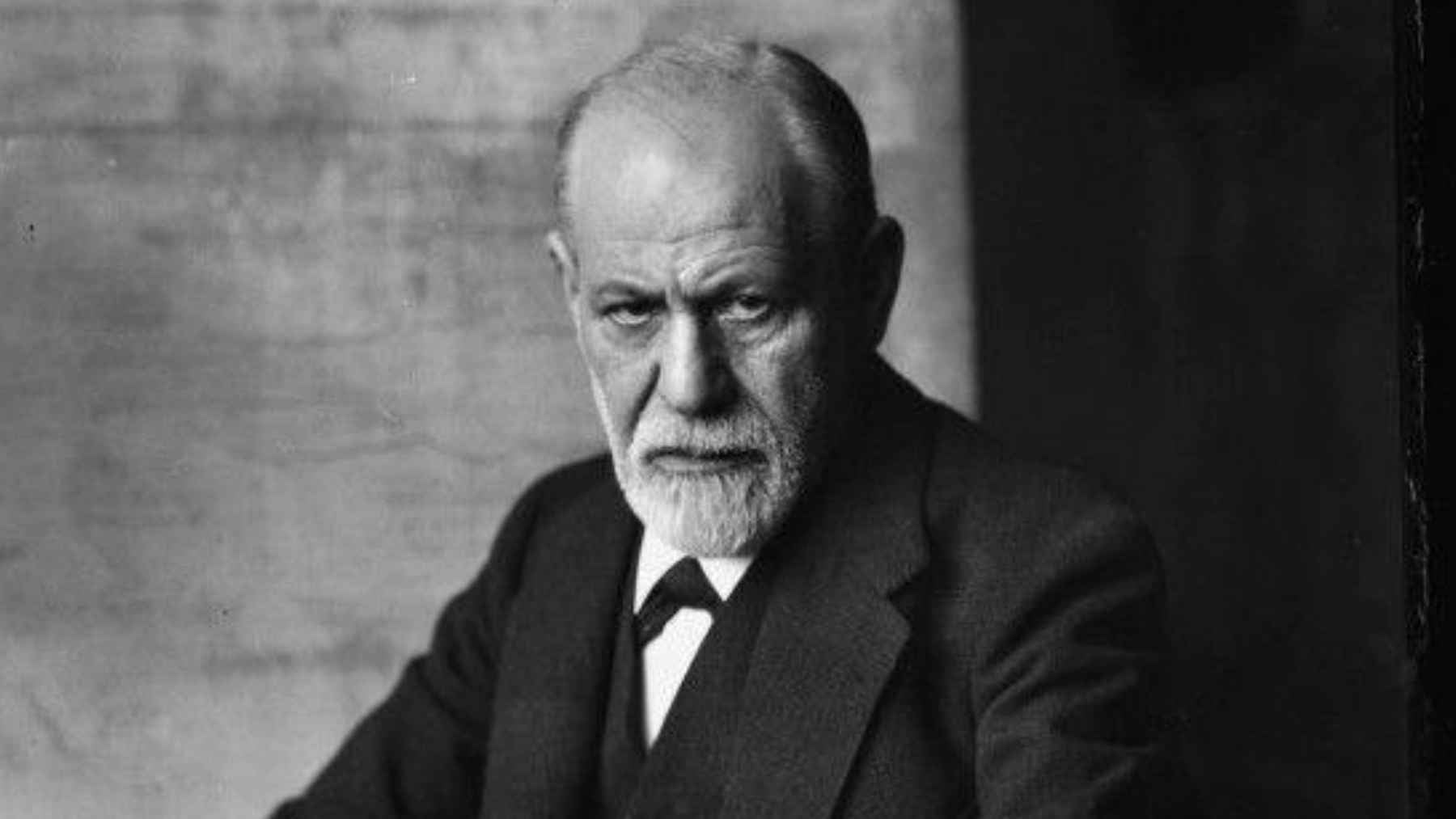
Historic portrait of Sigmund Freud, whose theories on the unconscious mind continue to shape conversations about freedom, responsibility, and human behavior.
A debated legacy
Freud’s ideas remain influential, but they are also heavily debated. The Internet Encyclopedia of Philosophy notes that psychoanalysis has faced criticism over its scientific claims, its treatment methods, and the way some followers defended Freud’s theories.
That debate matters because it keeps the quote from turning into a neat motivational poster. Freud’s work opened important questions about self-knowledge, desire, and fear, but many of his conclusions have been challenged, revised, or rejected.
Still, a debated thinker can leave behind a useful question: are we avoiding limits placed on us by others, or are we avoiding the hard work of choosing for ourselves?
The quote needs care
There is also a source problem. The exact sentence is often attached to Freud’s Civilization and Its Discontents, but in the 1930 English translation available through Project Gutenberg, the word “responsibility” does not appear, while the book does discuss liberty, culture, and the restrictions civilization places on individuals.
That does not erase the value of the idea. It means readers should treat the wording carefully and separate a popular attribution from what can be directly verified in a text.
The safer reading is this: the phrase captures a Freudian theme more than it proves a clean, traceable quotation. Freud repeatedly explored how people struggle between desire, social rules, guilt, and the search for relief from mental discomfort.
Why it still matters
The reason the line keeps returning is simple. People still want freedom, but they also want safety, approval, and a way out when things go wrong.
At the end of the day, responsibility is the price attached to adult choice. That price can be frightening, but it can also be clarifying.
Freud’s warning, whether read as a direct quote or as a popular summary of a Freudian idea, points toward a harder kind of freedom. Not the freedom to do anything without consequences, but the freedom to choose with open eyes.
The main work referenced in this article is Civilization and Its Discontents, originally published in 1930 and now available through Project Gutenberg.