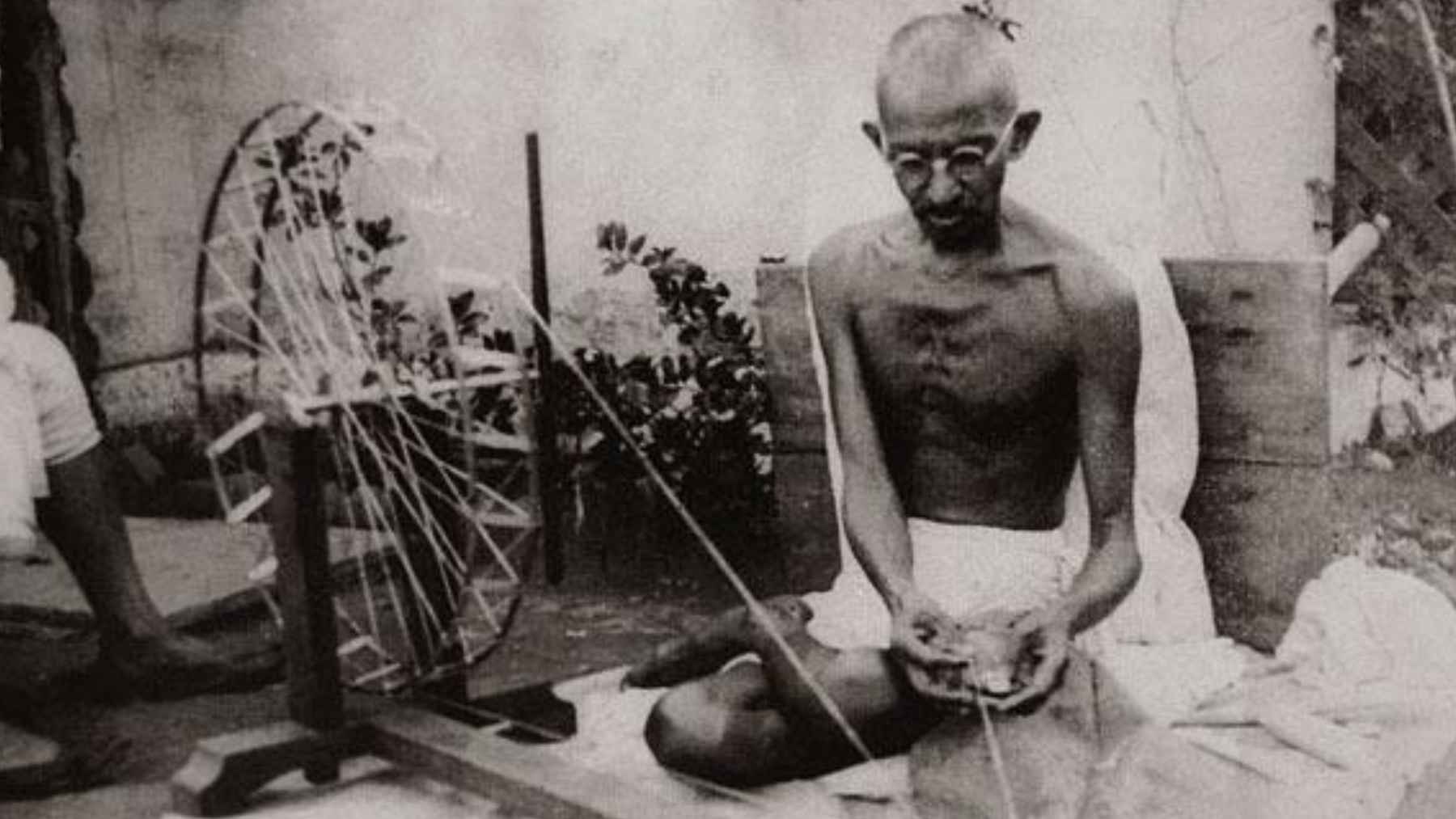
A widely shared line attributed to Mahatma Gandhi offers a simple rule for a calmer life. “Happiness is when what you think, what you say, and what you do are in harmony.” The words keep circulating because they speak to a problem that feels very modern, even if the message is old.
The exact source of the wording should be treated with care, since some quote collections list it as attributed rather than fully verified.
Still, the idea fits Gandhi’s larger philosophy. He linked a meaningful life to truth, self-discipline, and the hard work of making public action match private belief.
What Gandhi meant by harmony
Gandhi was not talking about happiness as a quick burst of pleasure. He was pointing to a steadier kind of peace, the kind that comes when a person is not fighting themselves all day.
That matters because inner conflict can be exhausting. Think of saying yes when you want to say no, promising change and then avoiding it, or smiling through a decision that leaves a knot in your stomach.
Stanford University’s Martin Luther King, Jr. Research and Education Institute describes Gandhi as a leader who challenged racism in South Africa and colonial rule in India through nonviolent resistance.
Essentially, his public message was tied to an everyday demand: live closer to the truth you claim to believe.
The signs that something is off
Misalignment rarely announces itself with a flashing red light. More often, it sounds like guilt after a choice, discomfort after an easy lie, or the quiet stress of acting like someone you do not want to be.
The warning signs can be familiar. You may break promises to yourself, struggle to express honest opinions, chase approval, or feel unclear about what really matters.
None of this means a person has failed. It means there may be a gap between values and habits. Once that gap is visible, it becomes possible to work on it.
Psychology has a similar idea
Modern psychology does not prove Gandhi’s quote, but it points in a similar direction. In a longitudinal study, Kennon Sheldon and Andrew Elliot found that goals linked to a person’s own interests and core values were tied to stronger effort, better goal attainment, and well-being.
A newer study available through the National Library of Medicine also found early evidence that purposeful, value-aligned behavior may support well-being. That is not magic, it is the everyday relief of doing what you actually believe is worth doing.
What does that look like in real life? It might mean choosing rest because health is a value, not because burnout finally forced it. It might mean telling the truth kindly instead of keeping peace at any cost.
Habits that make harmony practical
The lesson is not to overhaul your whole life in one weekend. Most people build alignment through small, repeated choices, the same way a room gets clean one drawer at a time.
A useful first step is to name your values without making them sound impressive. Honesty, patience, family, learning, service, faith, independence, or creativity only matter if they show up somewhere in the day.
Then comes the harder part. Speak more clearly, keep the promises that count, and take responsibility when a decision causes harm. Simple? Yes. Easy? Not always.
Why the message still lands today
The quote feels current because modern life is full of pressure to perform. Social media rewards image, work often rewards constant availability, and many people learn to measure success by applause instead of peace. That is why Gandhi’s message still has force.
At the end of the day, what it is trying to do is move happiness away from status and back toward integrity. The United Nations marks October 2, Gandhi’s birthday, as the International Day of Non-Violence, a sign of how far his ideas traveled beyond India.
The message is not that life becomes painless when thoughts, words, and actions align. It is that life becomes less divided.
The main official work referenced in this article, Gandhi’s The Story of My Experiments with Truth.