On hot nights, the hardest part of sleep is often the first part, getting comfortable enough to drift off. A simple cooling trick using a frozen plastic bottle, a bowl, and a fan may not replace air conditioning, but it can take the edge off during those first sweaty hours.
A Watson report described a familiar summer scene for homes without air conditioning. One child’s bedroom reached 82.8°F, warm enough that an older daughter ran to the basement, while a younger child managed to fall asleep after the homemade cooling setup was placed nearby.
Why heat keeps you awake
Sleep is closely tied to body temperature. As bedtime approaches, the body normally starts to cool itself, which helps signal that it is time to rest.
A sticky summer heat can interrupt that process. A review by Kazue Okamoto-Mizuno and Koh Mizuno in the Journal of Physiological Anthropology found that heat exposure can increase wakefulness and reduce deep sleep and rapid eye movement sleep, the stage often linked with dreaming.
That is why a hot bedroom can feel so frustrating. You may be tired, but your body is still working to cool down.
How the trick works
The setup is simple. Fill the largest plastic water or soda bottle you can find, freeze it, then place it in a bowl in front of a fan before bedtime.
The bowl matters because condensation will drip as the ice melts. The fan should sit several feet from the bed, close enough to move air toward the sleeper but not so close that it blows strongly all night.
The air may not feel dramatically colder when it reaches the bed. Still, it is slightly cooled as it passes around the frozen bottle, and that small change may be enough to help someone fall asleep.
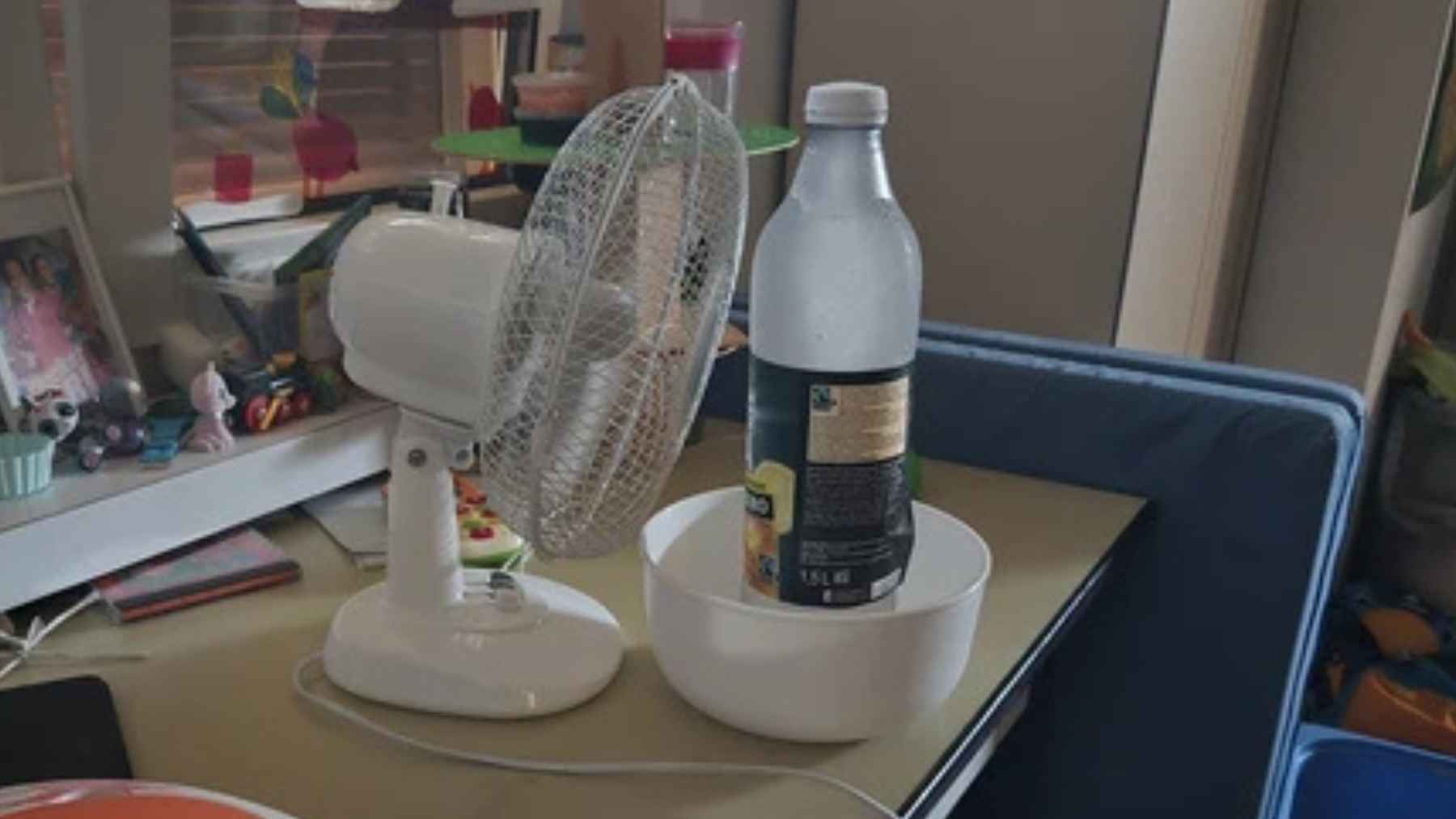
A frozen bottle positioned in front of a fan offers an inexpensive way to cool the air around the bed and make hot nights more comfortable.
What the ice can really do
This is not magic, and it is not a homemade air conditioner. The Watson report noted that about 3.3 lbs. of ice at 14°F could, in theory, cool a small child’s room by a few degrees.
In real life, the effect is weaker. Air keeps circulating, walls and furniture hold heat, and the ice melts, so the cooling benefit may last about two hours before the bottle turns into lukewarm water.
Still, those two hours can matter. For many people, the key is not keeping the room cool until morning, but getting through the first part of the night without tossing, sweating, and checking the clock.
What science says about hot bedrooms
Sleep experts often recommend a bedroom temperature between 60° and 68°, though the best temperature varies from person to person. The Sleep Foundation notes that high room temperatures can interfere with the body’s natural cooling process and lead to shorter or poorer sleep.
The problem is not just comfort. A 2025 analysis from the Keck School of Medicine of USC linked higher nighttime temperatures with shorter sleep and lower sleep quality in U.S. adults, using data from more than 14,000 people and more than 12 million nights of sleep.
In other words, a warm bedroom is not a small annoyance for everyone. For people with health conditions, older adults, children, and families without air conditioning, it can become part of a larger heat-health problem.
Safety matters on hot nights
A fan can help when indoor temperatures are below 90°, but the Centers for Disease Control and Prevention warns that when indoor temperatures rise above that level, a fan can actually increase body temperature.
That is the line where a simple trick stops being enough. Drinking water, closing blinds during the day, opening windows only when outdoor air is cooler, and moving to the lowest level of the home can all help.
People should also watch for warning signs such as dizziness, heavy sweating, headaches, weakness, nausea, or shortness of breath. If those symptoms appear, cooling down is no longer just about sleep.
A useful stopgap, not a fix
The frozen-bottle trick has one big advantage: it costs almost nothing if you already own a fan, and it can be ready the same night if the bottle goes into the freezer after work.
It also has clear limits. It will not cool a large room, it will not beat a serious heat wave, and it will not solve poor insulation, urban heat, or the rising electric bill that keeps many families from running air conditioning.
At the end of the day, what it offers is modest but practical relief. Sometimes, a few degrees and a little moving air are enough to help the body cross that line from uncomfortable to sleepy.
The original report was published by Watson.