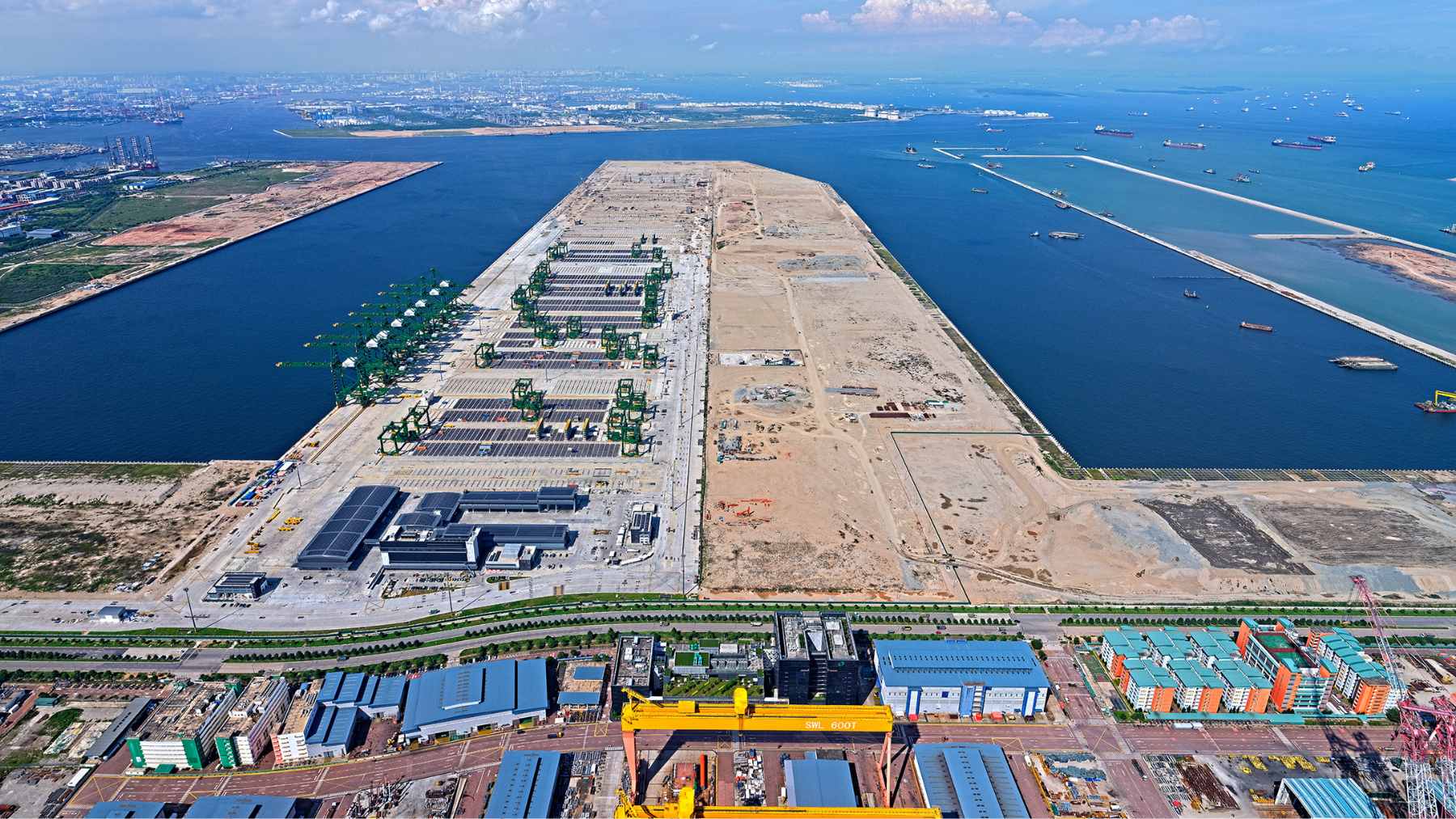
Singapore is turning part of the sea into the future home of global trade. At Tuas, on the western edge of the island nation, a giant port project is rising from reclaimed land, automation systems, electrified machines, and hundreds of enormous concrete structures placed beneath the water.
The headline number is hard to ignore. Tuas Port is planned to handle up to 65 million containers (TEUs) a year when fully completed in the 2040s, making it the world’s largest fully automated port, according to Singapore’s Ministry of Transport. That is not just a shipping story. It is also a test of how far technology can go in making one of the world’s busiest trade hubs faster, cleaner, and more resilient.
A port built from the sea
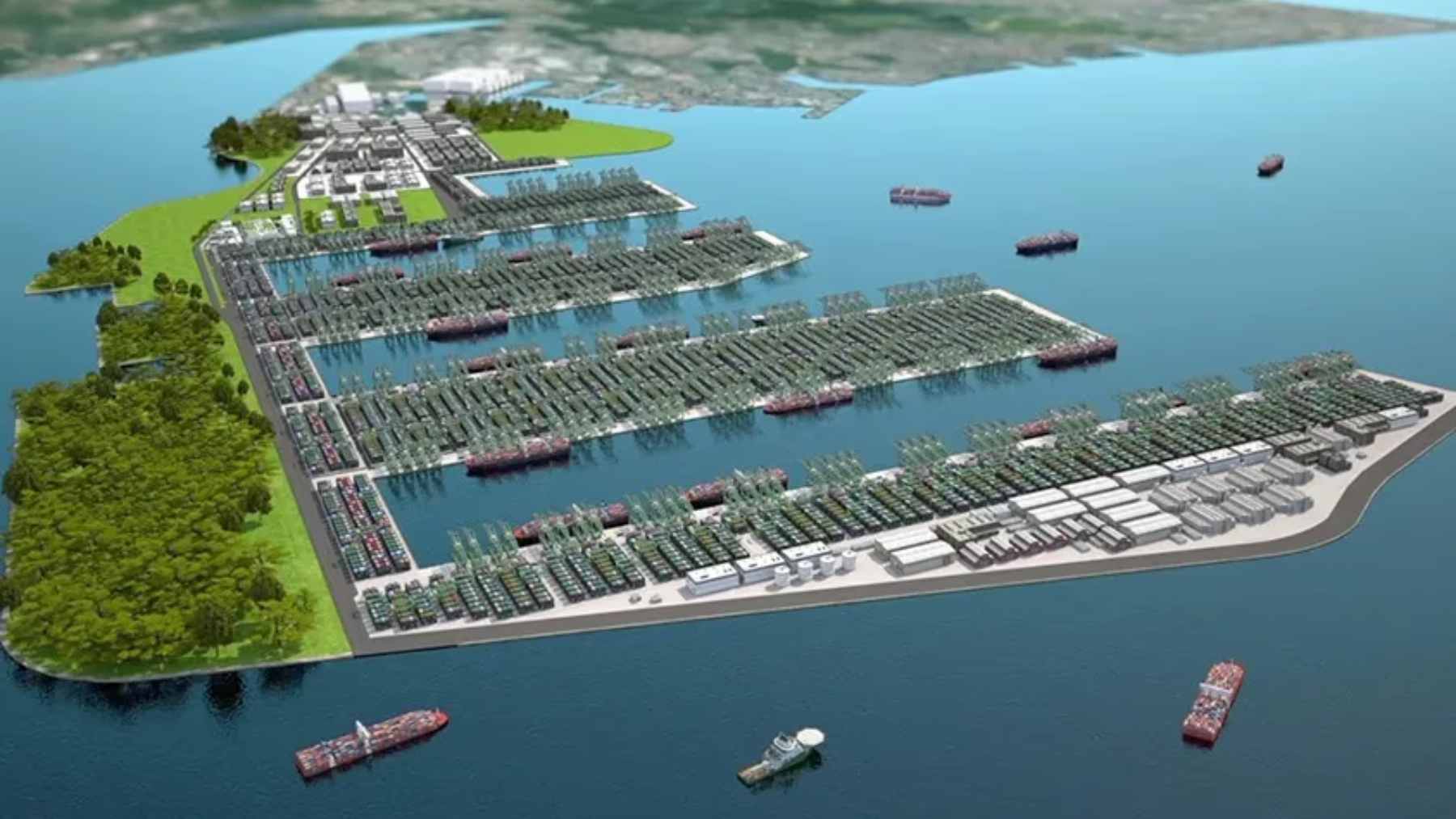
Singapore’s Maritime and Port Authority says Tuas Port will eventually cover about 3,300 acres, roughly 3,000 football fields. The finished complex is expected to include 66 berths stretching across 16 miles, with space for the largest container ships in operation.
How do you build that much port in a country where land is precious? You push outward. In Phase 1, Singapore fabricated and installed 221 caissons, described by MPA as 10-story-tall concrete structures weighing 15,000 tons each, to form a 5.4-mile seawall. Phase 2 added another 227 caissons for 5.7 more miles of seawall.
Why Tuas matters
For decades, terminals such as Tanjong Pagar, Keppel, Brani, and Pasir Panjang helped make Singapore one of the most important maritime hubs on Earth. But older port sites near the city have limits, especially as ships get larger and supply chains become more demanding.
Tuas is meant to pull container operations into one location. MPA says PSA is expected to move operations at Tanjong Pagar, Keppel, and Brani to Tuas by 2027, while Pasir Panjang operations will be consolidated there in the 2040s. That means fewer scattered port activities and a single, highly digitalized logistics center.
Machines take the wheel
This is where the project stops looking like a traditional port and starts looking more like a tech platform with ships attached. Tuas will use automated, guided vehicles to move containers between the wharf and the yard, while electrified, automated yard cranes will be managed remotely from the Tuas Port Control Centre.
There is also a private 5G network planned to support 5G-enabled automated cranes and vehicles. That may sound like a behind-the-scenes detail, but it matters. Ports run on timing, and even small delays can ripple into traffic jams at sea, longer waits at anchor, more fuel burned, and higher costs that eventually show up in everyday goods.
The green promise
The environmental question is not small. Building new land from the sea is a major coastal intervention, and a project of this size will inevitably draw scrutiny. Still, Singapore’s official pitch is that Tuas can make port operations cleaner once it is running.
MPA says PSA aims for Tuas Port to reach net-zero emissions by 2050. Electrified equipment and vehicles such as automated, guided vehicles are expected to cut carbon emissions by about 50% compared with current diesel prime movers.
The site will also use smart grid systems and green buildings, including a maintenance base building that uses 58% less energy than similar-sized buildings.
Trade keeps growing
Singapore’s bet is not happening in a quiet market. MPA reported that the country hit 44.66 million TEUs of container throughput in 2025, an 8.6% increase from 2024. Vessel arrivals also reached a record 3.22 billion gross tonnage.
That growth helps explain why Tuas is being built so aggressively. The port is not only about today’s cargo, but about ships, fuel systems, data platforms, and trade routes that may look very different in 20 years. The trouble is, the clock is moving faster than infrastructure usually does.
A new coastal city plan
Moving container activity west also opens the door to rethinking old waterfront land closer to central Singapore. Once port operations shift out, sites such as Tanjong Pagar, Keppel, and Brani can be redeveloped for other urban uses.
That part of the story feels less technical, but it matters for daily life. Ports bring jobs and trade, but they also bring noise, trucks, cranes, and industrial traffic. Moving heavy logistics to a purpose-built zone could reshape both Singapore’s coastline and its urban future.
Singapore’s maritime gamble
Former Prime Minister Lee Hsien Loong said at the official opening in 2022 that Tuas would be the “port of the future,” adding that it would strengthen Singapore’s ability to provide efficient and reliable services.
He also said sustainability was a key design feature, pointing to automation, electricity, green buildings, smart grids, and battery storage.
At the end of the day, Tuas is more than a bigger dock. It is a bet that AI, automation, electrification, and careful land planning can keep Singapore central to global trade while reducing some of the pollution and inefficiency that ports are known for.
The official statement was published on the Maritime and Port Authority of Singapore website.