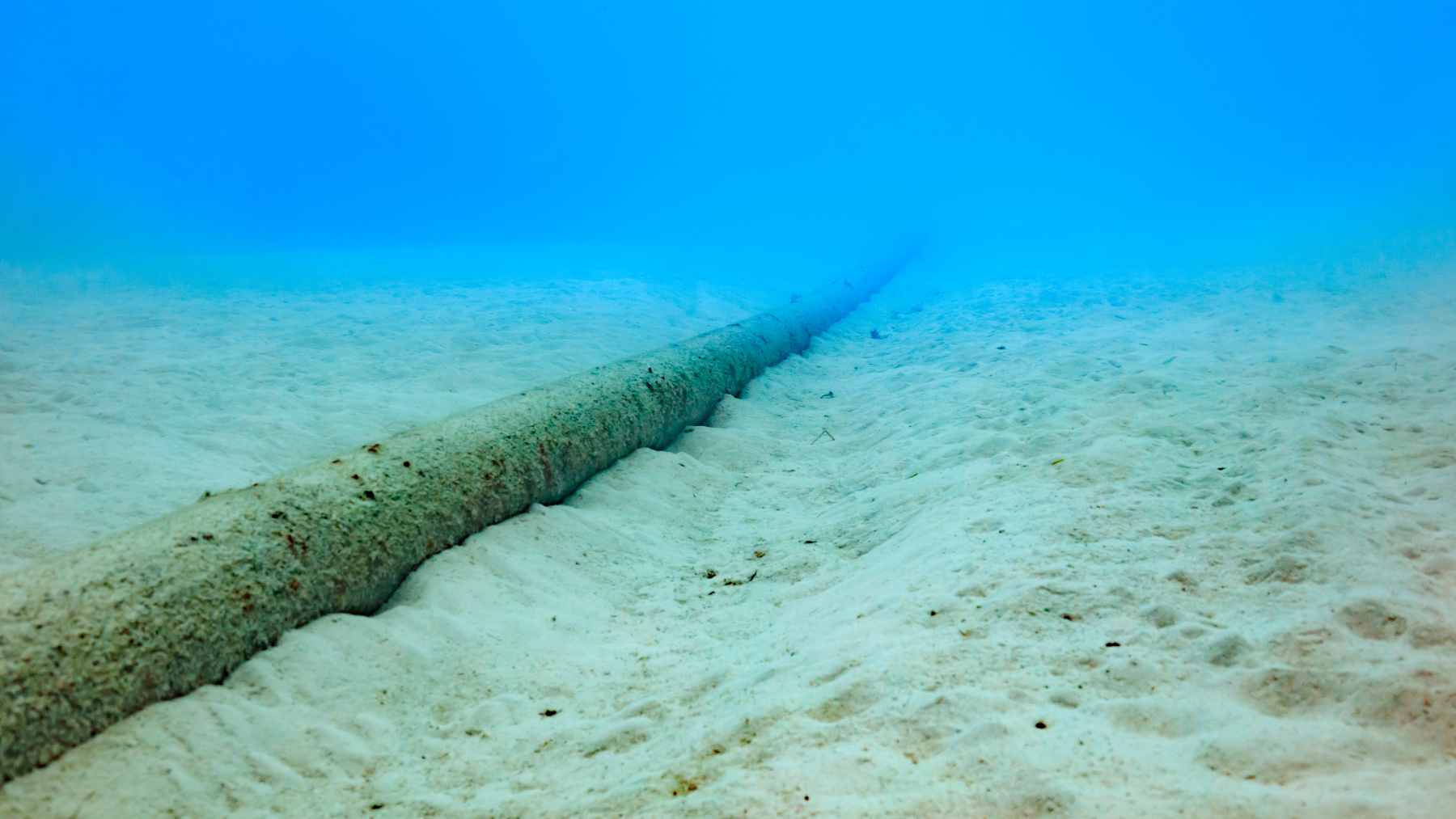
Chile has given Google’s Humboldt cable project a major green light, moving forward a subsea fiber system that could reshape how data travels between Latin America, Australia, Asia-Pacific, and Panama.
The approval came from the Regional Commission for Coastal Border Use in Valparaíso, which unanimously backed the installation of a system planned around Las Brisas beach in Santo Domingo.
At first glance, this sounds like another big tech infrastructure story, but it is also an ocean story. The routes are designed to avoid Chilean marine protected areas, benthic resource management zones, and traditional fishing grounds, turning Humboldt into a test of how countries can build digital highways while trying, for the most part, to stay out of the sea’s most sensitive spaces.
A new Pacific data route
The project approved in Valparaíso includes more than 13,000 miles of submarine infrastructure. One cable would connect Santo Domingo with Sydney, Australia, across roughly 9,200 miles, while another would link Santo Domingo with Panama City across about 4,040 miles. Both are planned with 16 fiber pairs.
That matters because undersea cables are the quiet machinery behind everyday life. Messages, bank transfers, cloud services, streaming, scientific data, and business platforms all depend on these thin lines resting across the seabed. You do not see them when you open a map app or send a photo, but they are there, doing the heavy lifting.
Google announced Humboldt in 2024 with Desarrollo País of Chile and French Polynesia’s Office of Posts and Telecommunications, describing it as the first direct subsea cable route between South America and Asia-Pacific. The company said the route would link Chile, French Polynesia, and Australia, adding resilience and geographic diversity to Pacific connectivity.
Why Chile wants it
Chile has been chasing a direct digital link with Asia-Pacific for years. Google said that goal had been an ambition of the Chilean government since 2016, and officials have framed Humboldt as a way to turn the country into a gateway for data moving between Asia-Pacific and Latin America.
Once operational, that means lower dependence on older traffic routes, more redundancy if another cable fails, and possibly better latency for businesses, researchers, and public services. It also gives Chile a stronger claim in the race to attract data centers, cloud investment, and advanced tech services.
Desarrollo País lists the broader Humboldt link between Chile and Australia at about $400 million. The latest Chilean coastal approval has been reported with an $11.5 million investment figure tied to this phase, with 99% participation by Google and 1% by Desarrollo País.
That distinction is important, because the local authorization is one piece of a much larger network plan.
The ocean question
So, what happens when a data cable crosses the Pacific?
Submarine telecom cables generally have a smaller physical footprint than many other ocean industries, but that does not make them invisible to the environment.
The National Oceanic and Atmospheric Administration (NOAA) notes that environmental impacts from fiber-optic submarine cables are generally considered modest, though special care is needed during trenching and laying.
A 2025 UNEP-WCMC report with the International Cable Protection Committee looked at how installing, operating, and removing submarine telecom cables can affect marine biodiversity. The point was not to stop cables, but to understand their pressures and improve mitigation as the global cable network expands.
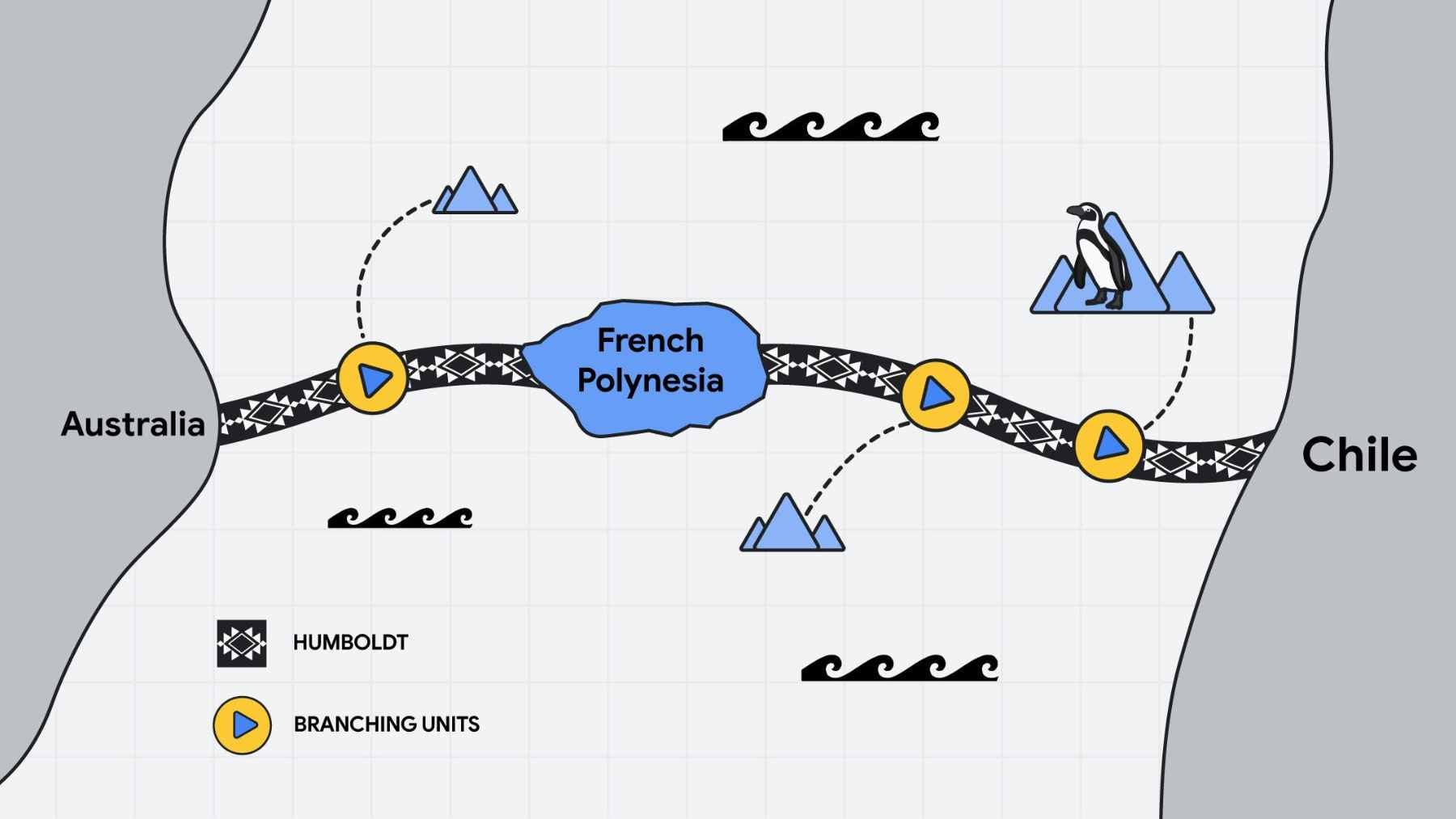
That is where Humboldt’s route planning becomes newsworthy beyond tech circles. Chilean reports say the two planned routes avoid the marine protected areas around Juan Fernández and Desventuradas, as well as benthic resource management areas and historic artisanal fishing grounds.
It is a logistical detail, yes, but it is also the difference between a project that simply cuts across a map and one that tries to work around existing ecological and local economic zones.
Small footprint, real risks
Scientists still warn that cable burial can disturb seabed sediment and stored carbon, especially in shallower areas where cables are more likely to be buried for protection.
One study in Nature Communications estimated that global cable burial has disturbed between 3.1 million and 12.5 million tons of organic carbon, a figure the authors describe as far below bottom fishing but still worth counting.
That does not mean Humboldt is automatically a major environmental threat. It means route selection, installation methods, and monitoring matter. Like a road through a forest, the damage depends heavily on where it goes, how it is built, and whether anyone checks the work after the machines leave.
There is another practical issue, too. Fishing, anchoring, natural hazards, and abrasion can damage cables after they are installed. The International Telecommunication Union says submarine cables carry more than 99% of international data exchanges, while 150 to 200 faults occur globally each year.
A security asset under the sea
That vulnerability is why subsea cables are no longer just a telecom topic. They are now part of business continuity, national security, and defense planning. A cable break can slow commerce, interrupt services, and force traffic onto longer backup routes.
For Chile, Humboldt could add another path across the Pacific and reduce the pressure on existing routes. For Google, it adds capacity and control in a region where cloud demand, artificial intelligence, and scientific data are all growing.
For the public, the result could feel much simpler, with faster services and fewer disruptions.
There is a trade-off in every new line across the seafloor, however. The digital economy wants more capacity, while coastal communities and environmental regulators want proof that the ocean is not being treated as empty space. At the end of the day, Humboldt’s importance may rest on both points.
What happens next
The project is expected to move toward installation in late 2026, with operations planned from 2028. Eduardo Wegener, legal director at Amebec, said the unanimous vote helps the project move toward the maritime concession needed to meet that schedule.
For now, the biggest takeaway is not just that Google is building another cable. It is that Chile is trying to become a Pacific digital hub while navigating a more crowded, more protected, and more strategically important ocean.
The official statement was published on Gob.cl.