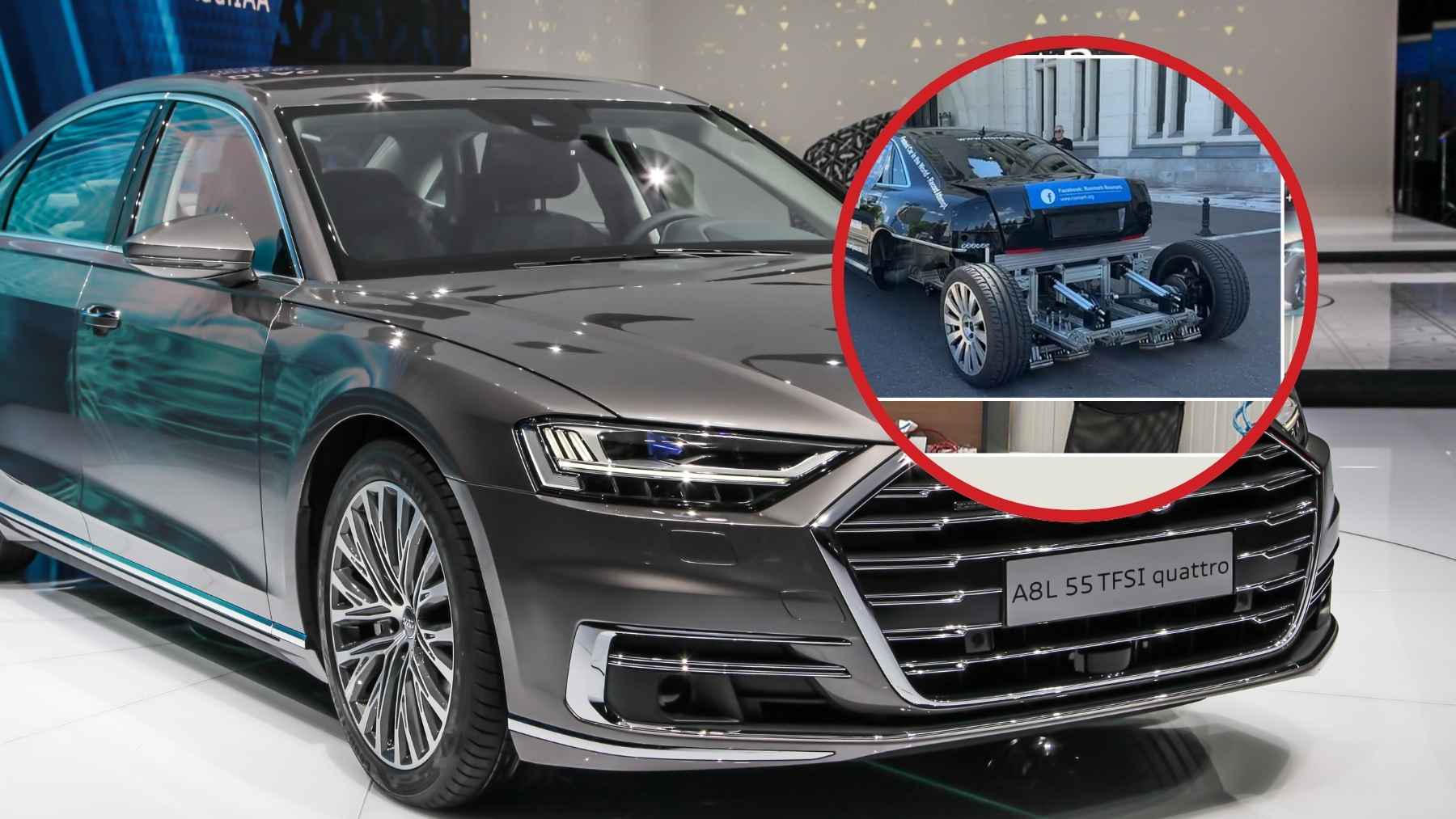
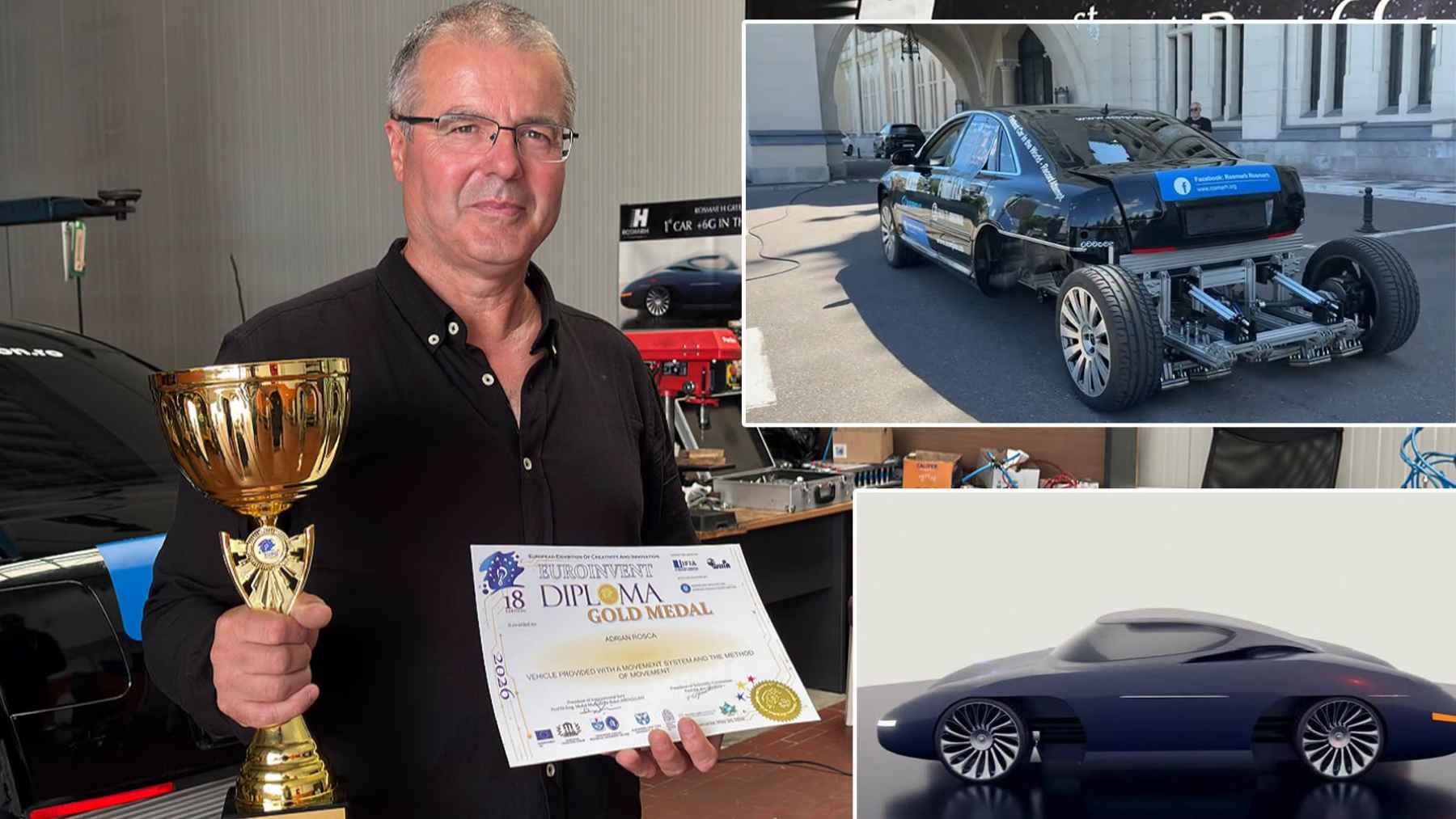
A stripped Audi A8 in Romania is moving without a gasoline engine, electric motor, or conventional transmission. Instead, large pneumatic cylinders make its rear wheels slide backward and forward, pulling the luxury sedan ahead in noisy, uneven steps. It looks less like a car accelerating and more like a machine learning to walk.
The prototype, developed by Rosmar H under Romanian inventor Adrian Roșca, is advertised with extraordinary figures, including 0 to 62 mph in 0.3 seconds and a maximum speed approaching 373 mph.
Yet the footage described in the available material shows a slow, jerking crawl, and no independently certified test accompanies those numbers. For now, this is best understood as an experimental mobility platform, not a proven zero-emission hypercar.
How the Audi moves
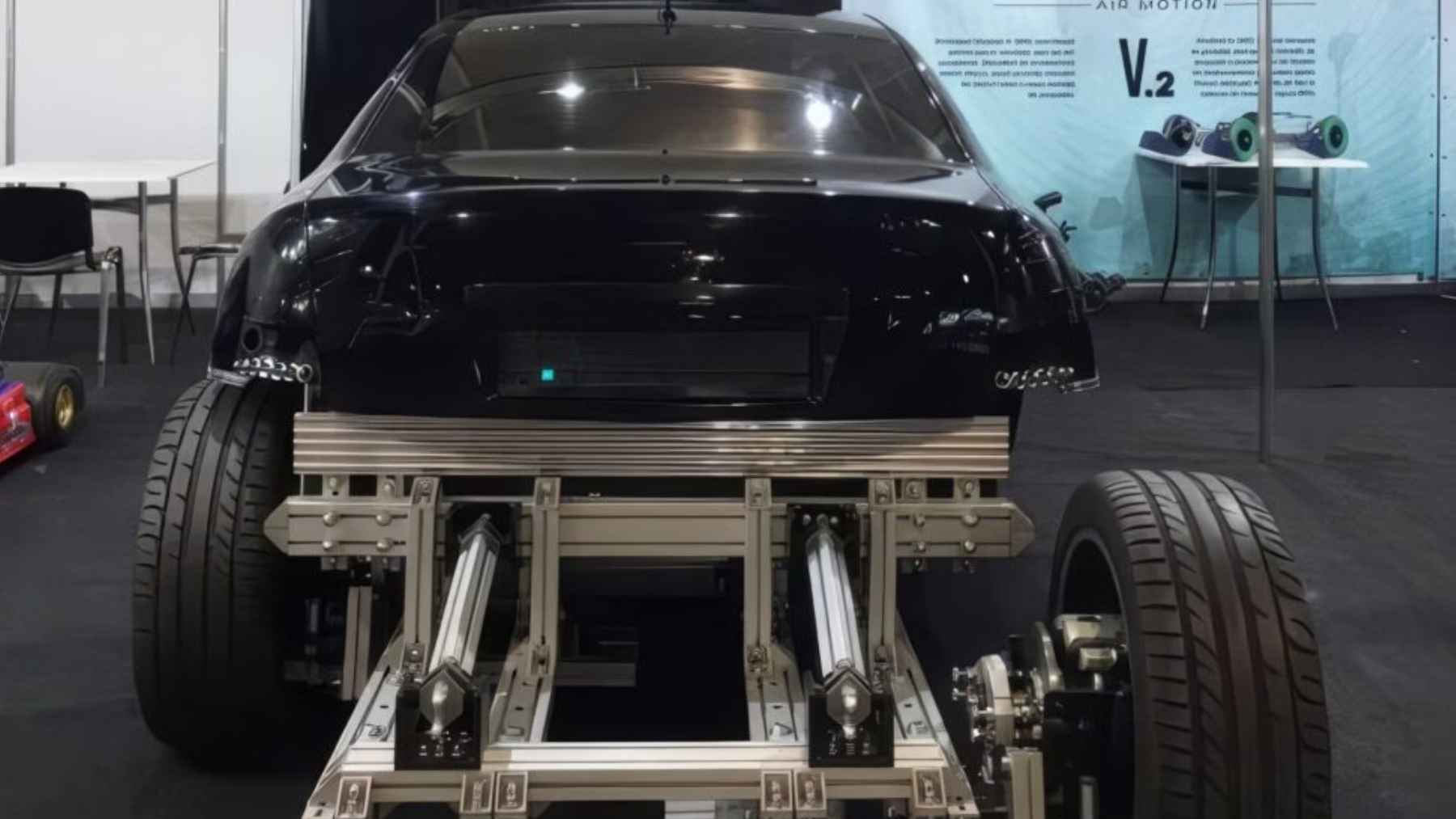
Rosmar H began with an older Audi A8 and removed the internal-combustion engine, gearbox, and conventional driveline. The space left behind now holds large cylinders, air lines, and the equipment needed to control the pneumatic system. This is closer to factory machinery than normal automotive architecture.
The key components sit at the back of the car. Each rear wheel can move slightly forward and backward relative to the body, while a pneumatic actuator changes the position of the wheel or chassis in a controlled sequence. One wheel is held in place while the system shifts the car, then the mechanism resets and repeats the process.
Seen from outside, the movement is immediately recognizable. The wheels work in alternating pulses, accompanied by sharp bursts of compressed air, so the A8 advances in short steps instead of rolling smoothly. That explains the strange caterpillar-like motion described in the footage.
The patent reveals a more practical purpose
Roșca filed the underlying Romanian patent in 2016, with a granted version published in 2020. The document describes a system intended to move a vehicle after it becomes stuck in mud, snow, ice, or sand, as well as on slopes steeper than 45 degrees. That purpose is very different from powering a high-speed road car.
In that context, the slow and deliberate movement starts to make more sense. A sliding wheel could reach firmer ground while other wheels hold the vehicle, allowing the chassis to inch forward when normal tire rotation only produces wheelspin. A snowbank does not care about a 373 mph claim, it cares whether a wheel can find grip.
This makes the concept easier to imagine as an auxiliary traction or recovery system for specialized vehicles than as a replacement for a normal highway drivetrain. That remains an inference, not a demonstrated commercial application.
The headline numbers need real testing
Rosmar H promotes a 0 to 62 mph time of 0.3 seconds and a top speed close to 373 mph. Reaching 62 mph that quickly would require an average acceleration of about 9.4 times the force of gravity, even before considering how the launch develops over those three-tenths of a second. That is not a small engineering detail.
The prototype shown publicly does not demonstrate anything close to that performance. A credible validation would require repeatable instrumented runs, independent timing, the vehicle’s mass, reservoir pressure and volume, and clear information about how much external energy was used to compress the air.
Until then, the figures are marketing targets rather than verified results.
There are also practical questions about tire grip, structural loads, braking, and occupant safety. A claim of this scale needs more than a dramatic number on a website.
Compressed air is not free energy
Compressed air is an energy-storage medium. A compressor must first use electricity or another power source to force air into a tank, and some of that energy is lost as heat before the vehicle even moves.
Routing air from one retracting cylinder toward another may recover part of the system’s energy, but it cannot eliminate losses from friction, pressure drops, and repeated conversions.
The U.S. Department of Energy notes that more than 80% of the input energy in typical industrial air compressors can be lost as heat. That figure is not a measurement of the Rosmar H prototype, but it shows why environmental claims must include the full energy chain. No exhaust pipe does not automatically mean no emissions.
If the compressor runs on low-carbon electricity, the upstream footprint could be reduced. If it draws power from a fossil-heavy grid, part of the pollution simply occurs at the power plant instead of behind the car. In practical terms, the air tank is more like a battery than a source of free fuel.
What the prototype has already achieved
The Audi does accomplish something tangible. It shows that a full-size passenger car can be moved by sequential pneumatic actuators and sliding wheel assemblies without using its original powertrain. Building real hardware also exposes control, sealing, synchronization, and traction problems that a computer rendering cannot reveal.
What it has not yet proved is equally important. There is no demonstrated evidence in the available material that the system is road-ready, energy-efficient, or capable of the advertised acceleration and speed. Its strongest technical case may still lie in low-speed traction, recovery, or experimental mobility.
That is still a worthwhile experiment. The real breakthrough would be a transparent test, not a louder promise.
The official project information was published on Rosmar H’s website.