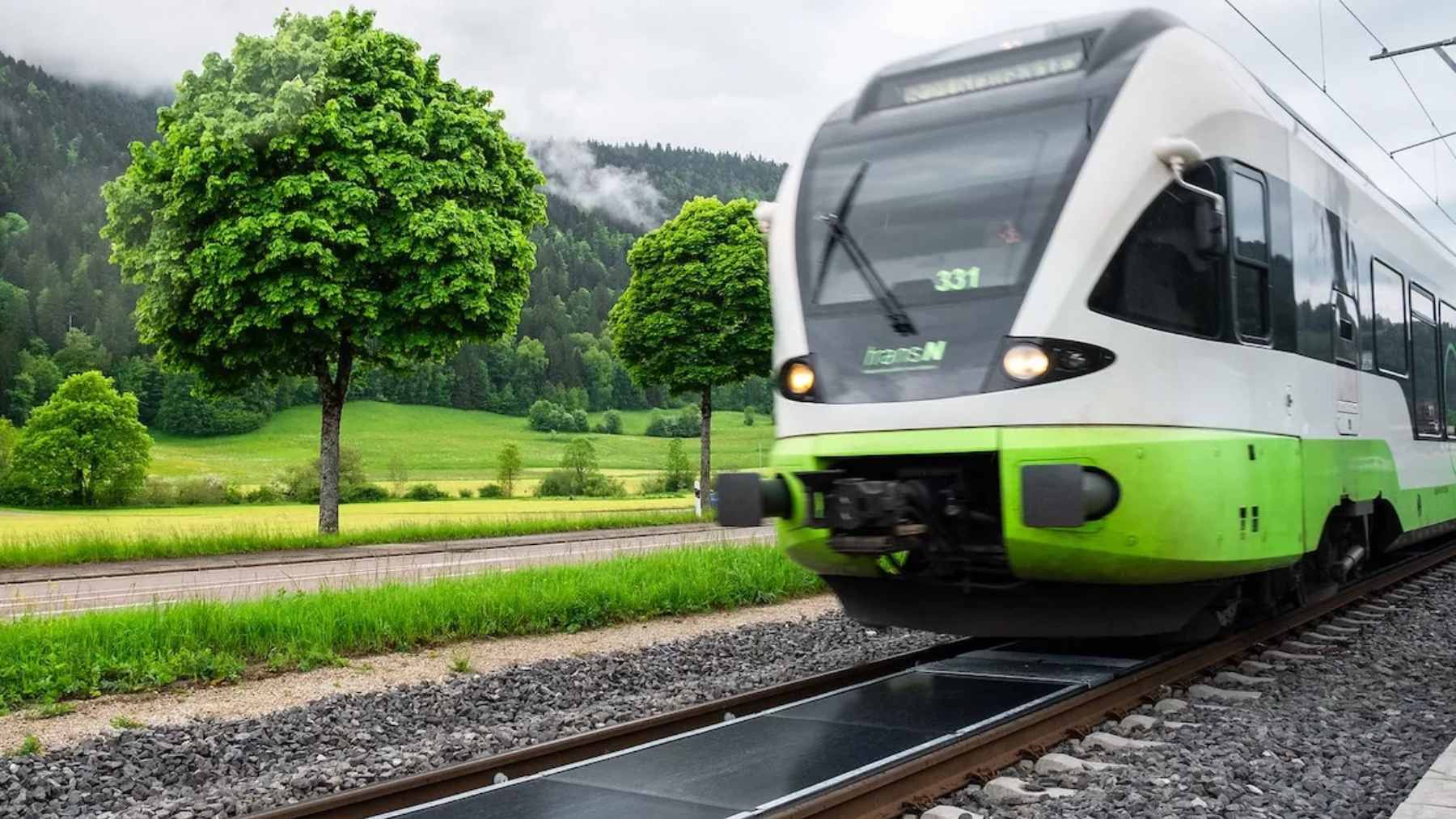
A quiet stretch of active railroad in western Switzerland has spent the past year doing two jobs at once. Along roughly 328 feet of track in Buttes, removable photovoltaic panels have generated more than 16,000 kilowatt-hours of electricity while more than 11,000 trains passed over them without a reported safety or operating conflict.
The result is not a green light to cover every rail line with solar hardware. But it does suggest that Swiss startup Sun-Ways has cleared the first big hurdle by using space that already exists without taking farmland, clearing forests, or competing for rooftops.
The harder question now sits farther down the wire, where distance, voltage, maintenance, and cost will determine whether this clever pilot can become a real energy business.
Solar power beneath daily trains
Sun-Ways inaugurated the installation on April 24, 2025, on TransN’s Line 221 near Buttes station. The pilot uses 48 panels rated at 380 watts each, giving the small plant about 18 kilowatts of installed capacity, and its electricity is fed into the local grid.
Could solar panels really sit beneath regular passenger trains? “We have achieved our objectives, both in terms of railway safety and electricity production,” founder Joseph Scuderi told Swissinfo. TransN also said the equipment had not conflicted with track infrastructure, maintenance, or daily train traffic.
The output is modest in national terms. Still, producing more than 16,000 kilowatt-hours after an interruption of roughly one month for snow and technical work is useful evidence that the setup can function outside a laboratory.
Removability changes the equation
The panels are not permanently locked into the track bed. A module made up of three panels and stretching about 20 feet can be disconnected from the electrical system and removed in roughly 10 minutes with dedicated tools.
That detail matters more than it may sound. Rail crews must replace railroad ties, inspect track geometry, grind rails, and carry out welding, and a renewable energy system that blocks those jobs would quickly become a costly headache.
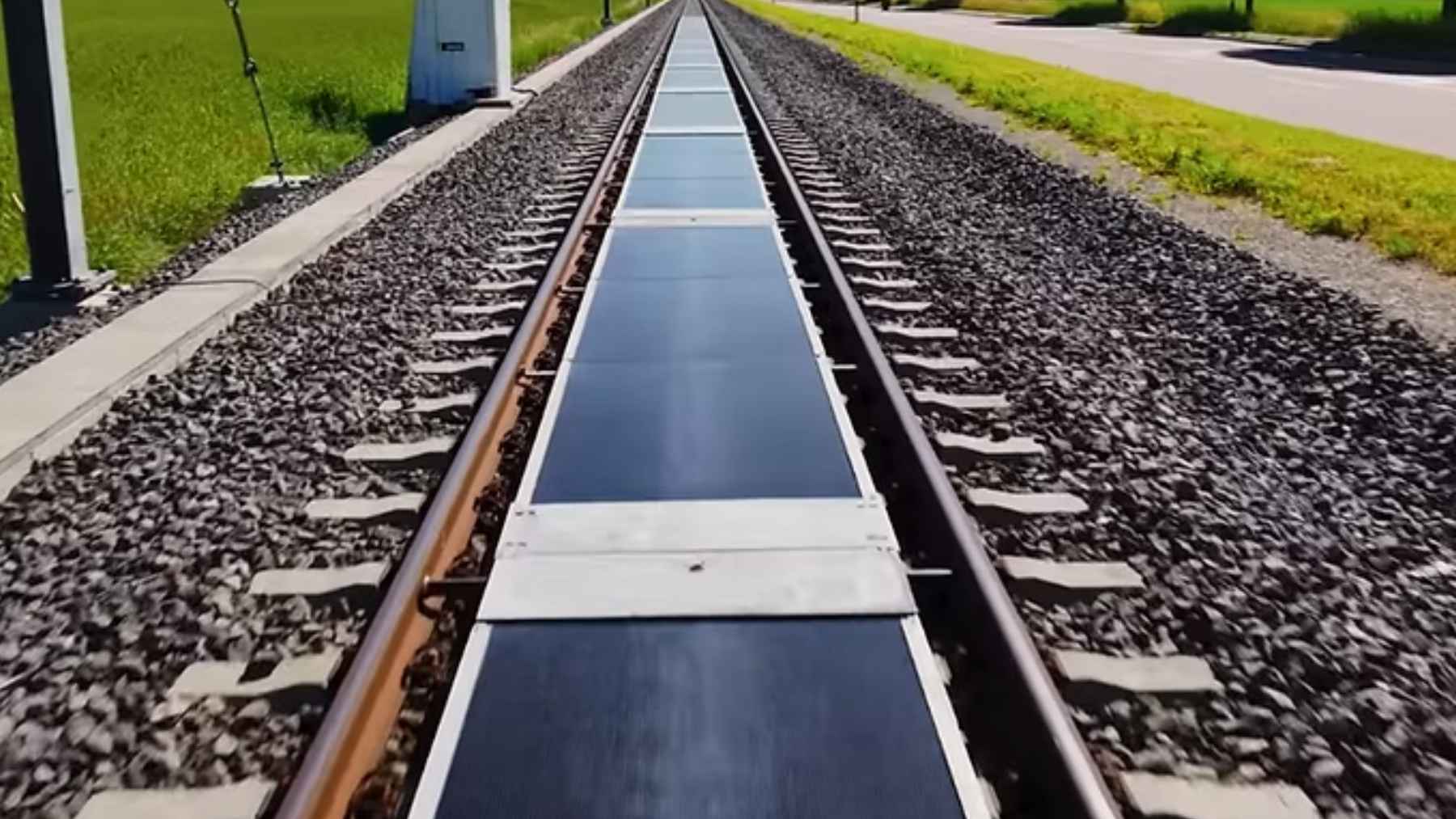
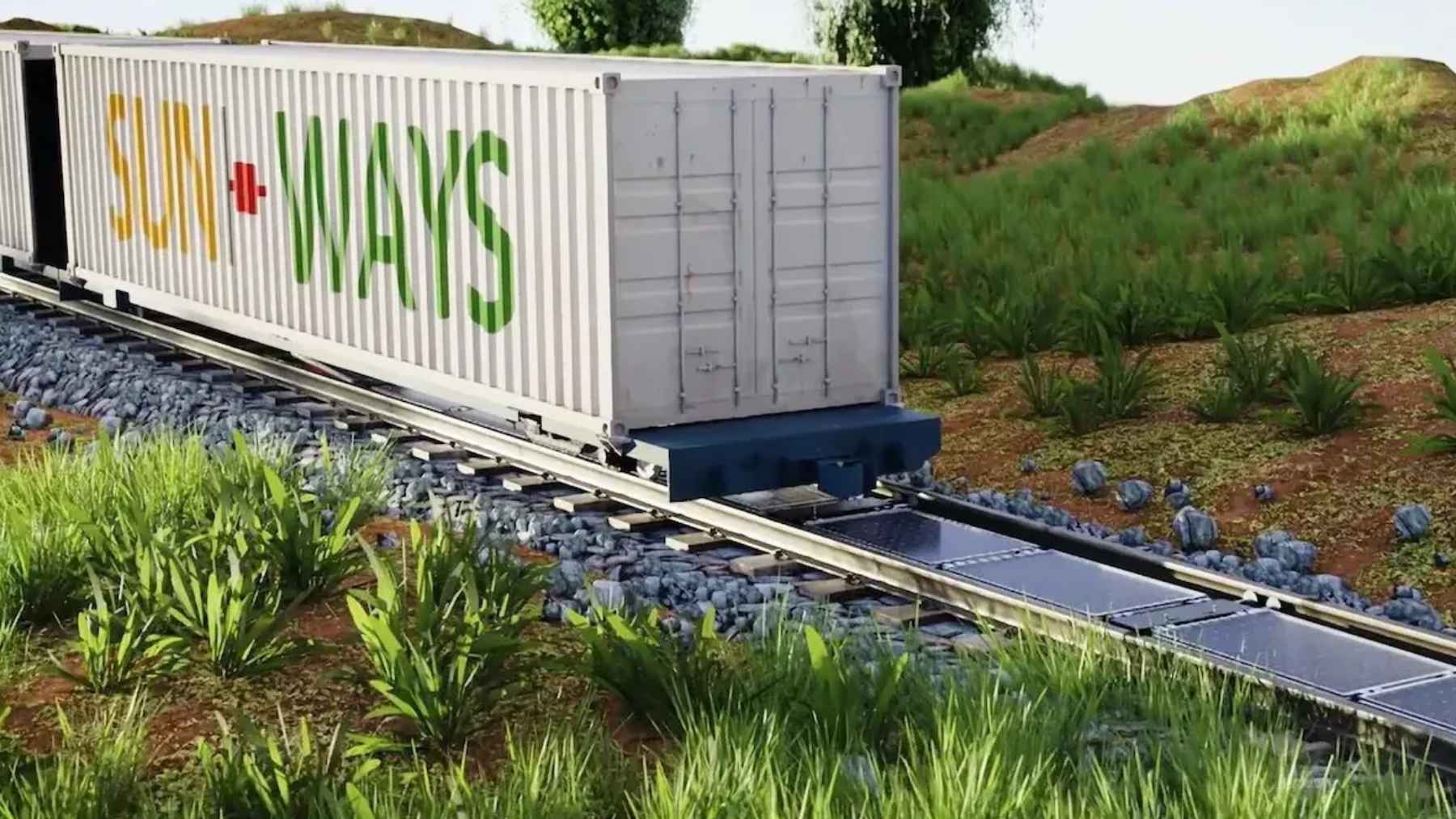
Sun-Ways says a specialized machine developed by Swiss rail maintenance company Scheuchzer can install up to about 984 feet of panels per hour. In practical terms, the company is trying to make solar equipment behave like another maintainable railroad component rather than a permanent obstacle.
Passing trains may help with cleaning
Dust was another obvious concern because dirty panels lose output. Sun-Ways initially considered fitting a cylindrical cleaning brush to the back of a train, but Scuderi said the airflow created by passing trains appeared to sweep dust away on the Buttes section.
Those trains reach speeds of about 56 mph. TransN also told Swissinfo that it had received no complaints from drivers about glare, which had been one of the safety questions surrounding the project.
That does not mean every location will be so forgiving. Flat panels can still be covered by snow, and the cleaning result from one site may not translate to every climate or traffic pattern. Long-term maintenance data will matter as the concept moves beyond one short stretch.
Big potential meets a wiring problem
By Sun-Ways’ estimate, about 3,306 miles of Swiss rail network could be suitable after tunnels and poorly sunlit sections are excluded. At full scale, the company says those corridors could generate up to 1 billion kilowatt-hours a year, equal to roughly 2% of Switzerland’s electricity use or the annual demand of about 300,000 households.
That is the eye-catching number. But what good is a long strip of solar equipment if the electricity cannot be gathered and transported efficiently?
Julien Pouget, an associate professor at the University of Applied Sciences of Valais, has warned that current technology is not well suited to stretches longer than about 1,640 feet without a specific electrical architecture.
The system would need to raise voltage so power could travel longer distances, shifting the central challenge from finding space to designing an economical grid connection.
Rail companies are paying attention
France’s SNCF Group signed a collaboration agreement with Sun-Ways in November 2025 and announced it in February 2026. The French operator will have access to pilot data through April 2028 as it studies installation, removal, glare, track inspection, dirt buildup, output, and the effect on maintenance.
Sun-Ways has also reported discussions with Italy’s Rete Ferroviaria Italiana over a possible pilot, while projects or contacts have emerged in South Korea and Indonesia. That international interest makes sense because rail corridors offer the same unused strip of land in country after country.
Still, attention is not the same as approval. The Swiss Federal Office of Transport set a three-year test period, and Sun-Ways is seeking final authorization sooner. For now, the project remains a controlled trial.
What the pilot really proves
For now, Buttes is a demonstration, not a nationwide power plant. Its strongest result is not the volume of electricity produced but the evidence that trains, maintenance crews, and removable solar modules can share the same narrow space for more than a year.
At the end of the day, the concept turns an overlooked piece of infrastructure into a second-use asset.
Whether it becomes common will depend on the less glamorous details that decide most energy projects, including grid design, installation cost, winter performance, maintenance time, and regulatory approval.
The first-year project update was published on Greater Geneva Bern area.