Denmark crossed a notable energy threshold on Saturday, July 4, 2026, when domestic biogas production exceeded the country’s total gas consumption for a full day. It was the first time this year that renewable gas output was large enough to cover the entire national gas balance.
Most households would not have noticed a thing when a boiler or factory burner switched on, but the numbers marked a real shift.
This did not mean Denmark’s whole energy system ran on biogas. It meant the country produced at least as much biogas as homes, businesses, and industry used from the gas system during a low-demand summer day.
Lars Kaspersen, CEO of Biogas Danmark, said the result showed full coverage is “possible in the long term,” even though fossil natural gas will return to the mix when temperatures fall.
A record built through spring
The July milestone did not arrive out of nowhere. Biogas supplied 51% of Danish gas use in April and nearly 70% in June, compared with roughly 40% across the year. Steady production met falling demand, and the two lines finally crossed.
Still, there is an important detail behind the 100% figure. Biogas and natural gas mix in the same network, so this is a national accounting balance rather than a claim that every burner received only renewable molecules. Denmark produced as much upgraded green gas as it consumed that day.
How waste becomes grid gas
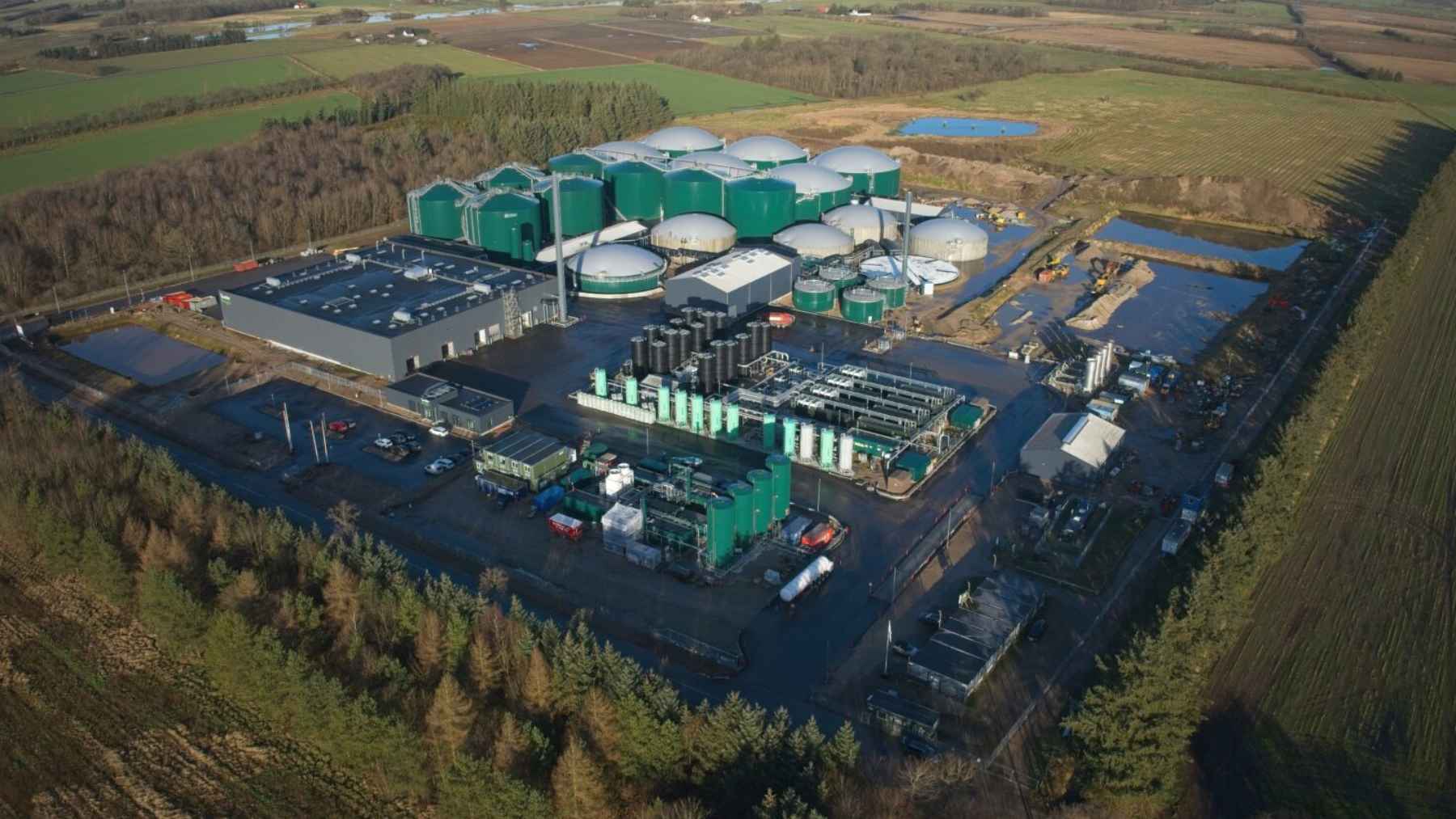
Biogas starts with organic material that might otherwise be treated as waste, including manure, straw, food scraps, crop residues, and industrial byproducts. Inside sealed digesters, microbes break down the material without oxygen and create a methane-rich gas, along with a nutrient-bearing residue known as digestate.
The gas is then cleaned and upgraded so it can enter the same pipelines used for natural gas.
Denmark already has the infrastructure to do this at scale. By April 2026, 60 biogas plants were connected to the gas grid, and about 23 billion cubic feet of biogas entered the network during 2025. That gas can be moved across the system or stored for later use, which gives it a different kind of flexibility from wind and solar power.
The 2030 target is harder
Denmark’s political ambition is to make all gas green by 2030, and Biogas Danmark says available biomass resources could nearly triple current production. So is the finish line already in sight? Technically, perhaps, but the timetable is the hard part.
The industry group is calling for tax relief on biogas, a requirement for a minimum share of green gas, and faster permitting. Kaspersen says a plant can take about 18 months to build, while securing permission often takes about three and a half years. The clock is moving faster than the permitting process.
The Danish government’s own 2026 frozen-policy outlook is more cautious. Under measures already approved, upgraded biogas is projected to overtake pipeline gas consumption in 2035, three years later than the previous estimate. The ministry points to higher expected gas use and lower projected biogas production as the main reasons.
Climate gains need tight controls
The environmental case is strongest when biogas captures methane from manure and food waste that could otherwise escape into the atmosphere, while also replacing fossil gas. Digestate can return nutrients to farmland, giving the system a useful circular benefit. But renewable does not automatically mean impact-free.
The International Energy Agency estimates that methane leakage from agricultural biogas plants can range from 2% to 5.5%. Even small leaks matter because methane is a powerful warming gas, and lost fuel also means lost revenue. That makes leak detection, equipment maintenance, and careful digestate storage essential to the climate math.
Winter remains the real test
Summer helped create the record because homes needed less heat and some industrial demand was lower. When cold weather returns, consumption can jump while biogas production remains comparatively steady. Unless Denmark adds capacity, reduces demand, or stores more renewable gas for peak periods, natural gas will still be needed.
That does not make the one-day result a statistical curiosity. It shows that an established gas network can absorb a high share of locally produced renewable gas without asking consumers to change how they use their equipment. One day is proof of capability, not proof of completion.
What Denmark has really proved
The milestone matters beyond climate accounting. More domestic biogas can reduce exposure to fossil-fuel markets, create value from agricultural and food waste, and preserve a flexible fuel that can be stored until demand rises. The gas grid becomes a bridge between waste management, farming, business, and energy security.
The July 4 result is a glimpse of what that bridge could look like all year, but reaching it will require faster decisions, more projects, lower gas demand, and strict control of methane leaks. One warm Saturday opened the door.
The statement was published by Biogas Danmark’s LinkedIn page.