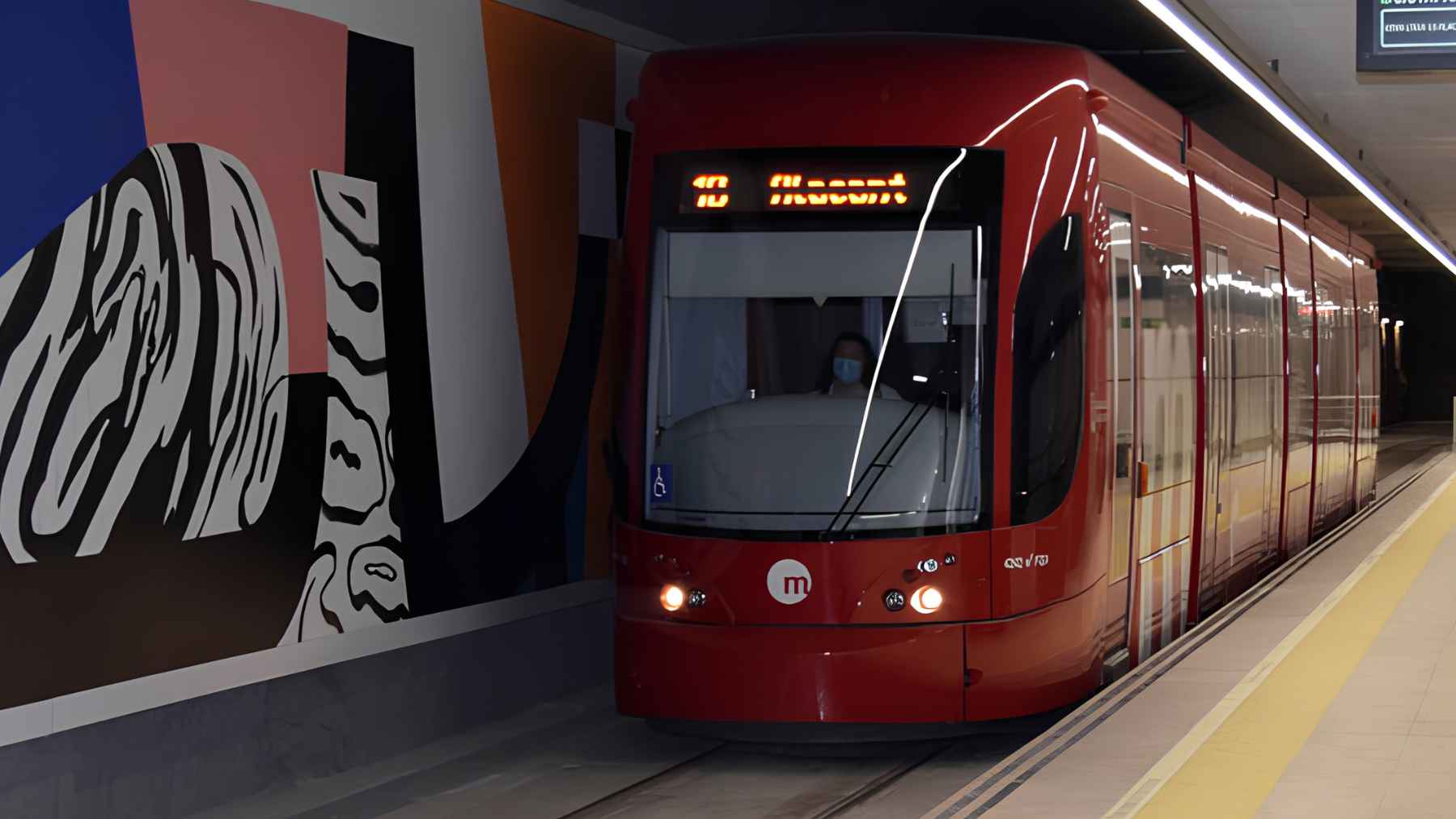
Valencia is preparing one of the biggest rewrites of its metro and tram map in decades. The most advanced plans would carry new services toward Hospital La Fe and the waterfront, while longer-term links could return trams to the historic center and connect northern neighborhoods more directly.
But not every colored line on the future map has the same status. Lines 11 and 12 are included in Ferrocarrils de la Generalitat Valenciana’s current investment program, while the Central Market extension and the much-requested Line 14 remain at earlier planning or political proposal stages.
A network built around daily life
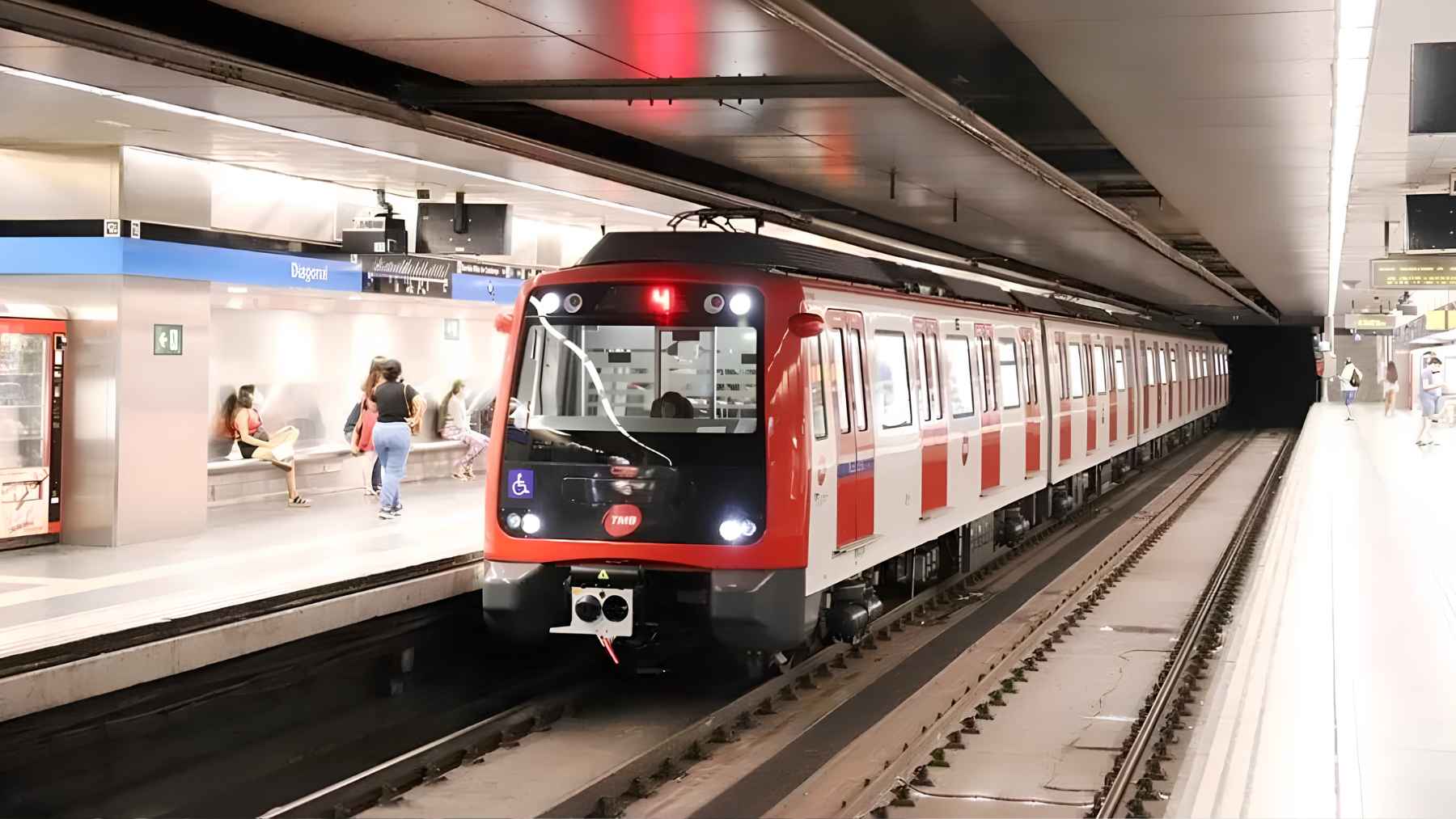
Metrovalencia carried more than 91.6 million passengers in 2025, even as the system continued recovering from the devastating 2024 floods. More than 19% of riders also transferred between metro and tram lines, which helps explain why planners are chasing more direct journeys.
The announcement says the program is meant to deliver “quality, efficiency, and sustainability,” but riders will judge it in simpler terms. A hospital appointment, an early shift near La Fe, or an afternoon by the waterfront becomes easier when passengers do not have to cross platforms, study a map, and hope the next connection arrives on time.
Line 11 heads for the waterfront
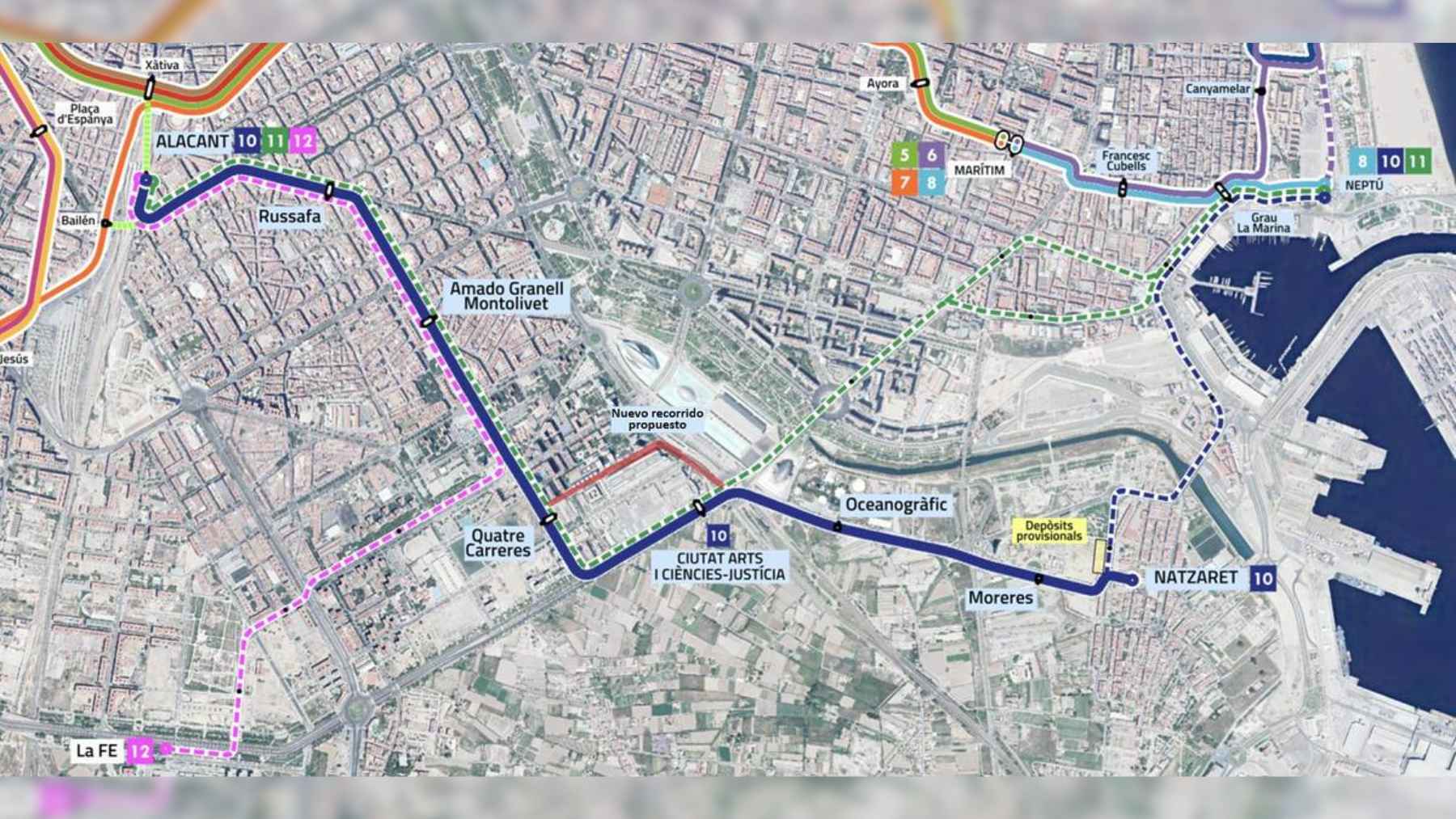
The proposed Line 11 would branch from the Line 10 corridor and add about 1.9 miles of double track with four stops. Its route would cross the Assut de l’Or bridge, continue through the Menorca, Baleares, Juan Verdeguer, and J.J. Dómine corridors, and connect with the existing Line 8 at Grau-La Marina.
That would strengthen public transportation between the City of Arts and Sciences, developing residential areas, the marina, and Valencia’s maritime districts. Could it replace every car journey to the coast? Of course not, but a frequent one-seat ride can make leaving the keys at home feel like the easy choice rather than a sacrifice.
Line 12 reaches Hospital La Fe
Line 12 is designed around a different daily need. It would share part of Line 10 from Alacant, then continue through Hermanos Maristas, cross Ausiàs March, serve Malilla, and reach Hospital La Fe with four new stops.
The full journey would cover roughly 2.5 miles, including about 1.2 miles of new dedicated track, under the published proposal. A planned interchange with city buses at the hospital would also help workers, patients, and relatives complete the last part of their trip without relying on a car.
Line 10 could reopen the center
One small piece of the future network is already visible under the city. The pedestrian passage between Alacant and Xàtiva opened in December 2025, creating an indoor link about 850 feet long that was engineered so it could eventually be adapted for a double-track Line 10 extension.
Farther north, an informative study for a surface connection between Empalme and Pont de Fusta was awarded in March 2026, while a later underground phase could pass the unused station near the Central Market. So when will riders board a tram beneath the market? There is no firm answer yet.
The hidden test is capacity
Most passengers will notice new stations, but the less glamorous issue lies below downtown. Several services share limited central infrastructure, and adding more trains without creating room for them could move congestion from the street to the rails.
Earlier plans described a second tunnel between Bailén and Alameda. The latest FGV program is more cautious, listing a capacity upgrade between Alameda and Colón as a project to be designed and planned, alongside the Empalme to Pont de Fusta connection.
FGV’s 2026 to 2030 program is worth about $957 million at the European Central Bank’s July 22, 2026 reference rate. It also includes 22 new trams across Valencia and Alicante and targets a base interval of 12 minutes on most above-ground services, because a new route is only useful when the vehicle actually shows up.
Line 14 remains on paper
Line 14 is the project many residents in Xirivella, Alaquàs, Aldaia, Mislata, and Barri del Crist are watching most closely. Socialist representatives requested about $24 million in multiyear regional funding in June 2026 to begin studies and design work, saying the connection could improve mobility for more than 100,000 people.
That request does not mean the line has been approved, funded, or scheduled. It is not listed among the new lines being launched in FGV’s current 2026 to 2030 action plan, so residents should treat it as an active political proposal rather than a promised service.
Figures cited by municipalities and the regional government in 2026 put private-vehicle use above 70% in Alaquàs, Aldaia, and Xirivella. Better rail or high-capacity bus service could therefore have an outsized effect on traffic and emissions.
Cleaner travel depends on execution
FGV estimates that its Valencia and Alicante networks together avoided around 93 million private-car trips in 2024. The operator also calculated that those journeys prevented roughly 130,000 U.S. tons of carbon dioxide emissions over the year.
New rail infrastructure has an environmental cost of its own, including construction materials, noise, disrupted streets, and possible pressure on urban trees and public space. That is why the greener outcome depends on careful design and on whether the finished network is reliable enough to draw people out of cars for the most routine journeys.
A transit map is only a promise on paper. The real transformation will come when funding, engineering, public consultation, construction, and dependable service turn those lines into trips people can use every morning.
What passengers should watch next
Lines 11 and 12 have the clearest place in the current official program, but detailed design, contracting, construction schedules, and opening dates still matter. The Line 10 links require further planning, and Line 14 first needs a formal government commitment.
For Valencia, the opportunity is bigger than getting from one neighborhood to another a little faster. Done well, the expansion could give more families a realistic alternative to a second car, reduce traffic on crowded approaches, and make the city’s growth less dependent on exhaust pipes.
The latest action plan was published by FGV.