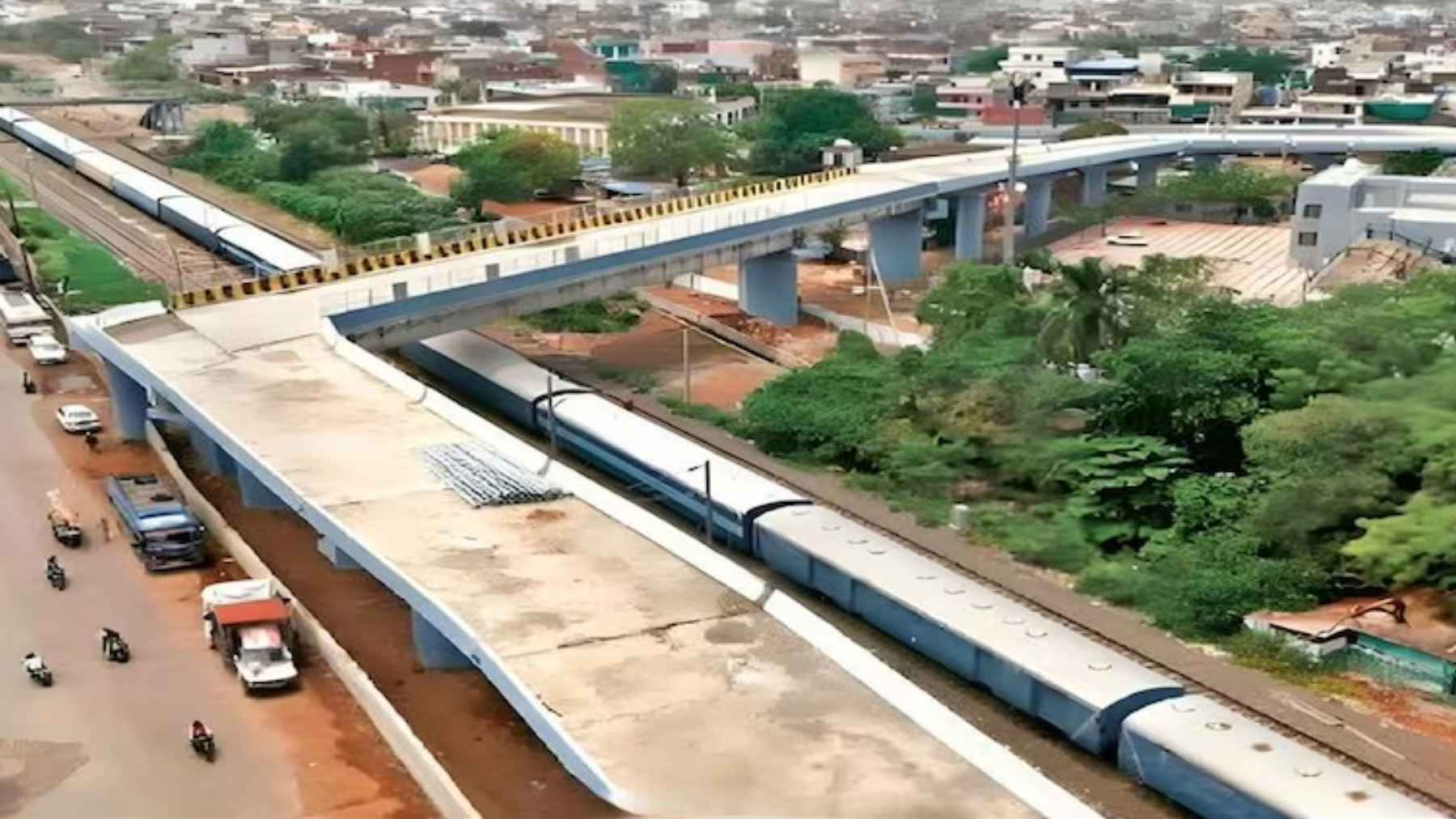
A new railroad overpass in Bhopal, India, was supposed to shorten daily trips for about 300,000 people.
Instead, the roughly $2.1 million project became a national controversy after photos showed what looked like a near right-angle bend at the top, prompting the Madhya Pradesh government to suspend seven engineers and blacklist the builder and design consultant. The dollar figure is based on mid-2025 exchange rates.
Then came a twist. A court-appointed expert measured the turn at 118° 40’, close to the 119° angle shown in the approved drawings, but that finding did not erase the safety question. The deeper failure was less photogenic and more important, because the state’s public works minister later said the slope and curve transitions were the technically flawed parts.
A bridge meant to fix traffic
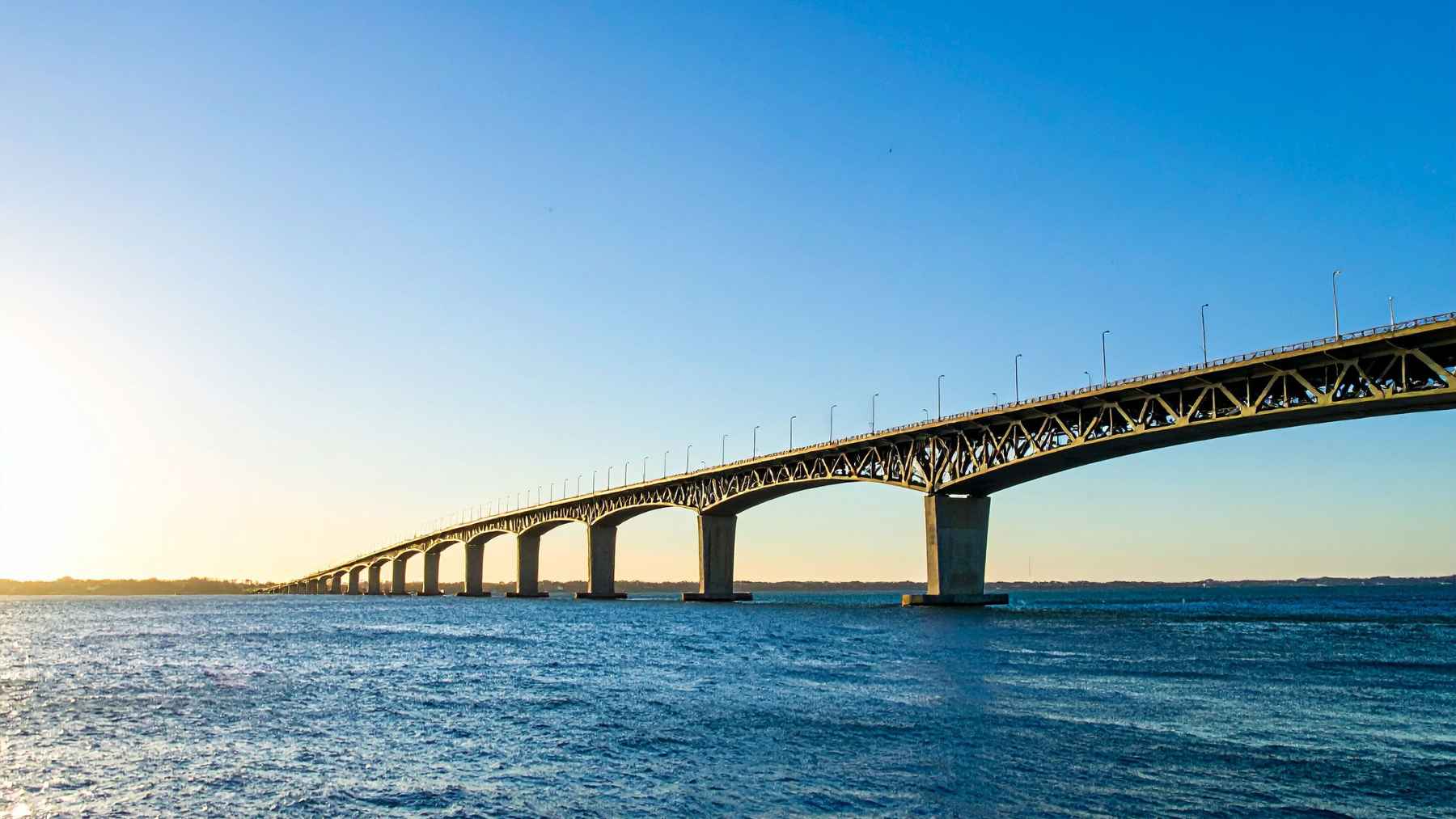
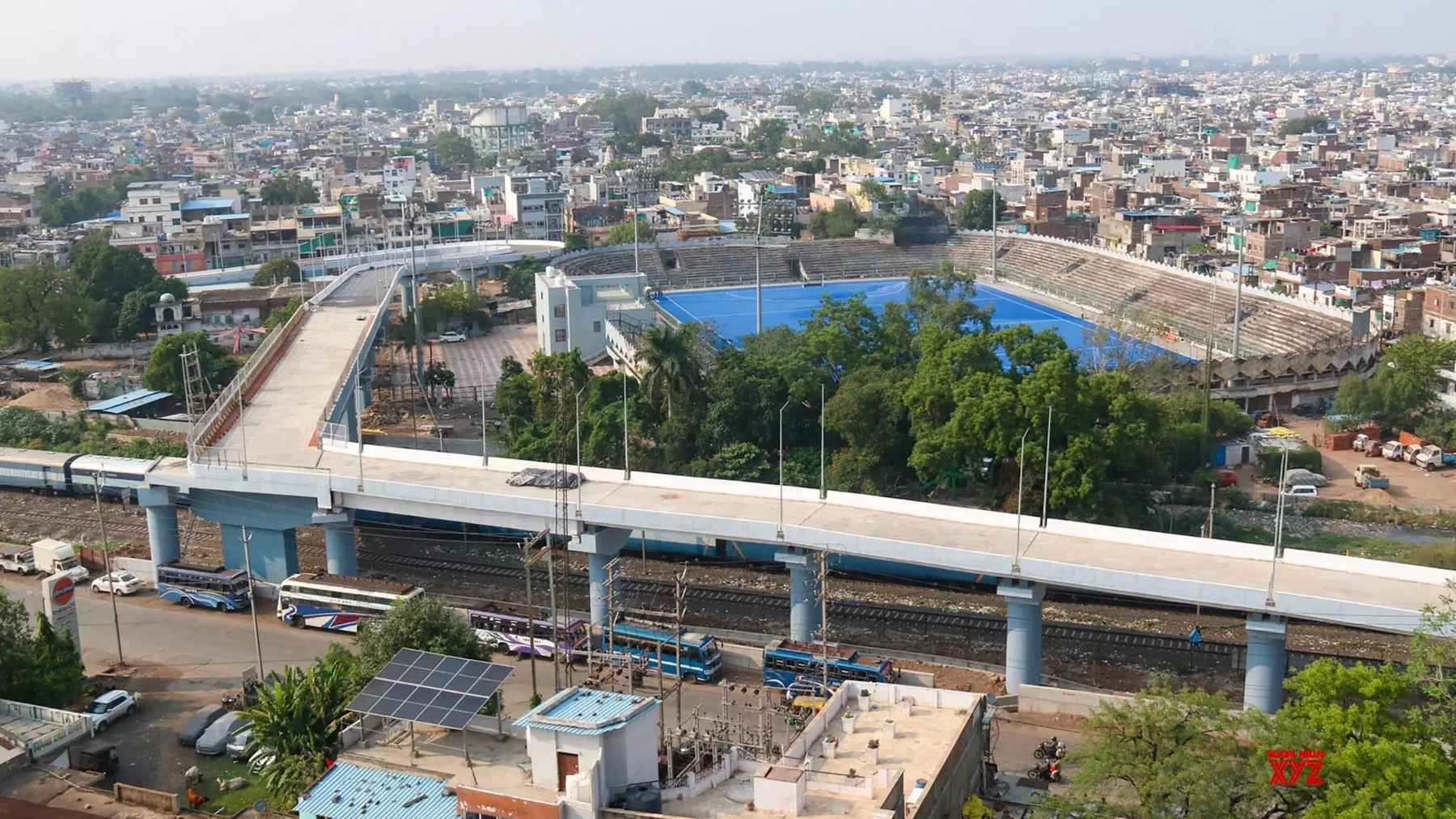
At 2,126 ft. long and roughly 28 ft. wide, the Aishbagh Rail Over Bridge was intended to connect Mahamai Ka Bagh, Pushpa Nagar and the station area with New Bhopal. It was also meant to spare drivers from waiting at a railroad crossing or taking a long detour, a small daily frustration multiplied across a crowded city.
The bridge was scheduled to open on June 15, 2025, after years of delay. Before the ceremony, however, images of its abrupt turn spread online and residents questioned whether cars, buses and larger vehicles could negotiate it safely.
The government’s response was immediate. Seven Public Works Department engineers, including two chief engineers, were suspended, a retired superintendent faced a departmental inquiry, and officials said the bridge would open only after corrections were completed.
The angle changed the case
The viral label was simple but wrong. A professor from the Maulana Azad National Institute of Technology, appointed by the Madhya Pradesh High Court, measured the site at 118° 40’ 1”, while the project drawing specified 119°.
That mattered because the construction firm had challenged its blacklisting. The expert found that the built structure closely followed the General Arrangement Drawing, and the court said that “blacklisting cannot sustain in view of the report.” It questioned why the contractor should be punished for following a government-supplied design.
So, was the public concern misplaced? Not really. A bridge can match its drawing and still leave drivers with a difficult approach, which shifts the central question from who poured the concrete to who approved the road geometry.
Why the turn still mattered
A road curve is not judged by one interior angle. Engineers also examine radius, approach speed, banking, lane width, grade, sight distance and the length of the transition from a straight section into the bend.
India’s urban road design guidance says transition curves are needed so vehicles can enter a circular bend smoothly. They also allow banking and extra lane width to be introduced gradually, rather than asking a driver to make a sudden correction at the last moment.
The everyday version is easy to picture. A driver should feel the road beginning to bend before making the main turn, not meet it like a wall at the end of a hallway. That is why the public works minister’s later explanation matters, since he said the action centered on technically deficient slope and curvature rather than the headline angle alone.
Approval was the weak point
Court reporting shows that the bridge’s main drawing was amended in 2023 and 2024, while a government inquiry found weak coordination between the state and the railways. Officials also pointed to limited land and the nearby metro line as constraints that narrowed the available options.
Constraints are common in dense cities, but they do not remove the need for a safe approach. In the planning phase, coordinated 3D modeling, vehicle-path simulation and an independent road-safety review could have exposed the conflict before the final concrete was in place.
That is the broader business and technology lesson. A project can pass through multiple offices, match an approved file and still fail the people expected to use it, especially when every agency reviews only its own slice of the job.
Indore raised the same question
While Bhopal’s bridge was under scrutiny, another overpass in Indore drew complaints over several sharp turns. The state said the 3,281-ft.-long, 39-ft.-wide structure followed Indian Roads Congress guidance, with curve radii of about 66 ft. against a stated minimum of roughly 49 ft.
A local lawmaker nevertheless asked officials to soften the alignment, while the public works minister defended it as technically approved. That does not prove the Indore bridge is unsafe, but it shows why authorities should publish design speed, curve radius and safety-audit findings before public concern hardens into distrust.
A costly redesign
By April 2026, the Bhopal bridge had still never opened, and the Public Works Department and Indian Railways had agreed to redesign it after a 10-month deadlock. Local reporting in May said all seven engineers had been reinstated while the departmental inquiry continued, leaving accountability unresolved.
Rework also carries an environmental cost. The United Nations Environment Programme says the wider buildings and construction sector produces 34% of global carbon dioxide emissions, while cement and steel are tied to 18%. Avoiding unnecessary demolition, replacement materials and extra truck trips therefore matters beyond the project budget.
At the end of the day, the Bhopal bridge is not a story about whether one angle was 90° or 118°. It is a warning that safe infrastructure depends on the whole journey from design file to driver experience, and that corrections become more expensive once concrete has already set.
The official statement announcing the disciplinary action was published on Madhya Pradesh Public Relations Department.