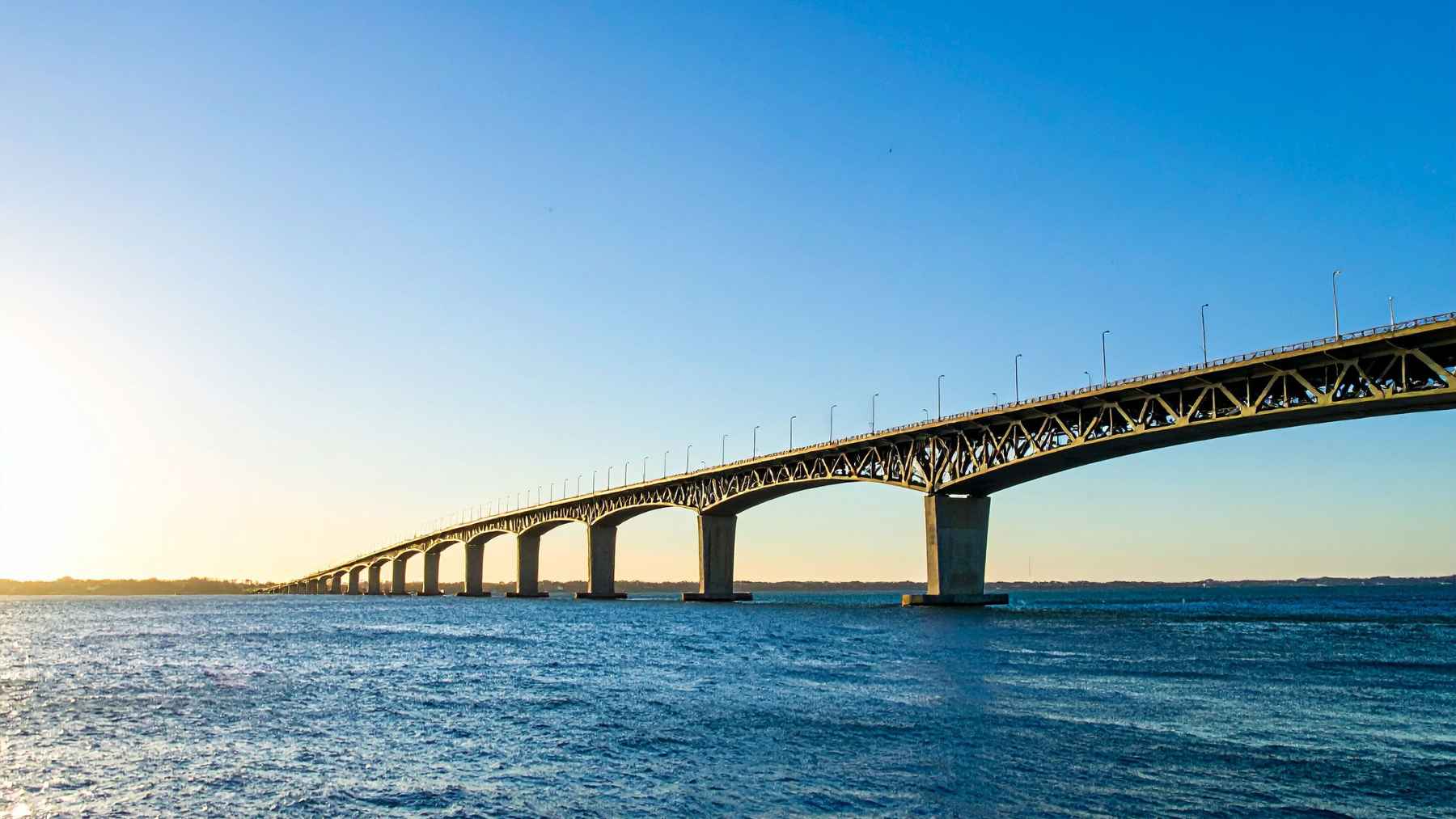
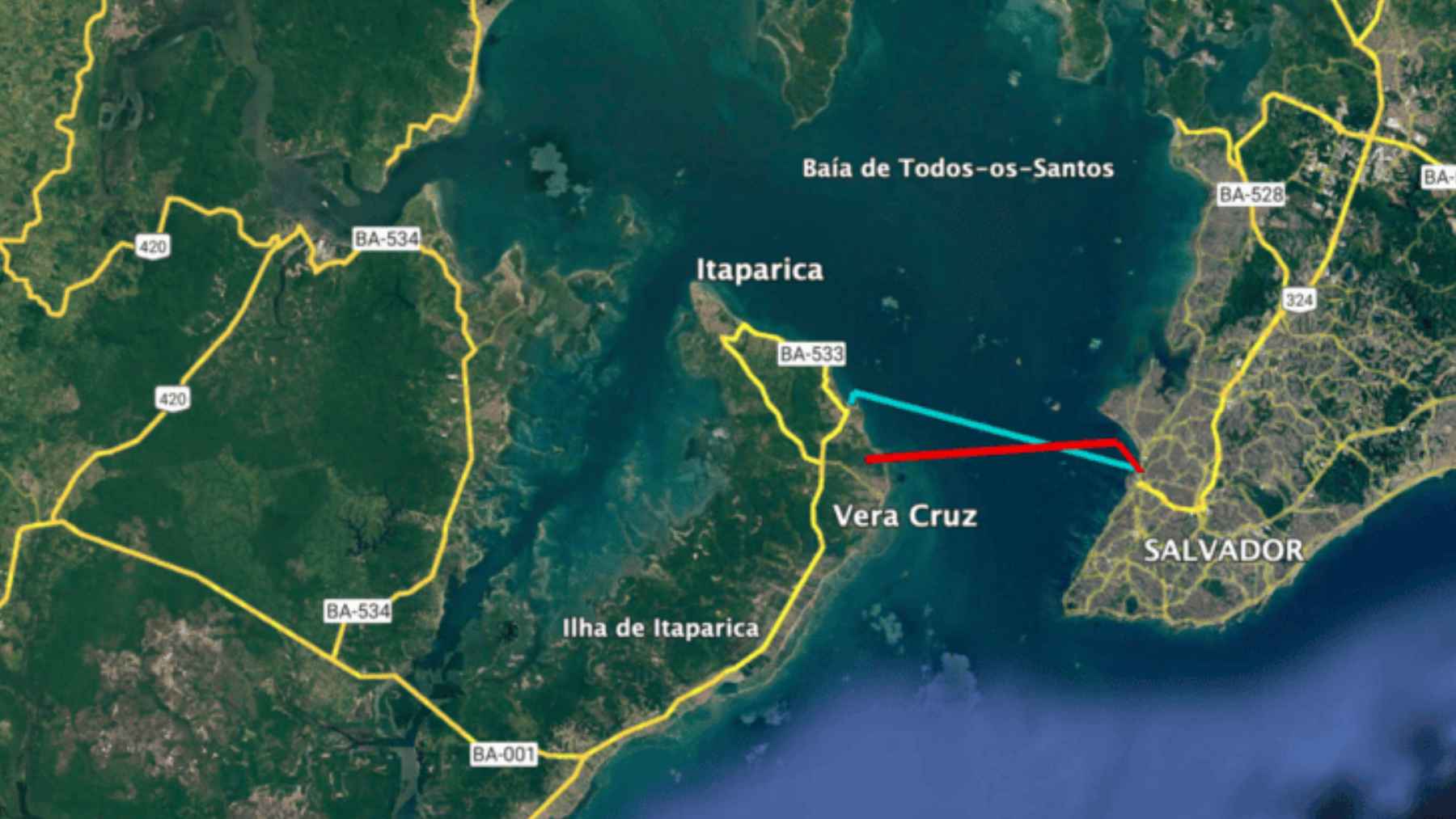
Brazil has officially begun building a 7.7-mile bridge across the Bay of All Saints, linking Salvador with Vera Cruz on Itaparica Island. Scheduled for completion in June 2031, the Salvador-Itaparica crossing is expected to become Latin America’s longest bridge built continuously over water.
It is an investment worth about $2.23 billion at Brazil’s recent exchange rate, with promises of faster travel, new business, and a less isolated regional economy. But can a road of this scale deliver growth without pushing marine habitats and traditional communities to the margins? That question will matter as much as the concrete and steel.
A new route by 2031
The bridge will carry two traffic lanes in each direction. Its cable-stayed central section will rise about 279 ft. above sea level, leaving room for large cargo ships, tankers, ferries, and cruise vessels to pass through the bay.
On land, the wider system adds 2.7 miles of access roads in Salvador, a 13.7-mile expressway on Itaparica, and roughly 5 miles of duplicated highway. It is not just a bridge, it is a new transport corridor.
Officials expect about 28,000 vehicles a day when the system opens and say some trips between Salvador and Bahia’s Lower South region could shrink by about two hours.
Freight arriving from western Bahia could avoid as much as 124 miles, which could cut delivery time and costs for grain, cotton, and fruit. For drivers now planning around ferries or long detours, the appeal is easy to see.
Who is paying
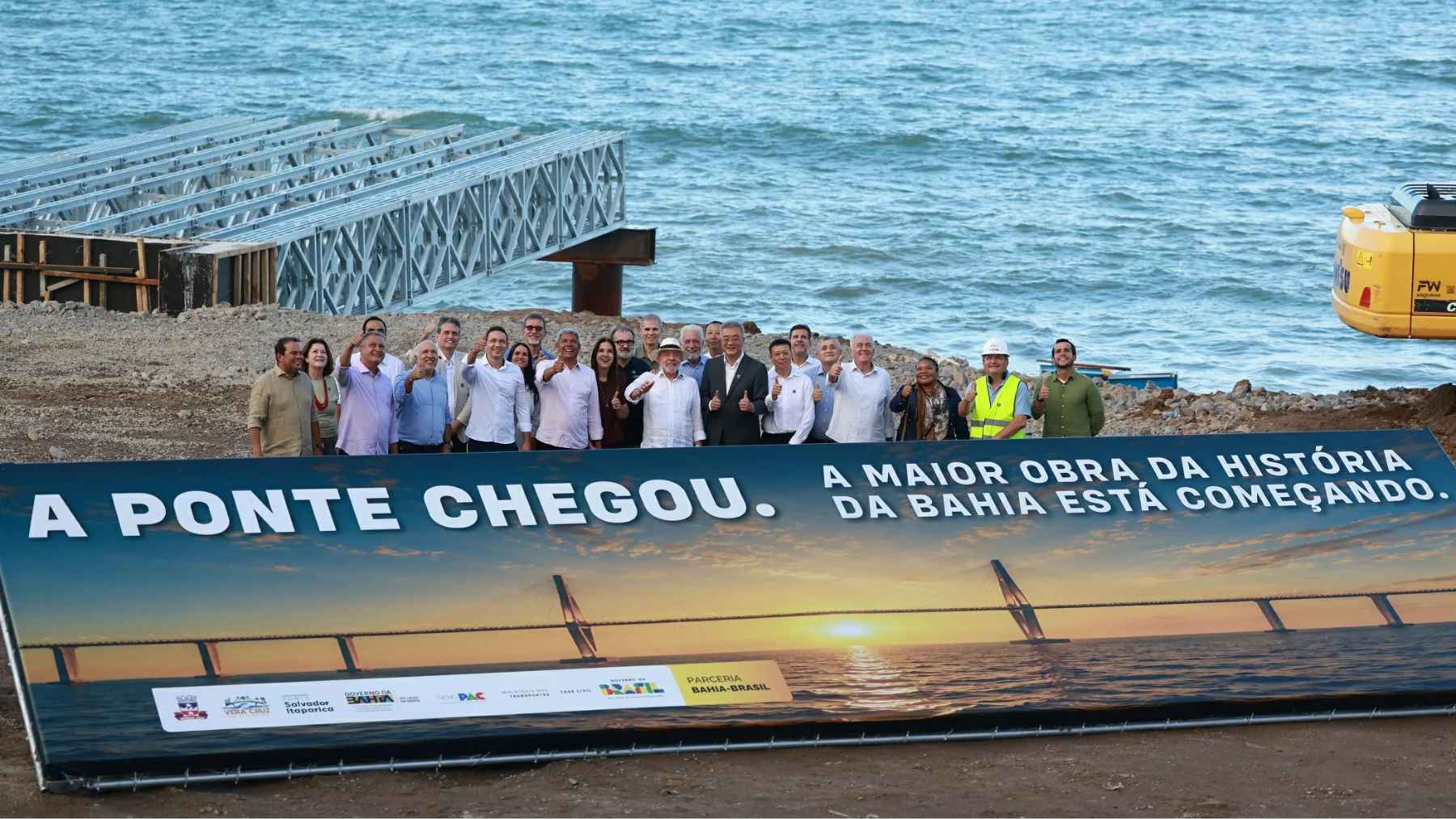
The project is structured as a 35-year public-private partnership with the concessionaire formed by China Civil Engineering Construction Corporation and China Communications Construction Company. About 47% of the investment comes from the concessionaire, while federal and Bahia state funding cover the remaining 53%.
Using the official July 1 exchange rate, the latest funding breakdown equals roughly $1.06 billion from the concessionaire, $577 million from Brazil’s federal government, and $597 million from Bahia. After construction, the concessionaire is due to operate and maintain the system for 29 years.
Construction is expected to create about 7,000 direct and indirect jobs. The state has also announced 1,400 training slots, while roughly 300 workers and 27 Brazilian suppliers were already involved when construction officially started.
Chinese technology over the water
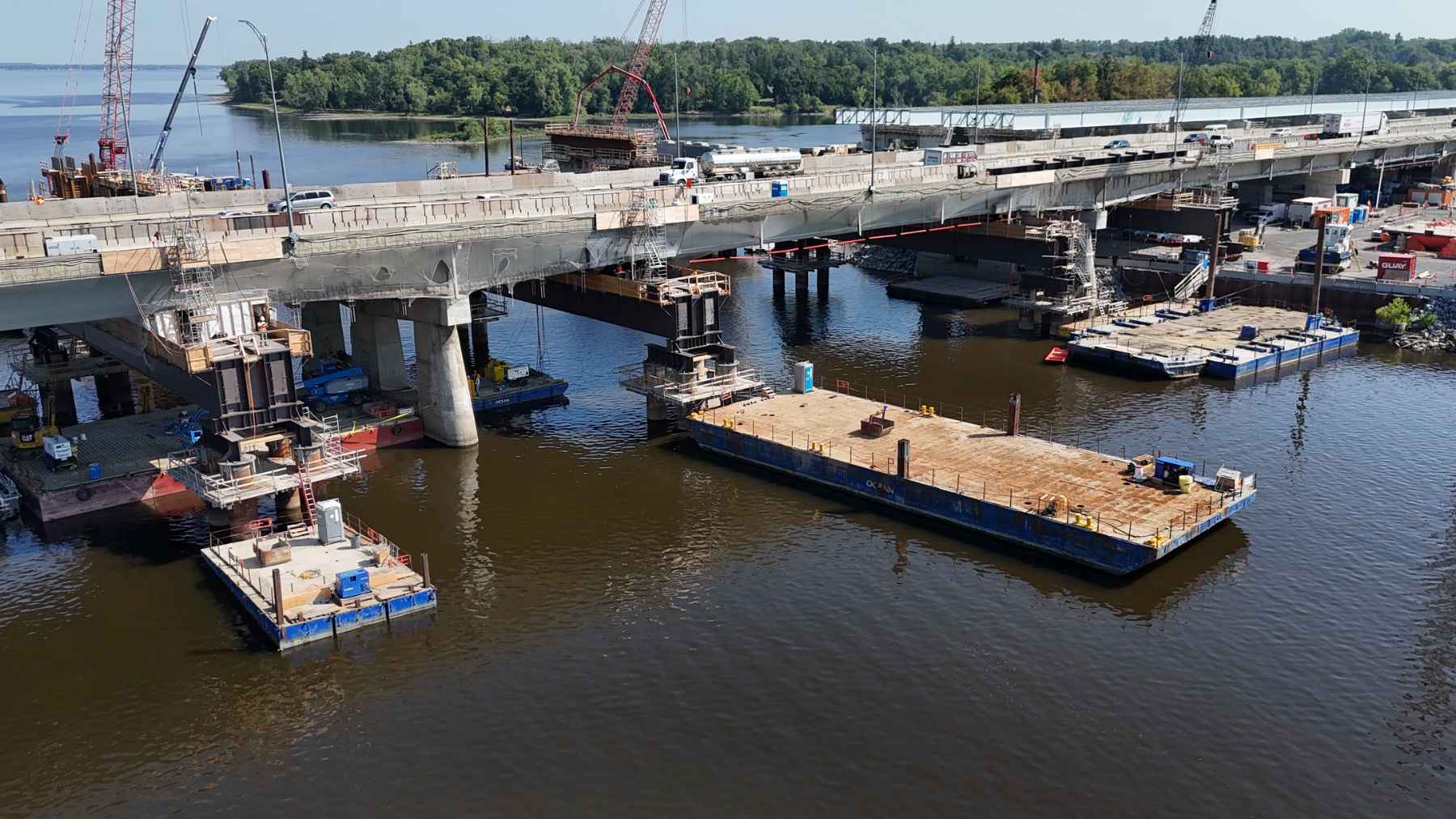
One of the project’s most unusual tools is a temporary linear platform running for about 7.5 miles alongside the future bridge. Think of it as an elevated work street that lets crews, cranes, and materials move above the water even as tides and weather change.
Officials say the platform will reduce the need for support vessels by about 70% while preserving navigation channels for fishers and larger ships. Once in place, that should mean less marine traffic and fewer operational risks, but the launch materials do not quantify how many gallons of fuel or how much underwater noise the technology could prevent.
Environmental safeguards
Bahia’s environmental agency says it has issued the installation license, native vegetation removal authorization, wildlife management authorization, and environmental compensation measure needed for the first interventions. Those approvals carry conditions, monitoring programs, and environmental controls that must continue through construction.
The project says its alignment avoids mangroves and coral reefs, with no underwater blasting or dredging planned. It also promises monitoring of water quality and marine biodiversity, sediment controls, wildlife rescue when required, and a program to prevent pollution at sea.
Those commitments matter, but they are not proof of zero impact. A 7.7-mile marine construction zone will need public, readable data that communities and independent researchers can follow as foundation work, vessel activity, and shoreline development intensify.
Communities cannot be an afterthought
In July 2025, Brazil’s federal public defender and federal prosecutors said most identified traditional communities had not been adequately consulted. A binding agreement then required prior, free, and informed consultation with artisanal fishers, shellfish gatherers, Romani groups, and Afro-Brazilian religious communities affected by the project.
The agreement also identified gentrification and rising living costs as risks for Itaparica. Lula echoed that concern at the groundbreaking, saying development must bring “opportunity and well-being to those who already live here.” A faster trip means little if longtime residents are priced away from the shoreline or lose dependable access to fishing grounds.
The climate math is not automatic
Shorter routes can reduce the fuel burned on each trip, especially when a truck avoids up to 124 miles. But with 28,000 vehicles expected daily, total emissions will depend on who uses the bridge, how often they cross, and whether buses and cleaner vehicles become a meaningful part of the system.
The official project guidance says buses will be allowed, but there is no planned pedestrian route or permanent bicycle lane. That makes public transit design an environmental variable, not a side issue.
At the end of the day, the bridge can claim greener mobility only if shorter routes outweigh the traffic and development it creates. The numbers after opening will tell the story.
What comes next
Before the foundation design was finalized, engineers drilled 105 boreholes along the route, working in water up to 220 ft. deep and extracting soil from depths reaching roughly 660 ft. at some locations. Wave-compensation equipment imported from China helped preserve sample quality despite changing sea conditions.
Now the test shifts from design to execution. The key markers are whether the June 2031 deadline holds and whether environmental monitoring, community consultation, and land-use planning remain as visible as the construction itself.
The bridge could become an engineering landmark and an economic gateway. Its real legacy, though, will be measured by whether the bay and the people who depend on it remain healthy as growth arrives.
The official press release was published on the Government of Bahia’s Salvador-Itaparica Bridge portal.