British Columbia says the replacement for the aging George Massey Tunnel will now cost about $6 billion in U.S. currency, more than twice the previous estimate of roughly $2.9 billion. Major construction is expected to begin in 2027, with the new crossing opening in September 2031 rather than December 2030.
The federal government has committed up to approximately $2.1 billion, based on the July 6 exchange rate, leaving the province responsible for the balance.
The price jump is the headline, but it is not the only risk. The project still needs an environmental review scheduled to finish late in 2026, and federal fisheries reviewers have challenged parts of the evidence concerning riverbed changes and fish habitat.
The next test is not only whether British Columbia can buy the tunnel for less, but whether it can build it without shifting too much of the cost onto the Fraser River.
The cost reset
The province says the revised budget reflects inflation, current market conditions, updated project information and the schedule required for construction of this size. It also says an independent third party reviewed and validated the estimate. The public will not know whether the reset worked until competitive bids arrive.
Critics are reviving the 10-lane bridge project canceled in 2017, arguing that it was cheaper and would have opened years earlier. The government counters that the new tunnel will be toll-free and include dedicated transit lanes plus a protected route for people walking and cycling. It is an old political argument with a much larger price tag now attached.
Smaller contracts
British Columbia ended its arrangement with Cross Fraser Partnership after the two sides failed to agree on commercial terms for the main construction phase.
The remaining work is being divided into five packages, allowing more Canadian and local contractors to compete instead of asking one consortium to carry the entire job. Transportation Minister Mike Farnworth said the market is “hungry for work on major infrastructure projects.”
That strategy could sharpen competition and reduce the premium bidders charge for accepting every risk under one enormous contract. Fragmentation has a catch, though. The tunnel, portals, mechanical systems, Deas Slough Bridge and highway work must still fit together, so savings in one package could reappear as delays or change orders elsewhere.
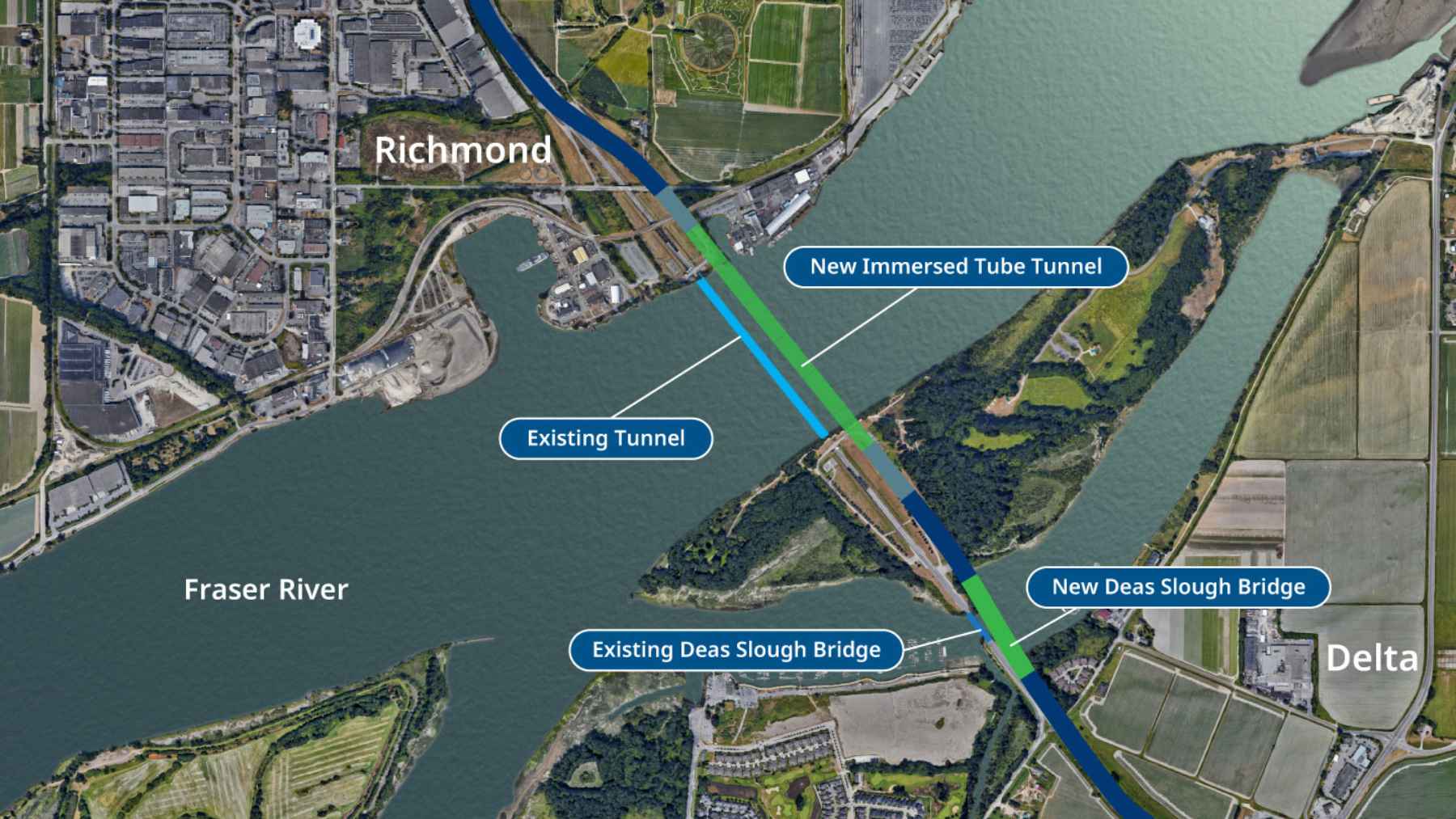
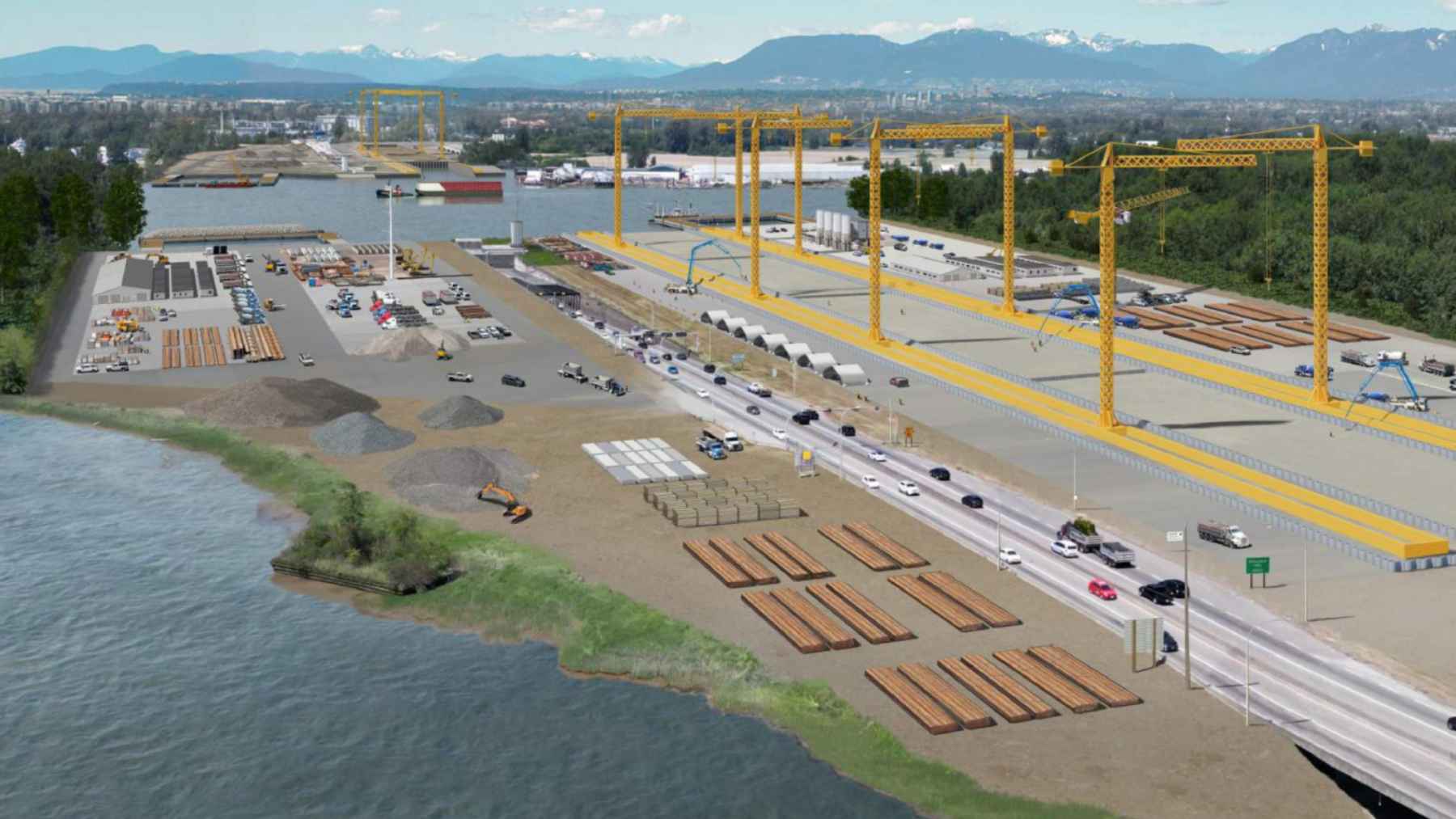
Early work is already underway on Deas Island, including tree clearing, utility relocation, access roads, jetties and the casting basin where the tunnel elements will be manufactured. Contractor teams are expected to be selected in early 2027. For nearby residents, the project is no longer just a rendering.
The river is the real test
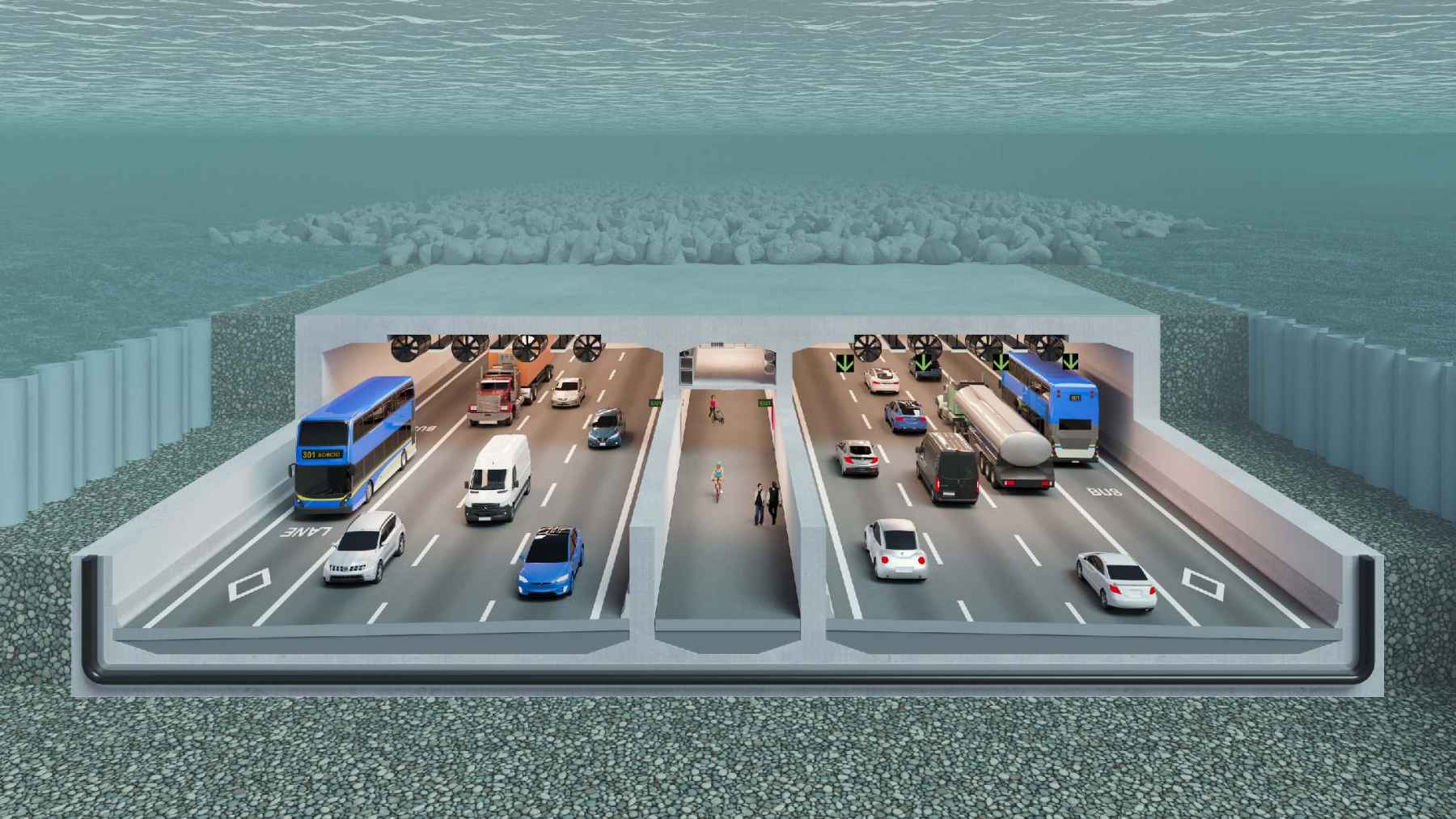
The new crossing will carry eight lanes, including one dedicated transit lane in each direction, and a separated corridor for walkers and cyclists. Prefabricated tunnel elements will be made on Deas Island, floated into position and lowered into a trench dredged across the riverbed. It is impressive engineering, but the construction method puts the river at the center of the risk.
Official assessment documents say dredging, disturbed sediment and underwater noise could change fish behavior, injure aquatic life, expose organisms to contaminants and reduce the invertebrates fish rely on for food.
The project is treated as a shoreline modification because it is expected to disturb more than 4.9 acres of foreshore or submerged land. The environmental review is not a box to check after procurement.
Proposed safeguards include gradual “soft starts” for noisy work, daily pauses during pile driving, side-scan sonar, fish salvage operations and habitat offsets. Those measures are meaningful, but they are still being refined with First Nations and regulators. A mitigation plan is not proof that the river will respond as predicted.
Fish questions remain
Fisheries and Oceans Canada raised a sharper concern about the project’s modeling. Reviewers said it predicts riverbed lowering of as much as 2.5 meters and sediment buildup of up to 1 meter in some areas, yet does not clearly connect those changes to fish use or juvenile rearing.
They also questioned the confidence behind the conclusion that effects from changing flow, sediment and scour would be low.
Draft offset concepts include creating salt marsh and salmon-rearing habitat at Deas Slough and other locations. Federal reviewers asked for more information about contamination, erosion, soil quality and whether restored areas would continue functioning over time. That is the difference between replacing acreage on paper and replacing ecology in the real world.
The assessment is expected to conclude before major construction starts. Still, environmental conditions, fisheries permits and design refinements could affect both price and timing. The clock is already moving.
The climate case is modest
The project’s environmental pitch includes smoother traffic, dedicated bus lanes and a new walking and cycling connection across the river.
The proponent estimates that annual operating emissions could fall 4.5% over the 2022 to 2050 period compared with the existing tunnel, helped by faster traffic, electric vehicles and improved transit. Peak approach speeds are projected to rise from about 19 mph to 50 mph.
That number needs context. The 4.5% estimate concerns project operation rather than the tunnel’s entire life-cycle footprint, and part of the improvement depends on electric vehicle adoption beyond the project itself. The tunnel may reduce idling, but it is not a climate shortcut.
A major study of U.S. cities found that vehicle travel tended to rise roughly in proportion to added highway lane miles, a pattern known as induced demand. Dedicated transit lanes can pull in the other direction, but the result will depend on frequent buses, useful walking and cycling links, and land-use decisions that do not keep stretching everyday trips.
What happens next
The province expects an environmental decision by the end of 2026, contractor selections in early 2027 and completion in September 2031. Taxpayers should watch more than the winning bids.
Key signals will include how risk is divided between contracts, the conditions imposed to protect fish, independent monitoring of habitat offsets and enough transit service to deliver the promised climate benefit.
This can be valuable trade infrastructure and still require tougher environmental proof. A safer crossing, better freight movement and more travel choices are real benefits, but a $6 billion budget does not guarantee value and an engineering plan does not guarantee ecological success.
The official press release was published on BC Gov News.