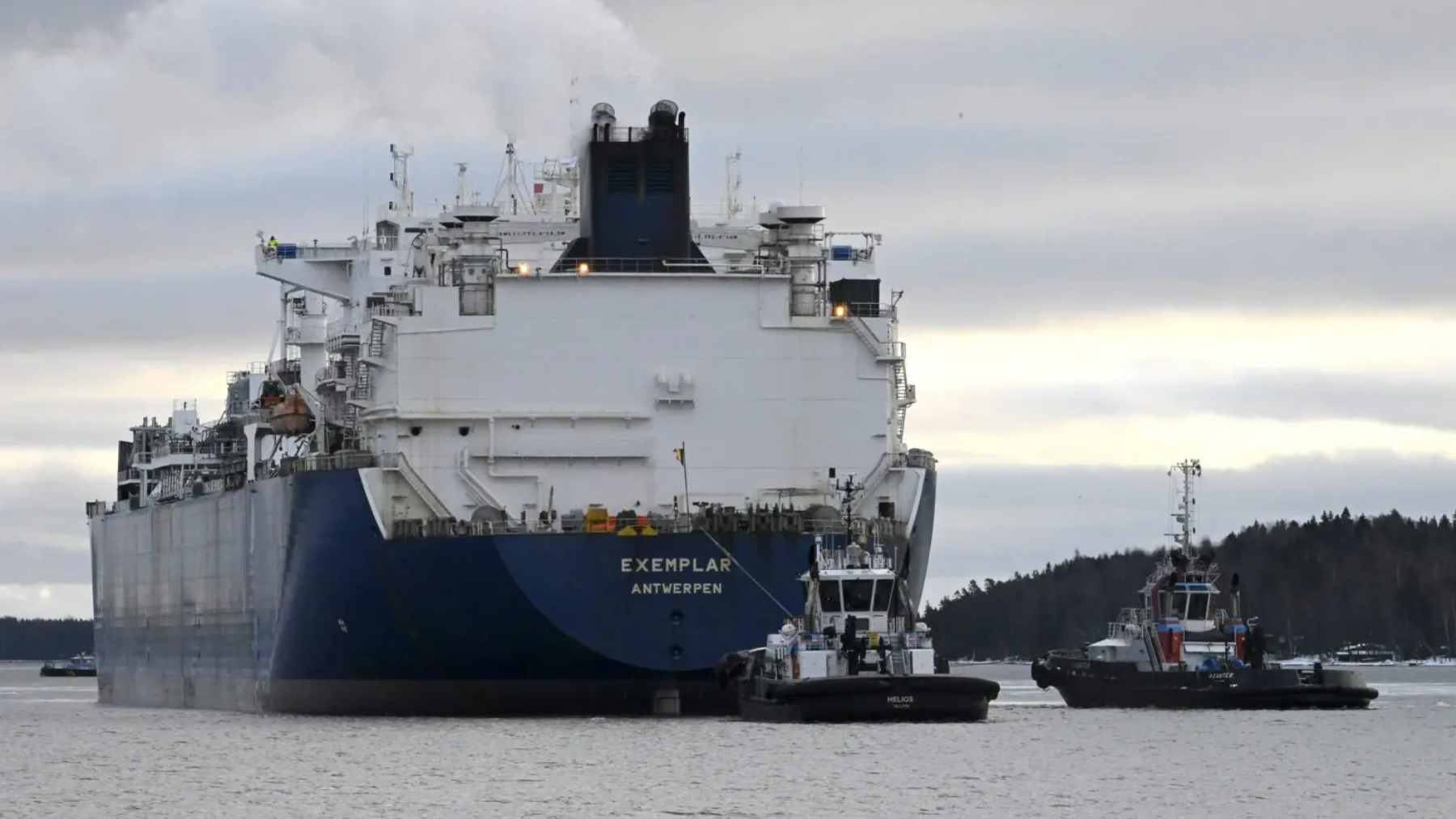
Finland moved with unusual speed after Russia’s pipeline gas supply was cut in May 2022. The country signed a 10-year, $487 million charter with U.S.-based Excelerate Energy for the FSRU Exemplar, a floating terminal that can receive liquefied natural gas from the global market and feed it into the Finnish network.
The result was a clear energy-security victory, but environmentally, the picture is more complicated.
The vessel reached Inkoo in December 2022 and commercial operations began on January 16, 2023. Gasgrid Finland says the terminal remains operational and Russian gas imports through it are prohibited.
In practical terms, Finland replaced one politically vulnerable pipeline with access to a global fuel market, though the climate cost depends on how the LNG is produced, shipped, and used.
A fast exit from Russian gas
Gazprom Export told Finnish energy company Gasum on May 20, 2022, that deliveries would stop the next morning after Finland rejected a demand to pay in rubles. The cutoff took effect at 7 a.m. local time on May 21, while Gasum turned to other supplies delivered through the Balticconnector pipeline.
“The LNG terminal will allow us to become independent of Russian gas,” Finance Minister Annika Saarikko said when the charter was announced. Finland and Estonia had already agreed to pursue a shared floating terminal, with Gasgrid Finland leading the vessel lease and Estonia’s Elering involved in the regional plan.
The 10-year lease was estimated at $487 million, plus expenses linked to use. That commitment sped up the process, since a suitable FSRU could arrive much faster than a permanent terminal could be planned and built. The urgent task was keeping industry and energy production supplied before winter.
A terminal that is also a ship
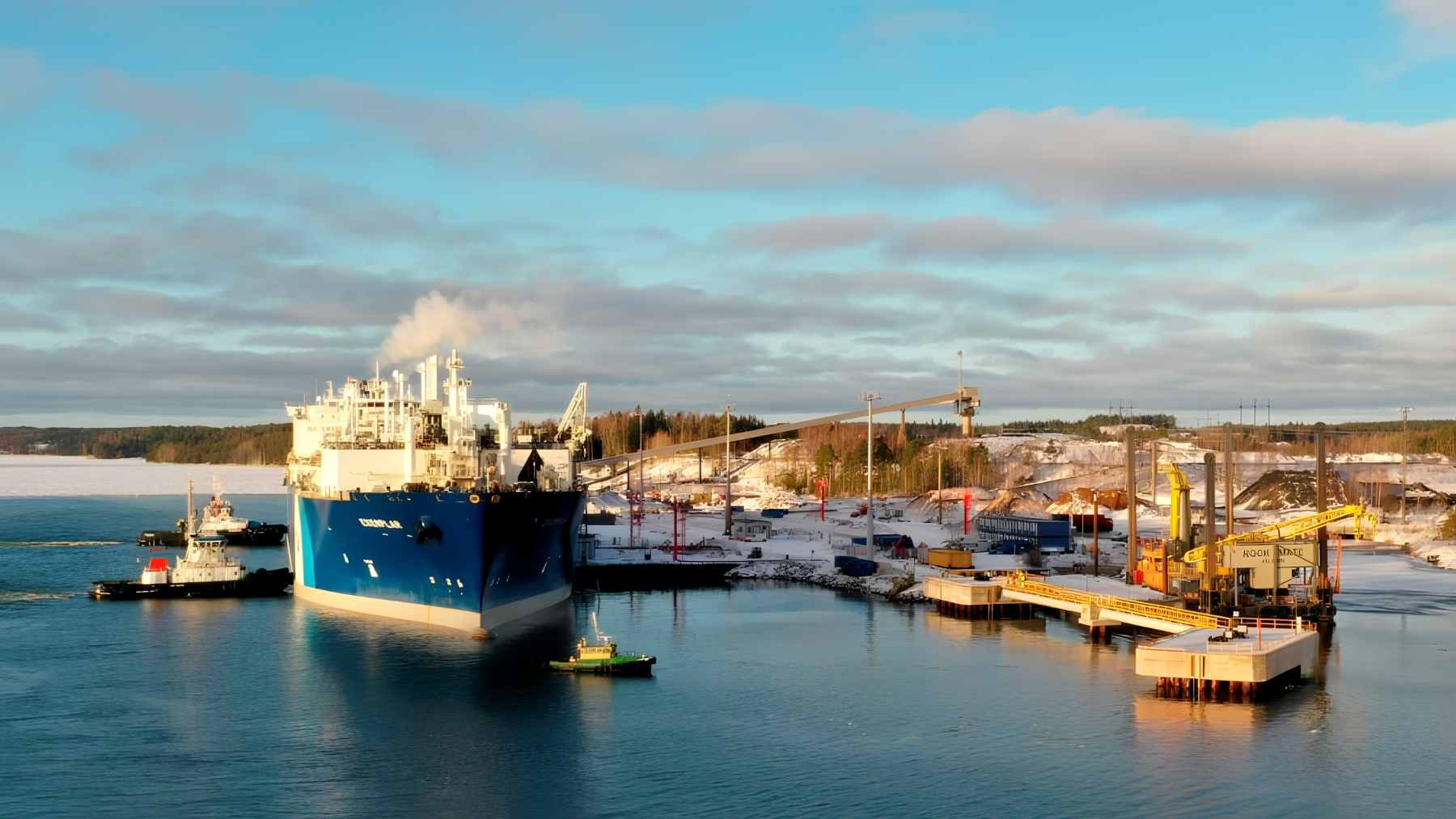
FSRU stands for floating storage and regasification unit. LNG arrives by tanker after being cooled into liquid form, is transferred to Exemplar, warmed back into gas aboard the vessel, and sent ashore through a roughly 1.4-mile connection to the national network.
Exemplar is about 955 feet long and 142 feet wide. When full, it can hold roughly 5.3 million cubic feet of LNG, equal to about 75,000 U.S. tons and around 3.58 trillion Btu of energy. Supply tankers were expected to call two or three times a month.
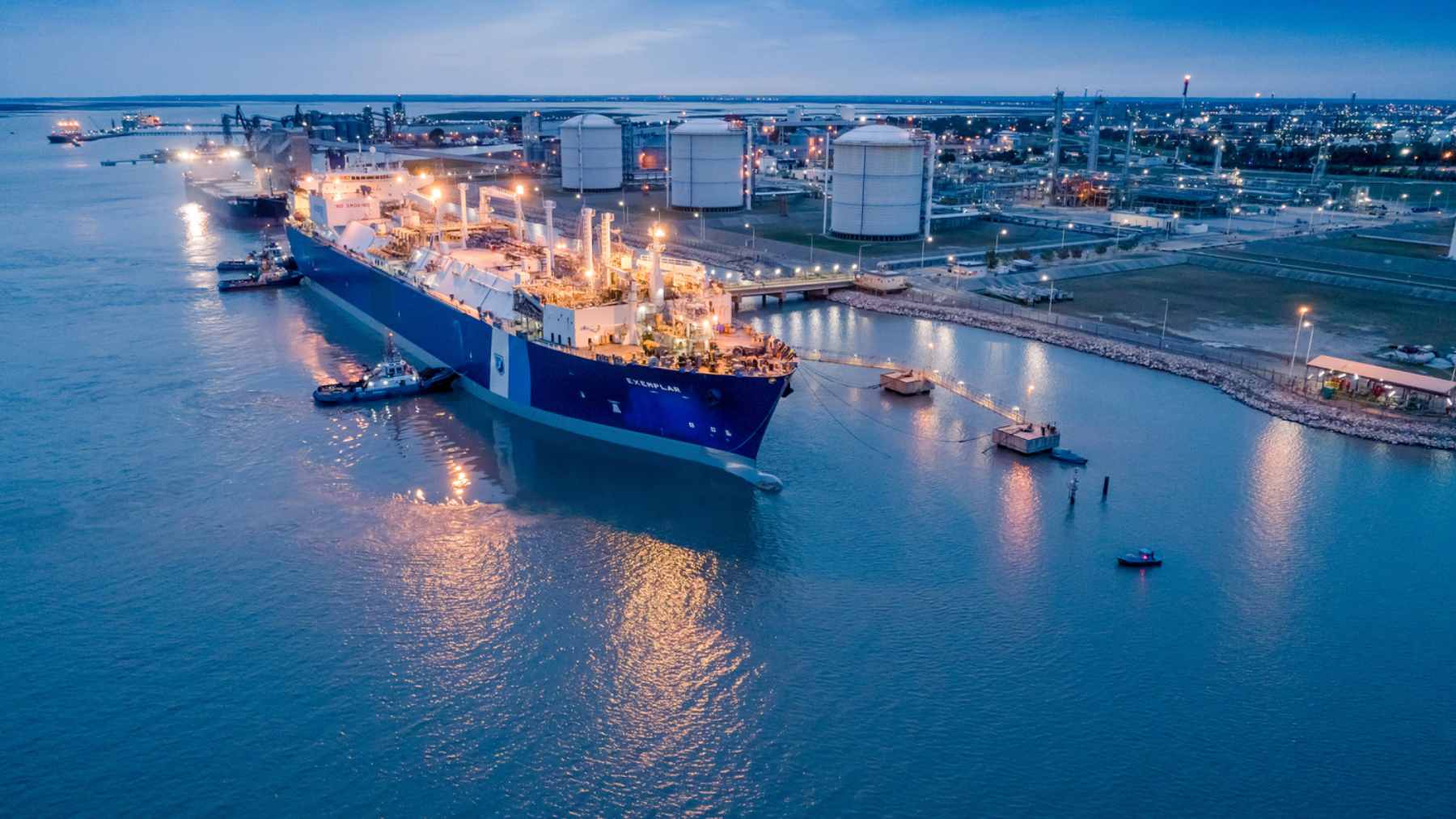
Excelerate said the ship can regasify more than 176.6 billion cubic feet of natural gas each year. It was designed to cover the combined gas needs of Finland and Estonia with room for the wider Baltic market. More than a storage tank, it is a movable gas gateway.
Energy infrastructure becomes national defense
The project sits at the crossroads of business and national security. Natural gas accounted for about 5 percent of Finland’s annual energy use at the time, but remained important for industry, combined heat and power production, and some households. That made continuity a strategic issue, not just a commodity trade.
The terminal also has a regional role through Balticconnector, the pipeline linking Finland and Estonia. When that pipeline was damaged in 2023, Gasgrid says the Inkoo terminal helped keep Finland’s gas supply stable through the following winter.
Reducing energy vulnerability comes not only with troops and stockpiles, but also with alternate ports, pipelines, suppliers, and storage.It is only when something breaks that redundant parts of the system are exposed.
The climate math is not simple
So, is LNG a green solution? Not by itself. Burning natural gas releases about 117 pounds of carbon dioxide per million Btu, compared with about 212 pounds for an average mix of coal, a reduction of roughly 45 percent at the point of combustion.
That advantage can shrink across the full supply chain. Gas must be liquefied, transported by ship, and regasified, while methane can leak during production and handling. The International Energy Agency says LNG usually has higher life-cycle emissions than pipeline gas, even though it generally remains below coal.
The same agency says existing technologies could cut global LNG supply-chain emissions by more than 60 percent, with methane controls doing much of the work. For Finland, that means cargo origin and supplier performance matter alongside operations at Inkoo. The ship alone cannot make the gas clean.
A bridge or a lock-in
Gasgrid says the terminal can support an energy system with more weather-dependent renewables, especially during cold and windless periods. That makes sense as a backup role, much like keeping a spare generator for the rare night when the power fails.
The risk comes if emergency infrastructure turns into routine dependence. A 10-year lease keeps gas available into the early 2030s, and heavy use could compete with electrification, efficiency, storage, heat pumps, and cleaner industrial processes. Used sparingly, the vessel can act as insurance, but used to delay replacements, it becomes a fossil fuel lock-in.
The business case is insurance
Excelerate gained a decade-long charter for one of its core assets, and its shares rose 3.4 percent to $25 in premarket trading after the announcement. Finnish industry gained another supply route, but buyers also became more exposed to global LNG prices, shipping availability, and competition for cargoes.
For Gasgrid and the Finnish state, the $487 million commitment is best understood as an insurance premium against disruption.
The terminal does not guarantee cheap gas, but it lets Finland buy from multiple suppliers instead of depending on one pipeline from Russia. That flexibility has real value.
What Finland must look out for
Finland’s floating terminal solved the urgent problem it was built to solve. It replaced Russian pipeline dependence with a functioning maritime route and gave the Baltic region more resilience. Still, energy independence and transitioning to green energy are not the same thing.
The best outcome would be for Exemplar to remain available, operate efficiently, and become less necessary as renewable power, storage, and clean industrial technologies grow. That is the real test.
The latest official terminal information was published on Gasgrid Finland.