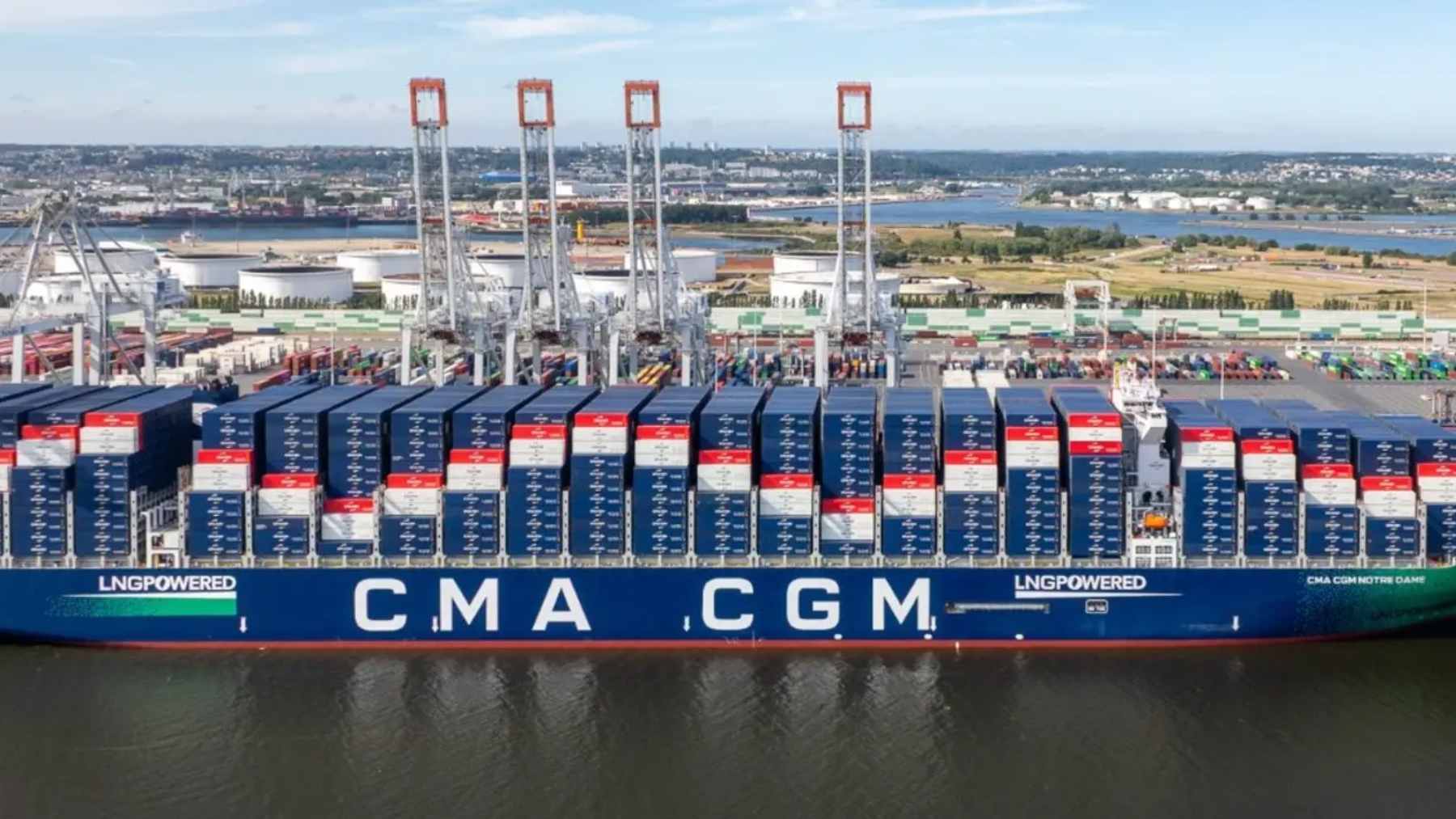
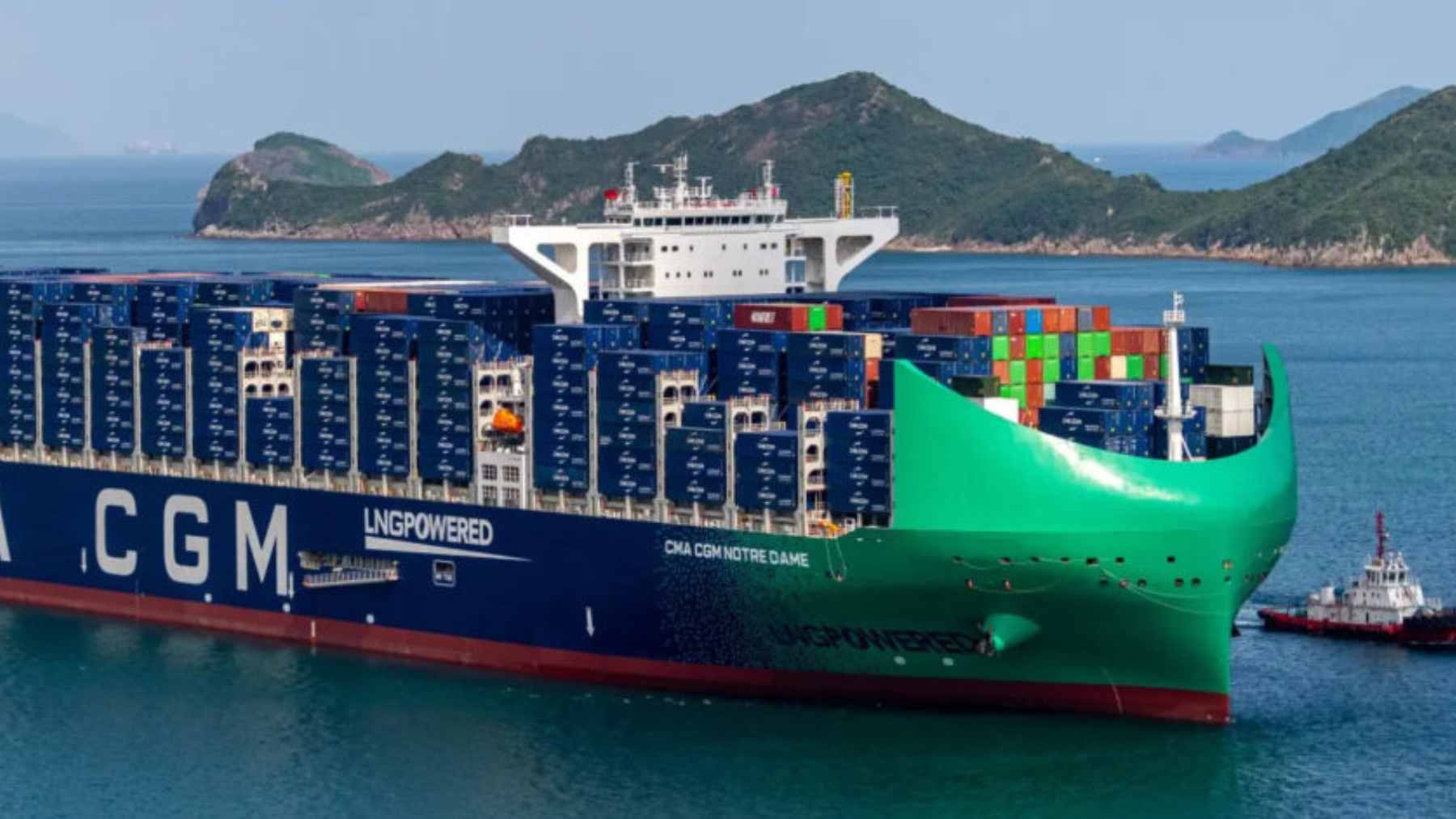
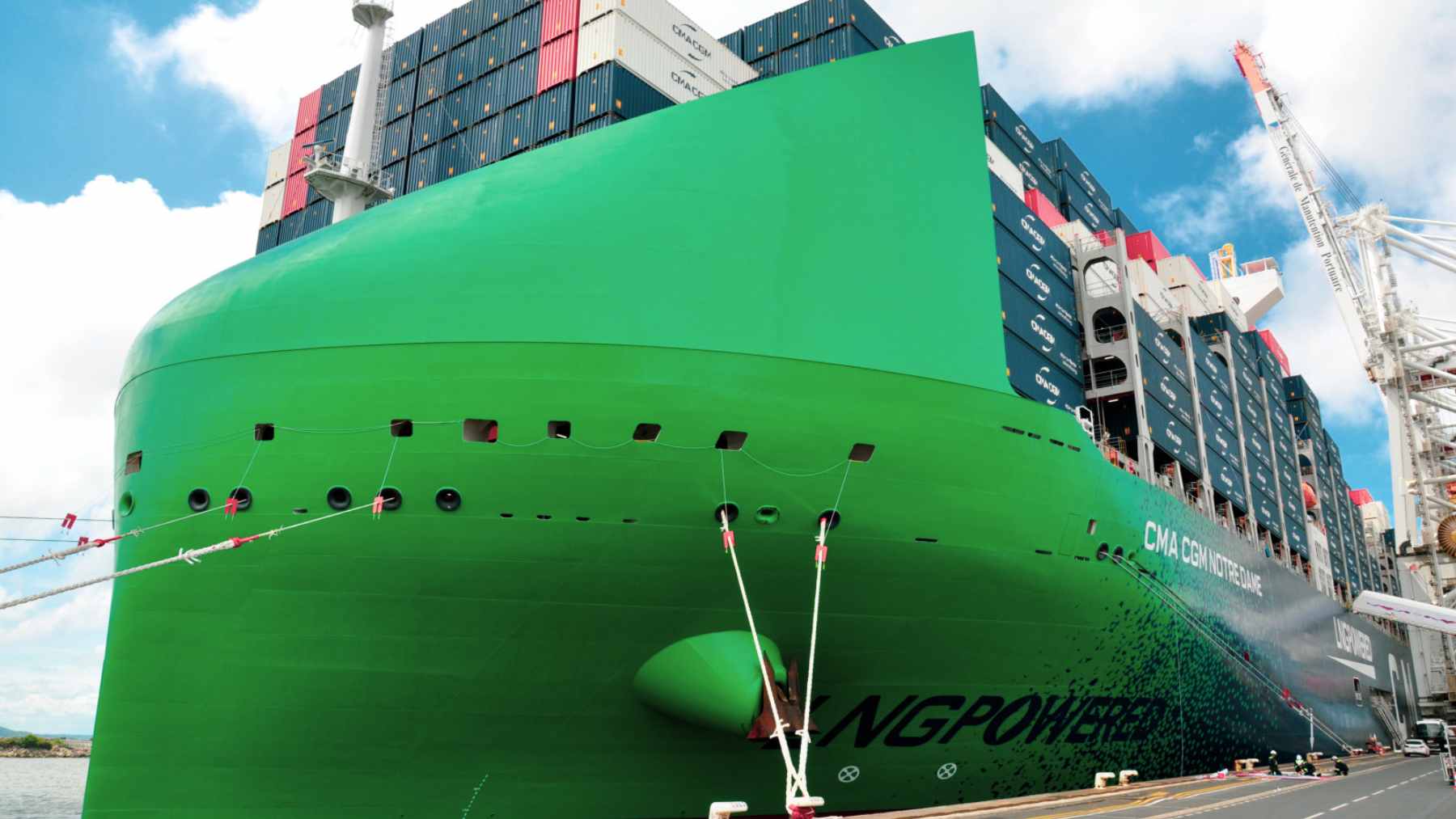
France is welcoming a new ocean giant, and it is not just another big ship sliding into port. The CMA CGM Notre Dame, the largest container ship currently sailing under the French flag, is set to be named in Le Havre on July 2 after beginning its first commercial voyage from Shanghai. At 1,312 ft. long, 203 ft. wide, and 246 ft. high, it can carry up to 24,212 standard containers.
That scale matters because it shows where global trade is heading. Fewer but larger ships, smarter navigation tools, and cleaner fuels are being presented as the shipping industry’s path forward.
But there is a catch: liquefied natural gas can reduce several air pollutants compared with conventional marine fuel, yet it is still mostly a fossil fuel, and experts warn that methane leaks can weaken its climate benefits.
A 1,312-foot signal
The Notre Dame is the first in a series of 10 huge LNG-powered ships that CMA CGM plans to place under the French flag. Each is designed for the busy Asia to Northern Europe corridor, with calls including Ningbo, Shanghai, Yantian, Singapore, Le Havre, Rotterdam, Hamburg, and Tangier Med.
In practical terms, one voyage can move the kind of cargo that fills homes, stores, factories, and hospitals. Electronics, food, cosmetics, medicine, and industrial parts all ride these routes. When a ship this large arrives, it is not only a port event, it is a reminder of how much everyday life depends on the sea.
The ship’s size also narrows its options. Vessels of this class need deep-water ports, advanced cranes, and carefully planned navigation. That is why hubs such as Le Havre, Rotterdam, Antwerp, and Hamburg matter so much in Europe’s supply chain map.
Cleaner, not clean
CMA CGM presents the Notre Dame as part of a lower-emission generation of ships, with LNG propulsion, an aerodynamic windshield system, smart energy management, and power systems for refrigerated containers. The ship also has an LNG tank of about 4.9 million gallons, giving it the range needed for long Asia-Europe rotations.
That sounds like progress, and to a large extent it is. LNG can sharply reduce sulfur oxides and fine particles, which is important for air quality around ports and shipping lanes. Still, the climate question is tougher. Methane that escapes before or during combustion can be a serious greenhouse gas problem.
The International Council on Clean Transportation has warned that for renewable LNG to play a major climate role, methane slip from engines must be almost eliminated and upstream leaks must be greatly reduced. So, the Notre Dame is best understood as a bridge. Useful, perhaps, but not the final destination.
AI reaches the bridge
The ship is also a floating technology platform. CMA CGM says the Notre Dame has a fully digitalized bridge with augmented-reality tools, trajectory prediction, and 360° visualization to help crews maneuver safely, especially near ports.
Artificial intelligence also helps optimize routes, speed, and energy use. That sounds futuristic, but for crews it is more like having better eyes and better timing in a crowded parking lot full of cranes, tugboats, wind, and moving steel boxes.
The company’s fleet centers in Marseille, Miami, and Singapore monitor operations and support decision-making. Technology cannot cancel bad weather, congestion, or conflict, however, it can only give crews and operators a better chance to act early.
A flag with weight
There is a political side to this story, too. The Notre Dame is registered under the French International Register, and CMA CGM says the whole 10-ship series will follow. The company also plans to recruit 135 French seafarers to operate the vessels.
Rodolphe Saadé, chairman and CEO of CMA CGM, said the company decided to register “ten new 24,000-TEU vessels” under the French flag. He tied that move to confidence in France’s maritime sector and to training with the French Maritime Academy.
That is not just paperwork. Sailing under a national flag can affect labor standards, inspections, safety rules, and the role a ship might play in a crisis. The wider program has been described at about $2.85 billion, according to recent exchange rates.
Red Sea reality
The Notre Dame’s first trip also showed how trade and defense now overlap. The Suez Canal Authority said the vessel transited the canal on June 16 on its way from Singapore to France, with senior pilots and tug assistance assigned for the passage.
That route matters because many ships have been avoiding the Red Sea and sailing around Africa instead, a longer route that burns more fuel and adds time. CMA CGM itself announced in January that several services, including FAL 1 and FAL 3, would operate via the Cape of Good Hope because of the uncertain international context.
France’s defense ministry said the Notre Dame was accompanied in the Red Sea area during a Bab el-Mandeb passage as part of the European Aspides mission. The EU describes Aspides as a defensive operation that protects civilian ships and crews in the Red Sea and Gulf of Aden, and said in May it had supported more than 1,960 merchant vessels since launch.
What shoppers should keep in mind
For shoppers, the story may seem distant. A giant ship in Le Havre does not look connected to the price of a phone charger, a toy, or a bottle of medicine at the pharmacy, but it is. When shipping routes become longer, riskier, or more expensive, those costs can move through the supply chain.
The Notre Dame may help carry more cargo with better efficiency per container, and its cleaner fuel can reduce some pollution, but the larger environmental test is what happens next. Will LNG be replaced or blended with low-carbon methane at scale? Will methane slip be controlled tightly enough? Will ports and rules push shipping toward truly near-zero fuels?
At the end of the day, this ship is both impressive and uncomfortable. It shows how far maritime technology has come, while also showing how much work remains before global trade can call itself clean.
The official statement was published on CMA CGM Group.