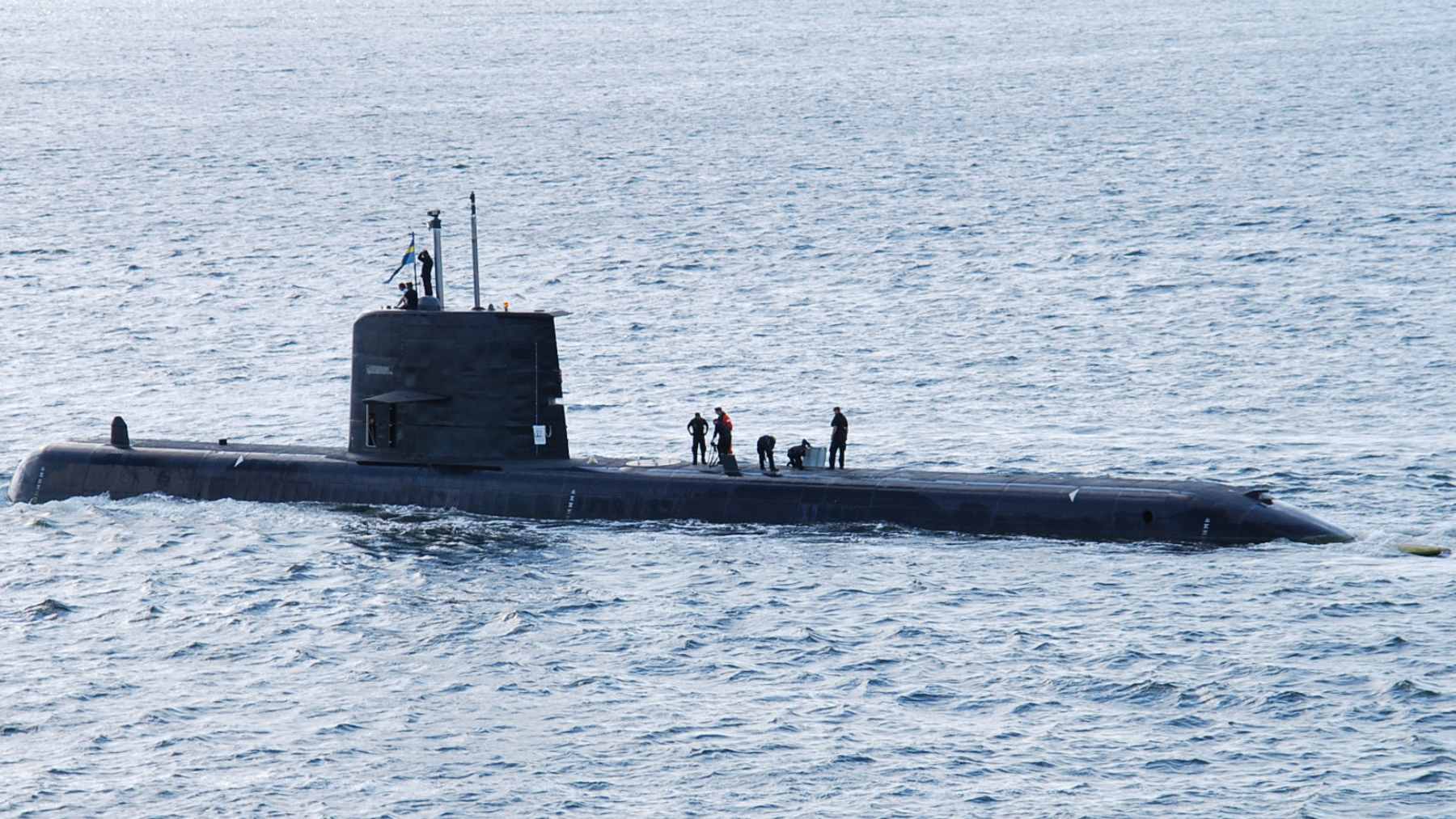
A newly launched Chinese submarine spotted at Jiangnan Shipyard in Shanghai is raising fresh questions about how fast Beijing is moving in the quietest part of modern warfare.
Early satellite images suggested an almost “sailless” design, but newer ground-level views point to something slightly different, a very small sail paired with a large X-form stern that analysts say could help the boat move more quietly and efficiently underwater.
That may sound like a tiny design detail, but it isn’t. In submarine warfare, shape, sound, and water flow can matter as much as missiles, because the boat that hears first often gets the advantage.
A tiny sail with a big message
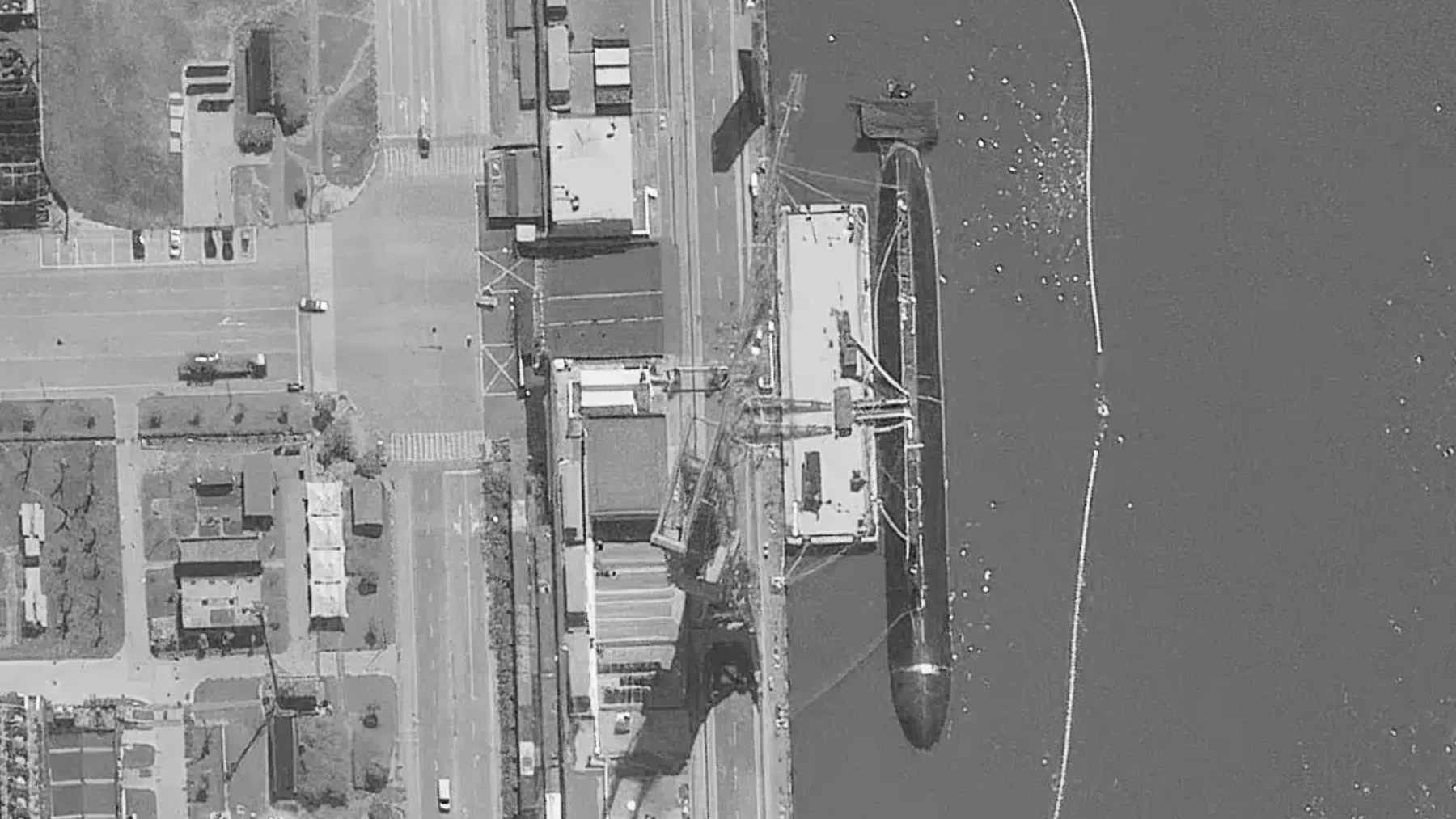
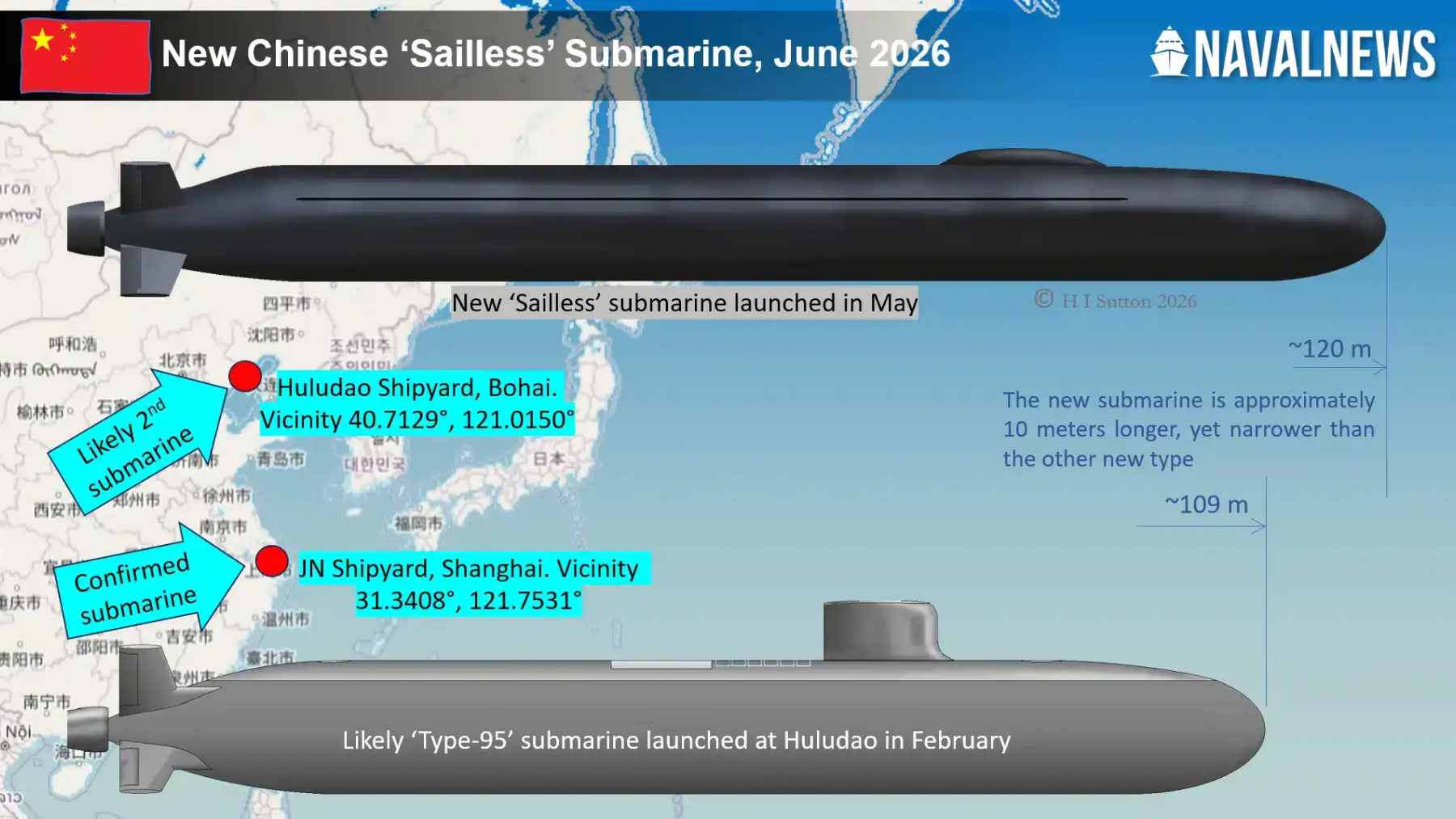
The submarine was seen at Jiangnan Shipyard after satellite imagery from late May and early June showed a new, large boat moored at the facility. Naval News reported that the vessel has a sleek bow, X-form rudders, and a minimal sail, while later analysis by H I Sutton described it as a “small-sail” submarine rather than a truly sailless one.
The estimated size is also notable. Analysts put the boat at about 400 ft. long and 33 to 36 ft. wide, making it longer and slightly narrower than some other recent Chinese submarine designs. That shape has fueled debate over whether it is linked to the expected Type 095 attack submarine, a Type 093 family evolution, or something more specialized.
For now, Beijing has not offered a public explanation. That silence is normal in this field, but it also leaves analysts reading hull lines the way meteorologists read clouds.
Why the shape matters underwater
A smaller sail can reduce drag, and drag is the enemy of speed, range, and quiet movement below the surface. The War Zone noted that low-profile submarine designs can offer benefits in speed, maneuverability, and acoustic signature, although they also come with tradeoffs.
The X-form rudder is another clue. Compared with older cruciform sterns, this arrangement can improve maneuverability, efficiency, and safety, especially when a submarine is operating in difficult underwater conditions. A possible pumpjet propulsor would also fit the same theme, since pumpjets can help quiet operation at higher submerged speeds.
This is where the technology becomes almost environmental. The ocean is a soundscape, not an empty blue space.
The National Atmospheric and Oceanic Administration (NOAA) notes that marine animals rely heavily on sound, and researchers study how human-made noise changes that underwater environment, which is the same physical world submarine designers are trying to master.
China’s shipyards are part of the story
The submarine is not just a single mystery boat. It appears in the middle of a larger Chinese push to expand and modernize its undersea fleet, backed by an enormous shipbuilding base.
The Pentagon’s 2025 China military report said China remains the world’s top commercial ship-producing nation by most measures and has enough capacity to produce large numbers of naval submarines and surface ships.
Andrew Erickson told the U.S.-China Economic and Security Review Commission that China’s navy already has more than 400 battle force ships, including more than 60 submarines. He also warned that China is improving nuclear propulsion, submarine quieting, maritime surveillance, and unmanned undersea platforms.
That industrial side matters for business as much as defense. Submarines are not built by slogans. They require nuclear expertise, precision manufacturing, sensors, propulsion systems, skilled labor, and supply chains that can survive years of pressure.
The ocean data race
Why should anyone outside a naval office care? Because the next submarine race is not only about steel hulls, it is also about ocean knowledge.
Reuters reported that China has carried out extensive seabed mapping and monitoring across the Pacific, Indian, and Arctic oceans, using research vessels and sensors to collect data on underwater terrain, temperature, salinity, and currents.
Some of that work has civilian uses, including climate research and resource surveys, but naval experts told Reuters the data is also valuable for submarine navigation, concealment, sonar performance, and anti-submarine warfare.
That overlap is the uncomfortable part. The same ocean data that can help scientists understand marine systems can also help navies hide, hunt, and plan. At the end of the day, the ocean is becoming both a research frontier and a military map.
Washington is moving, too
The United States still has major advantages in submarine stealth, operational experience, and global undersea surveillance networks, according to Erickson’s testimony. But he also warned that maintaining those advantages will take sustained investment.
That is already showing up in the Indo-Pacific. Australia’s defense ministry said the AUKUS partners are setting up Submarine Rotational Force-West, including U.S. nuclear-powered submarines rotating from HMAS Stirling in Western Australia. The U.S. Navy also reestablished Submarine Squadron 3 to support those rotations beginning in 2027.
Rear Adm. Chris Cavanaugh said the move adds “presence, agility, and responsiveness” in the theater. That is military language, but the meaning is simple enough. More submarines are being positioned closer to the waters where both sides expect the toughest competition.
What remains unknown
There is still no confirmed designation for the Jiangnan submarine, and outside analysts are careful for a reason. The boat may share technologies with the Type 095 program, or it may be a lower-risk evolution of earlier Chinese designs. It may also be meant for a very specific role that is not obvious from imagery alone.
That uncertainty is the story. China appears to be experimenting with shapes, propulsion, and production patterns that could narrow the long-standing undersea gap with the United States and its allies.
For now, the small sail is doing a lot of talking.
The report was published on Military Watch Magazine.