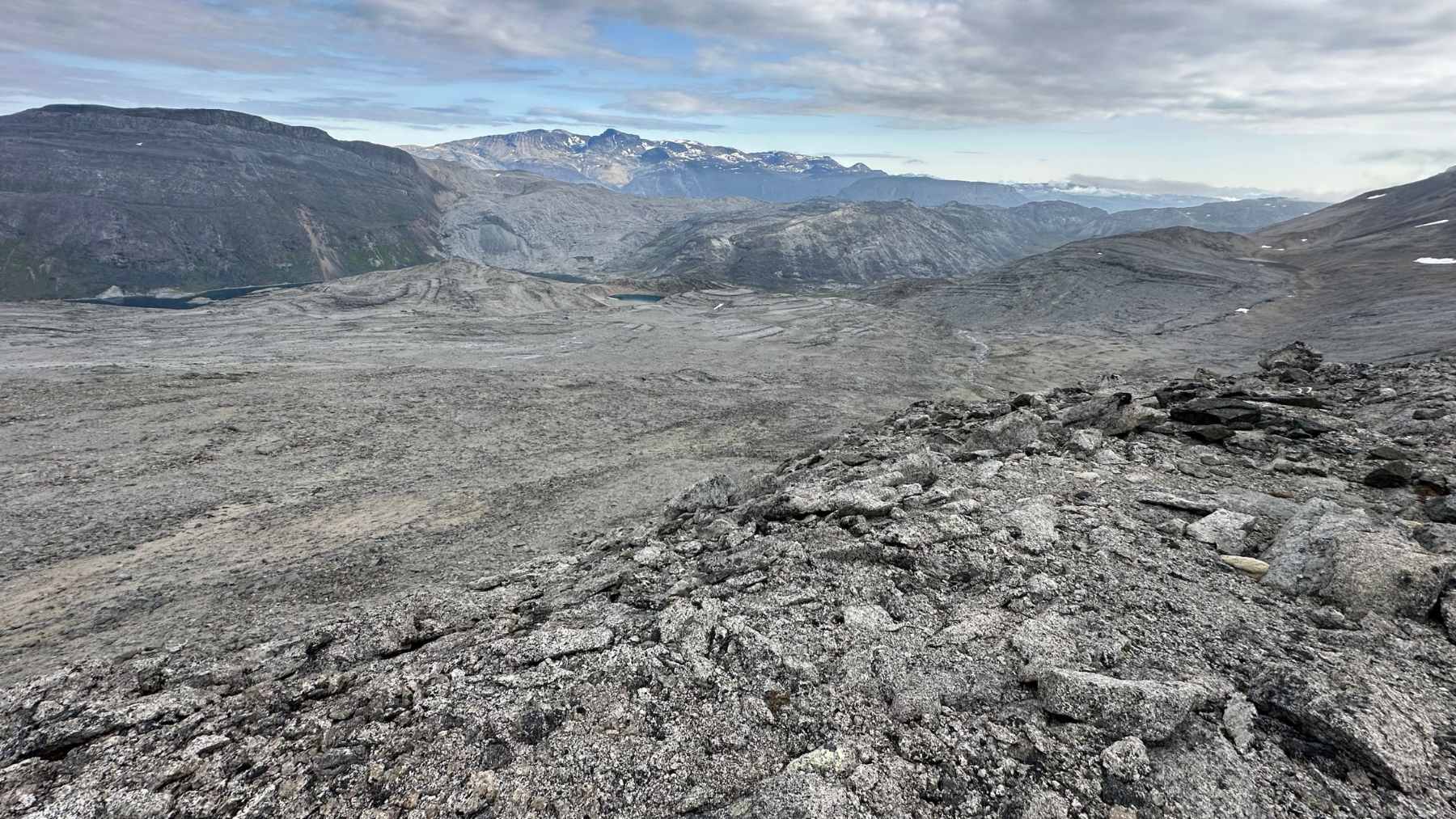
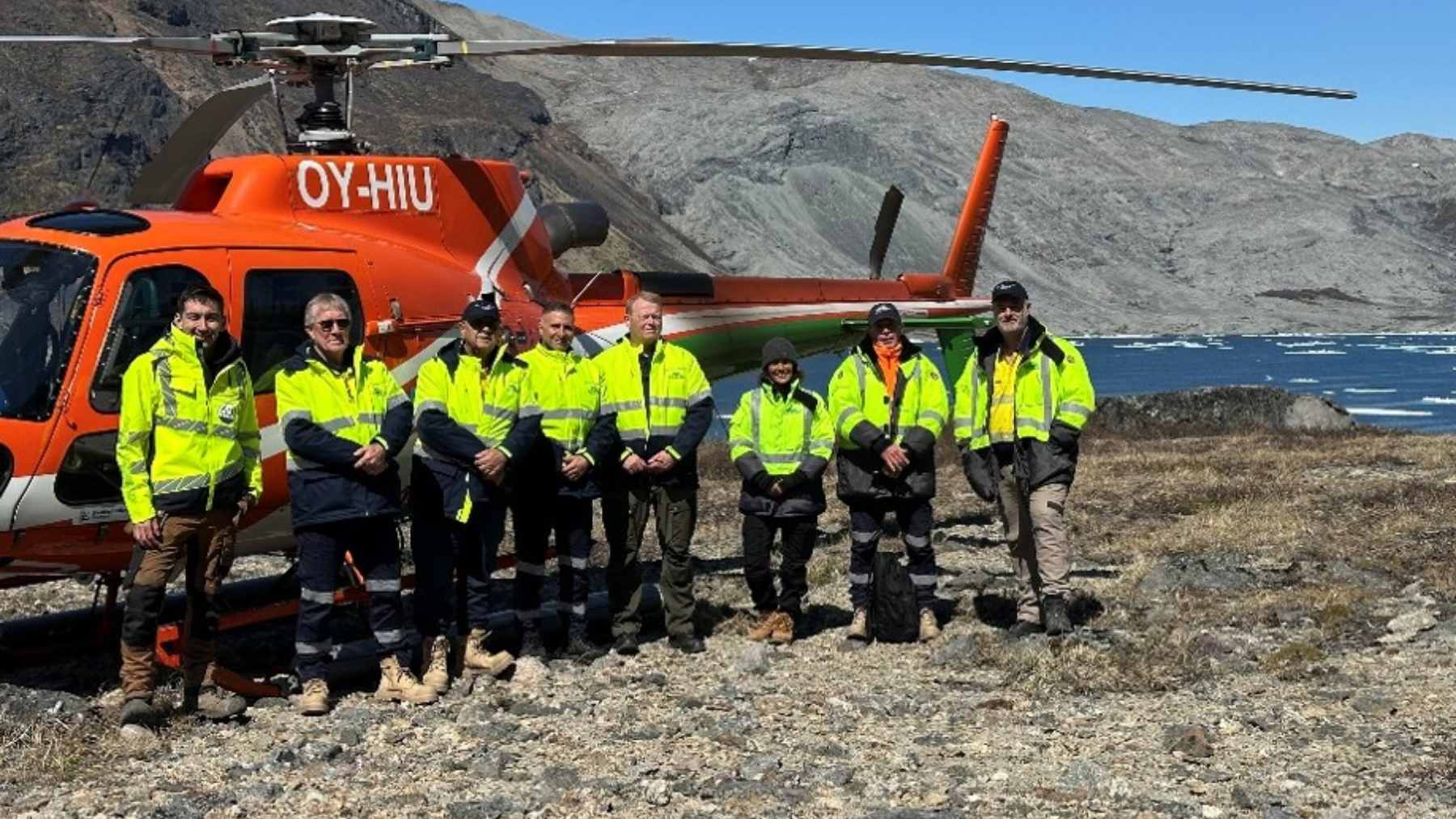
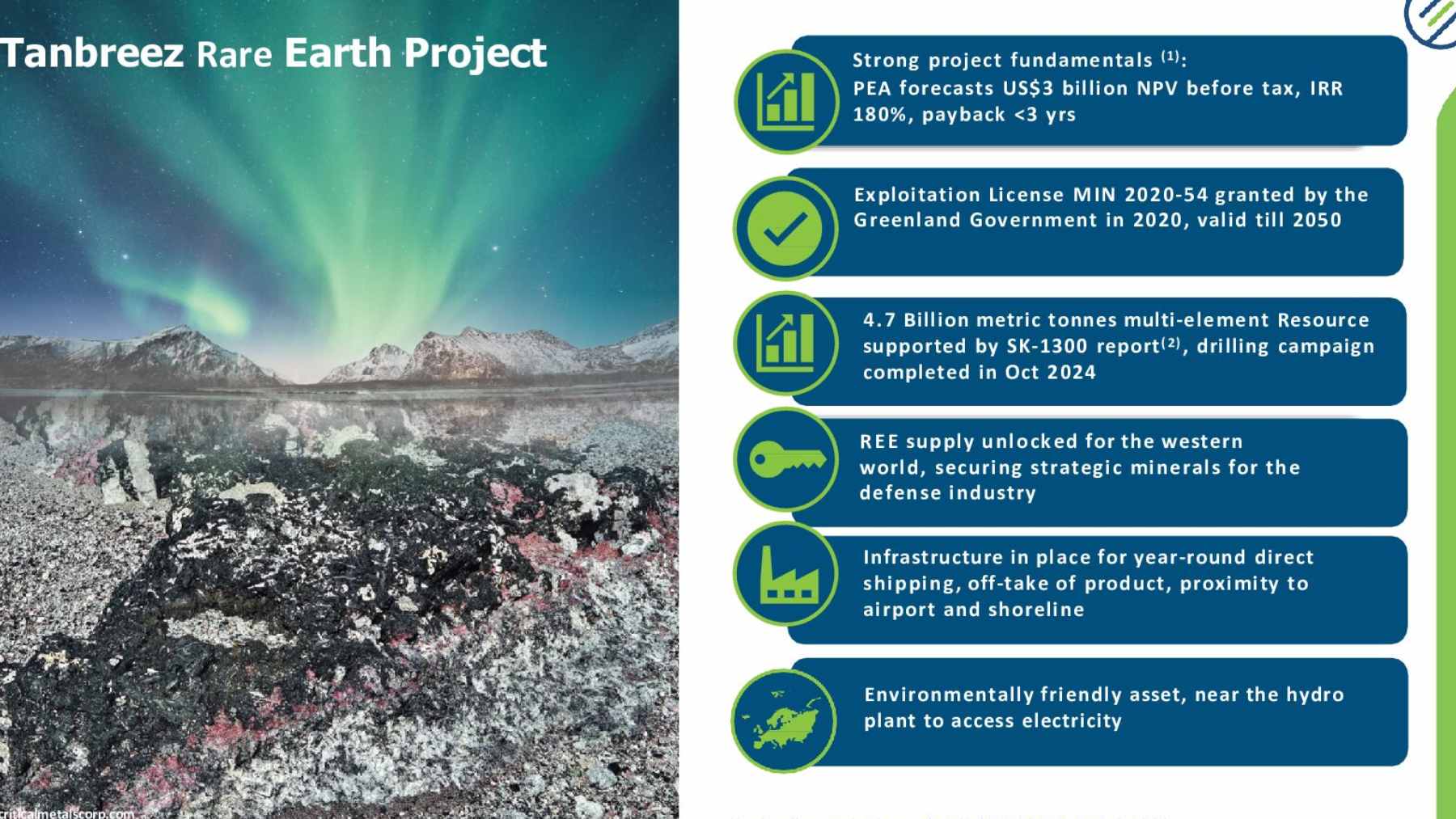
The race to secure rare earths has moved north, and Africa is feeling the pressure. Critical Metals Corp. has signed a definitive 15-year offtake agreement with REalloys for material from the Tanbreez project in southern Greenland, a deposit the company describes as one of the world’s largest heavy rare earth sources.
The deal covers 15% of monthly Phase 1 production, and at the public nameplate capacity, would equal roughly 2,500 tons of concentrate a year.
That sounds like a mining contract, but it is really a supply-chain warning. Washington wants rare earth materials that do not depend on China, defense companies need compliant sources before a 2027 procurement deadline, and African governments now face a sharper question: can they turn mineral wealth into trusted supply fast enough?
A deal with defense weight
Rare earths are not just for electric cars, wind turbines, and the phone in your pocket. The heaviest and most strategic elements, including dysprosium and terbium, are used in high-performance permanent magnets that can withstand heat in aerospace and defense systems.
REalloys says Tanbreez will support a “mine-to-magnet” strategy for U.S. defense, energy, NASA, and broader industrial customers.
The timing matters. U.S. defense procurement rules take effect on January 1, 2027, tightening restrictions on covered materials mined, refined, separated, melted, or produced in countries including China, Russia, Iran, and North Korea. For samarium-cobalt and neodymium-iron-boron magnets, the rule extends deep into the supply chain.
That is why Greenland looks so attractive. It is not a magic answer, and it does not erase Africa’s role, but it gives the U.S. and its allies a politically aligned option in a race where every month counts.
China still sets the pace
China remains the center of gravity in rare earths, especially after ore comes out of the ground. The International Energy Agency says China accounted for 60% of global mined production of magnet rare earths in 2024, 91% of refined output, and 94% of permanent magnet production.
That is the bottleneck. A country can find a deposit, raise money, and build a mine, but the real choke point often arrives later, when ore has to be separated, refined, turned into metals, and finally made into magnets–a new mine is only one part of the story.
The official language around Tanbreez makes that clear. Critical Metals said the agreement supports U.S. defense and national security industrial base supply chains, while REalloys described it as a foundation for downstream separation, metallization, and magnet manufacturing.
Africa has the minerals
Africa is not standing still. The IMF estimates that sub-Saharan Africa holds about 30% of the world’s proven critical mineral reserves, with the Democratic Republic of Congo producing more than 70% of global cobalt output and South Africa, Gabon, and Ghana together producing over 60% of global manganese.
Rare earth projects are moving, too. Benchmark Mineral Intelligence has said African rare earths could go from almost no mined magnet rare earth supply to about 9% of global mined supply by 2029, with pipeline projects in countries including Tanzania, Angola, South Africa, Malawi, and Uganda.
That is a big opening. For African governments, the prize is not just exporting rocks and watching value added elsewhere. The real win would be local processing, better-paid industrial jobs, cleaner power for mines, and contracts that leave more money inside the countries that carry the environmental burden.
Reliability is the test
The challenge is that supply chains reward reliability as much as geology. Investors look at security, permits, infrastructure, power, roads, ports, courts, and the basic question of whether a shipment will leave on time. It sounds boring, but that is often where billion-dollar projects live or die.
Congo shows both the promise and the problem. The U.S. and DRC signed a strategic partnership agreement on December 4, 2025, covering critical minerals, infrastructure, and governance, including provisions for U.S. access to offtake and strategic projects.
Insecurity is still a major obstacle, though. In April 2026, Congo announced a $100 million paramilitary mining guard backed by U.S. and Emirati investment, with 2,500 to 3,000 personnel expected to be operational by December 2026 and a planned force of more than 20,000 by the end of 2028.
AP reported that fighting and illicit mineral trafficking continue to complicate the country’s mining sector.
The environmental question
There is also a harder point that often gets lost in the geopolitics. Rare earths help power cleaner technologies, but mining and refining them can still damage land, water, and communities if oversight is weak. The clean-energy supply chain cannot be clean only at the finished-product end.
That is where Africa could change the story, if it chooses. Countries with new projects can demand stronger environmental standards, more transparent revenue, local value addition, and community benefits before the first shovel hits the ground. Not every government will get that right, but the opportunity is there.
Greenland has its own environmental sensitivities, of course. Arctic and sub-Arctic landscapes are not empty spaces on a map. The broader lesson is simple: the mineral race is no longer just about who has the deposit, but who can prove that development is strategic, traceable, and responsible.
What comes next
The Tanbreez deal does not mean Africa has lost its chance. If anything, it shows how valuable African projects could become once they are bankable, permitted, secure, and connected to non-Chinese processing. The continent has scale. Greenland has speed and political clarity.
At the end of the day, Washington is building optionality. One route may run through Greenland, another through Congo, Malawi, Angola, Tanzania, South Africa, or Namibia. The winners will be the places that can move from promising geology to dependable supply without ignoring workers, communities, and the environment.
For now, Africa’s message is clear but urgent. Mineral wealth is no longer enough by itself. The next phase belongs to countries that can turn rare earth potential into clean, trusted, and commercially reliable production.
The press release was published on GlobeNewswire.