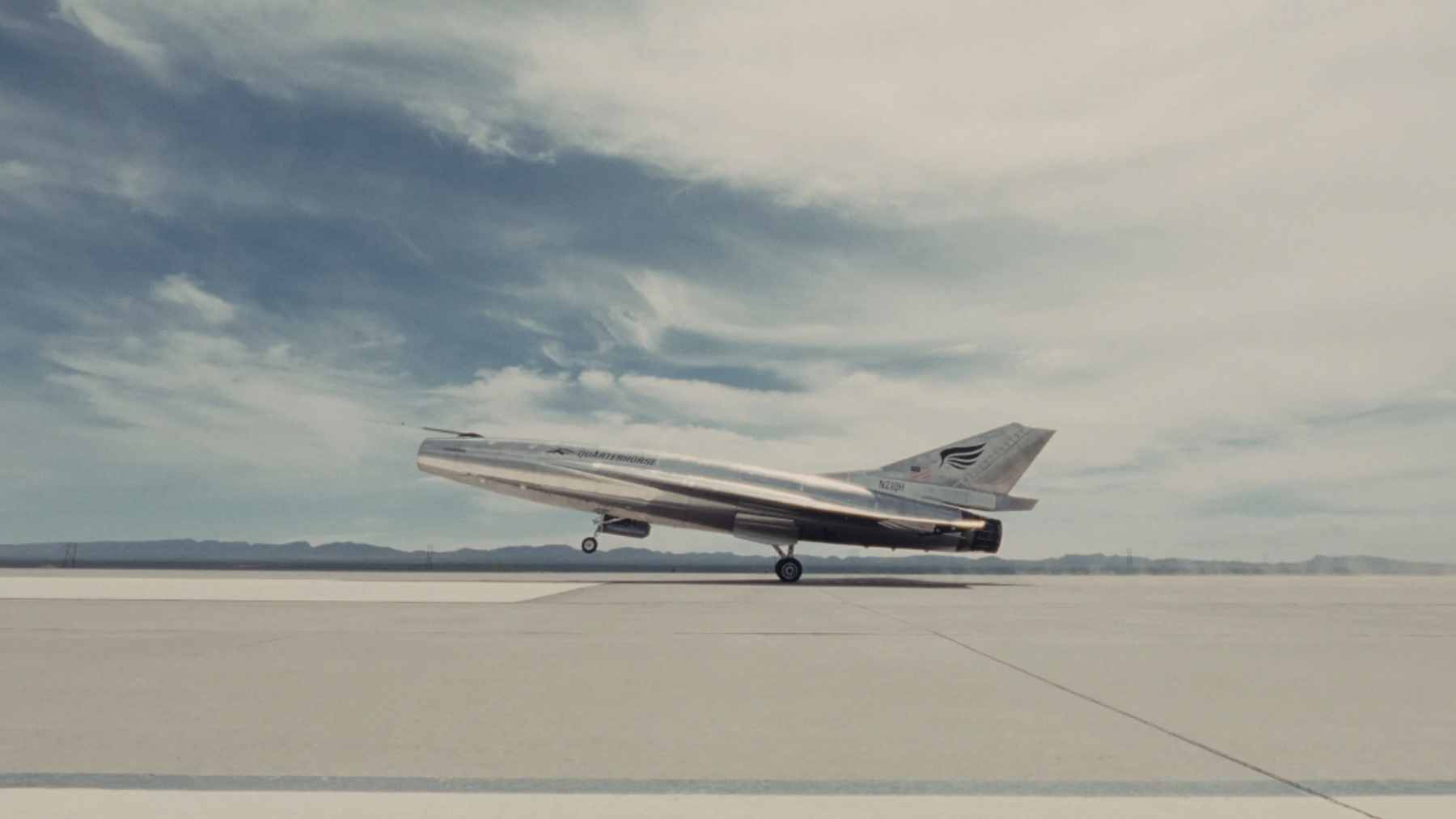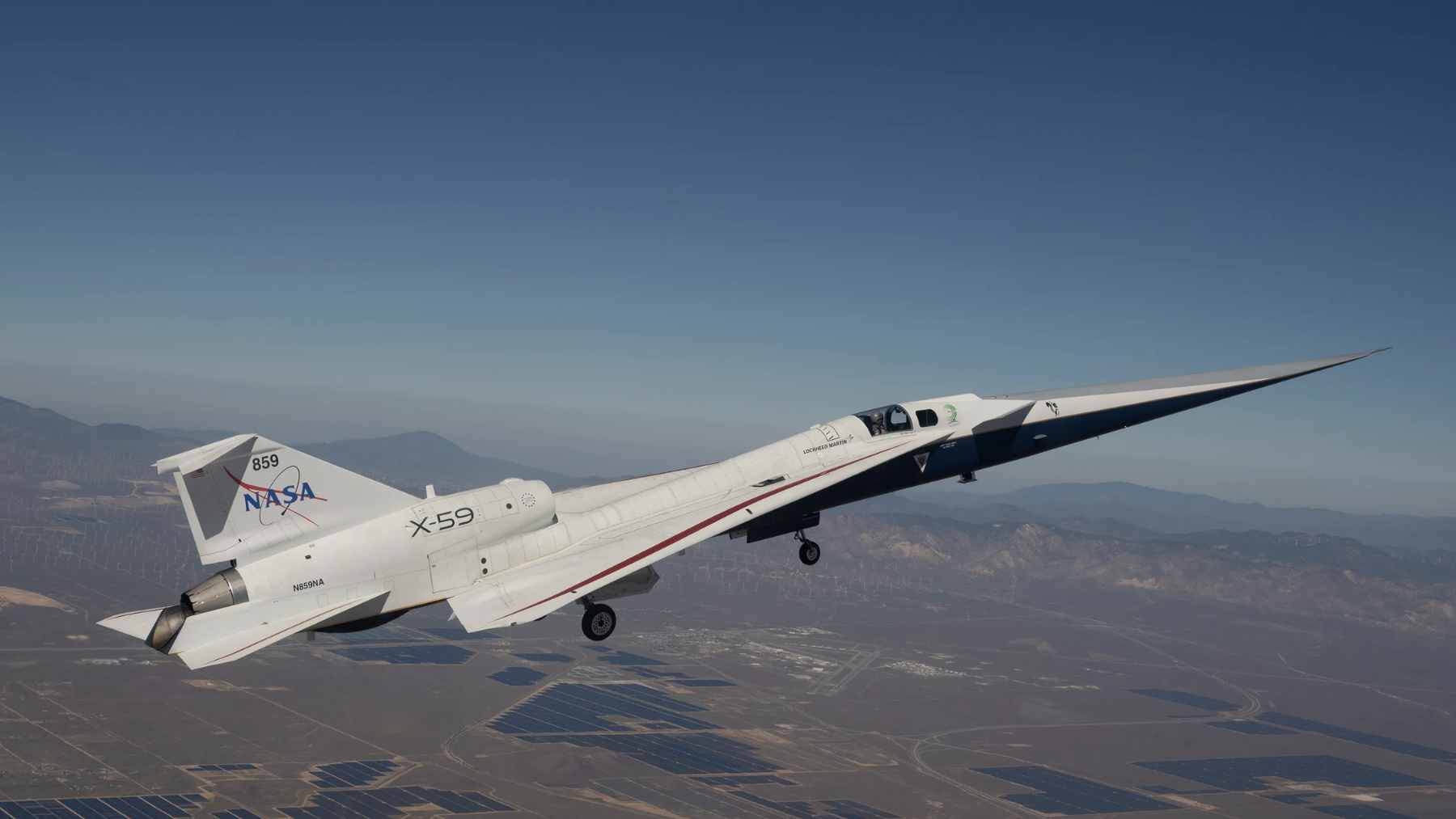
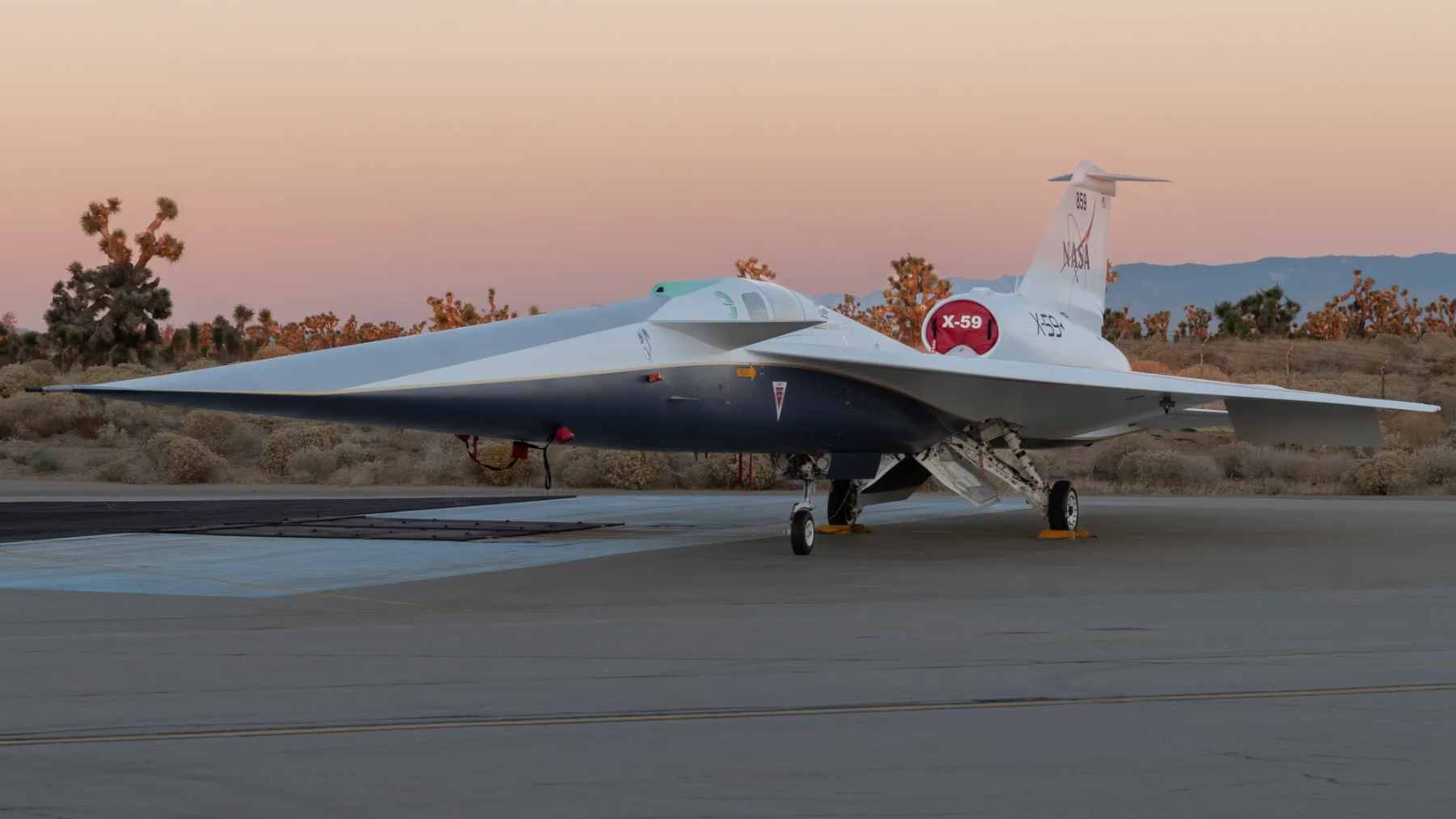
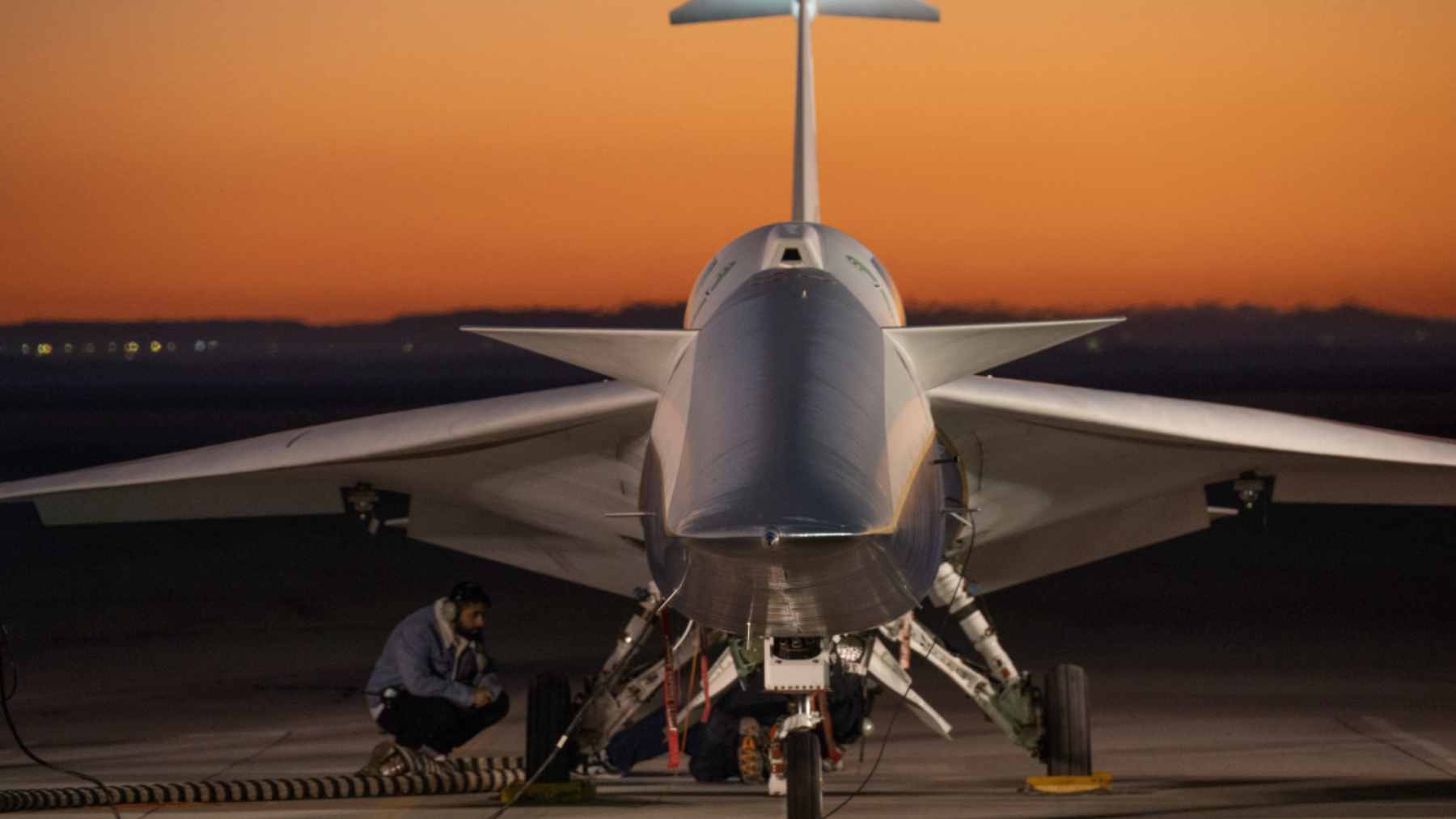
NASA’s experimental X-59 has crossed a line that aviation has been trying to redraw for decades. On June 5, the long, needle-nosed aircraft flew faster than sound for the first time, reaching Mach 1.1, or about 713 mph at 43,400 ft. after taking off from Edwards Air Force Base in California.
That was only the beginning. On June 12, NASA said the aircraft reached Mach 1.4, or about 924 mph at 55,000 ft, the speed and altitude planned for future community overflights. In plain English, NASA is not just asking whether a jet can fly fast, it is asking whether people on the ground can live with it.
A quieter kind of speed
The X-59 is the centerpiece of NASA’s Quesst mission, a program built around a deceptively simple idea. Supersonic flight may be possible over land if the sharp crack of a sonic boom can be turned into a softer “thump.”
That matters because speed alone is not enough anymore. A plane can be a marvel of engineering, but if it shakes windows, startles neighborhoods, or adds a new layer of noise to daily life, the public may not accept it.
NASA has previously said it expects the X-59’s sound to be as low as about 75 perceived loudness decibels, compared with more than 100 perceived loudness dB for Concorde. That is still a technical number, of course. For most people, the real test is simpler: did you notice it while making coffee, walking the dog, or putting a child to sleep?
Why the boom matters
Civil supersonic flight over land has been tightly restricted in the United States for decades. The FAA says civil aircraft are currently prohibited from flying above Mach 1 over land unless they receive a special flight authorization, and the federal rule bars civil aircraft from operating above Mach 1 except under approved conditions.
That rule was not written because engineers stopped dreaming. It was written because sonic booms became a public problem, not just an aviation problem. Noise has an environmental impact, too, especially when it travels across homes, schools, farms, and workplaces.
So the X-59 is carrying more than sensors and fuel. It is carrying a regulatory question that has been waiting for better data. How quiet is quiet enough?
The June flights changed the timeline
The June 5 flight lasted 81 minutes and was flown by NASA test pilot Jim “Clue” Less. After the aircraft crossed the sound barrier, Less said, “I didn’t feel anything,” adding that the jet “easily got to Mach 1.1.”
There is an important catch. A NASA F-15 chase plane flew nearby during the first supersonic test, and its own loud booms obscured whatever sound the X-59 made. In other words, the flight proved the aircraft could go supersonic, but it did not yet prove what people on the ground will hear.
The June 12 flight was even closer to the mission’s real goal. NASA said Mach 1.4 at 55,000 ft. is the profile the X-59 will use when it eventually flies over several U.S. communities to gather public response data. Still, the agency says months of performance testing remain before the acoustic validation phase begins.
What comes next over communities
NASA’s plan is not to declare victory from the cockpit. The agency wants to fly the X-59 over communities, survey how people respond, and share those results with U.S. and international regulators. The goal is to help create data-driven noise standards for possible commercial supersonic flight over land.
That is a very different approach from simply asking the public to trust the technology. It puts people on the ground into the evidence chain. For the most part, that is where this story becomes less about a futuristic aircraft and more about everyday quality of life.
A quiet thump heard once may seem harmless, but heard often, across busy flight corridors, it could feel different. That is why NASA’s community surveys may end up being as important as the flight data itself.
The business promise and the environmental catch
The commercial appeal is obvious. Faster aircraft could shorten long trips, open new premium routes, and give U.S. manufacturers a stronger position in high-speed aviation. NASA says Quesst will also provide design tools and technology that could help aircraft makers develop quiet supersonic concepts with more confidence.
There is another catch, and it is a big one. The X-59 is mainly a noise demonstrator, not a full answer to aviation’s climate problem. The International Council on Clean Transportation estimated that the supersonic transports it examined would burn 7 to 9 times more fuel per seat-mile than comparable subsonic aircraft.
That does not make the X-59 irrelevant. It means the next generation of supersonic aviation will have to clear more than one hurdle. Noise matters. Fuel burn, emissions, and high-altitude atmospheric effects matter, too.
A test for the future of flight
To sum it all up, the X-59’s first supersonic flights do not mean passengers will soon board quiet supersonic airliners across the United States–not yet. What they do mean is that NASA has moved the debate from drawings and promises into measured flight.
If the quiet thump proves acceptable, regulators and manufacturers may have a new path forward. If it does not, supersonic flight over land may remain what it has been for decades, a powerful idea held back by the people who have to live beneath it.
The official statement was published on NASA.