Have you seen the claim that Earth is about to say goodbye to the 24-hour day? It sounds dramatic, almost like schools, offices, airlines, and phones will soon need a new clock. The truth is much calmer, and much stranger.
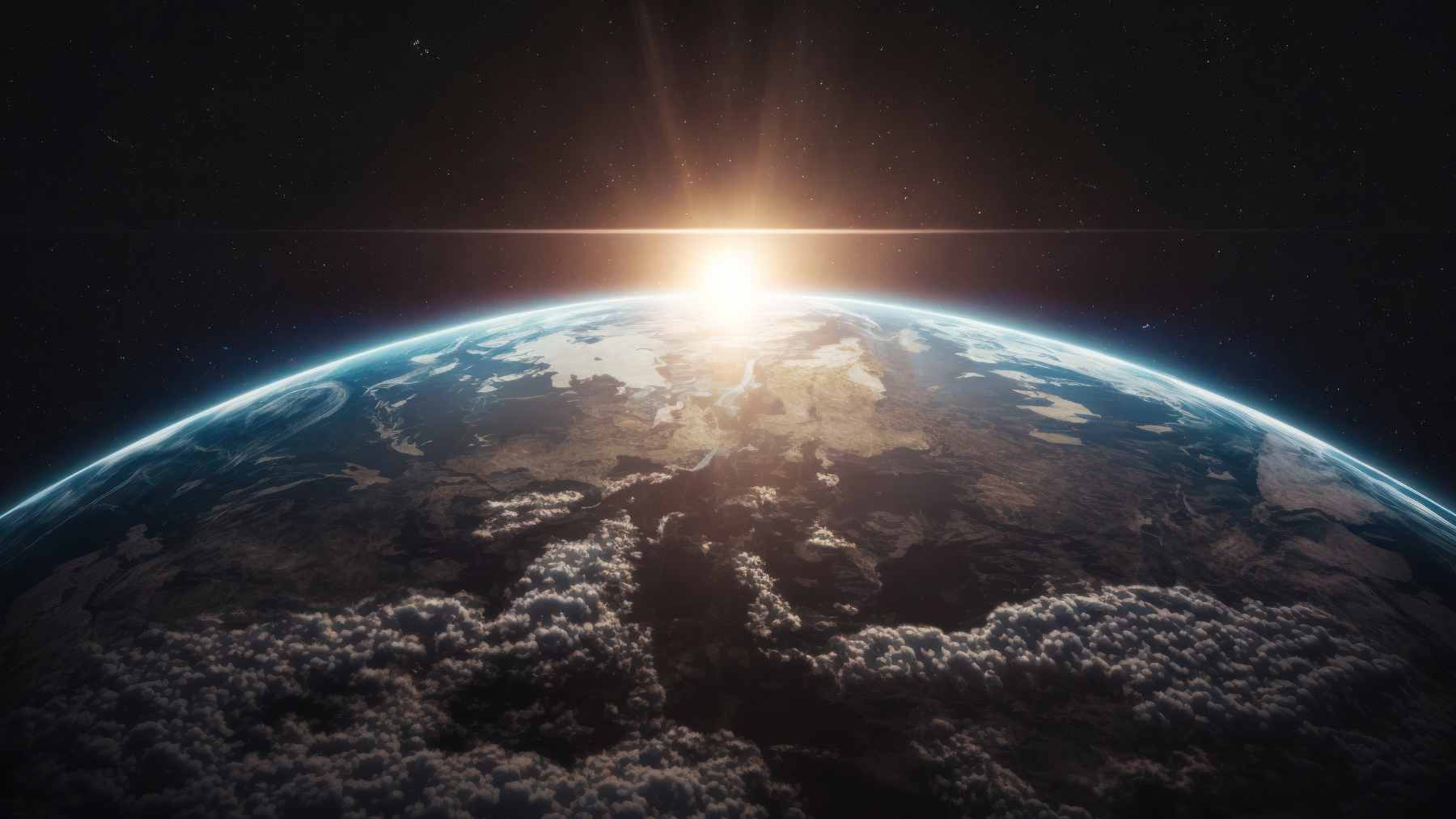
Earth’s rotation is slowing over deep time, mostly because of the Moon’s pull on our oceans. That means a 25-hour day is a real possibility in the planet’s far future, but not on any date anyone can circle on a calendar. We are talking about hundreds of millions of years, while today’s changes are measured in milliseconds per century.
A day is not so fixed
Most of us think of a day as 24 hours because that is how we organize life. Wake up, go to work, eat dinner, sleep, repeat. NASA explains that a solar day on Earth is around 24 hours, while a sidereal day, measured by one full spin against distant stars, is almost exactly 23 hours and 56 minutes.
That difference is not an oversight. Earth spins while also moving around the Sun, so the planet has to turn a little more for the Sun to appear in the same place in the sky. Tiny details like that are why “one day” can sound simpler than it really is.
The Moon is the slow brake
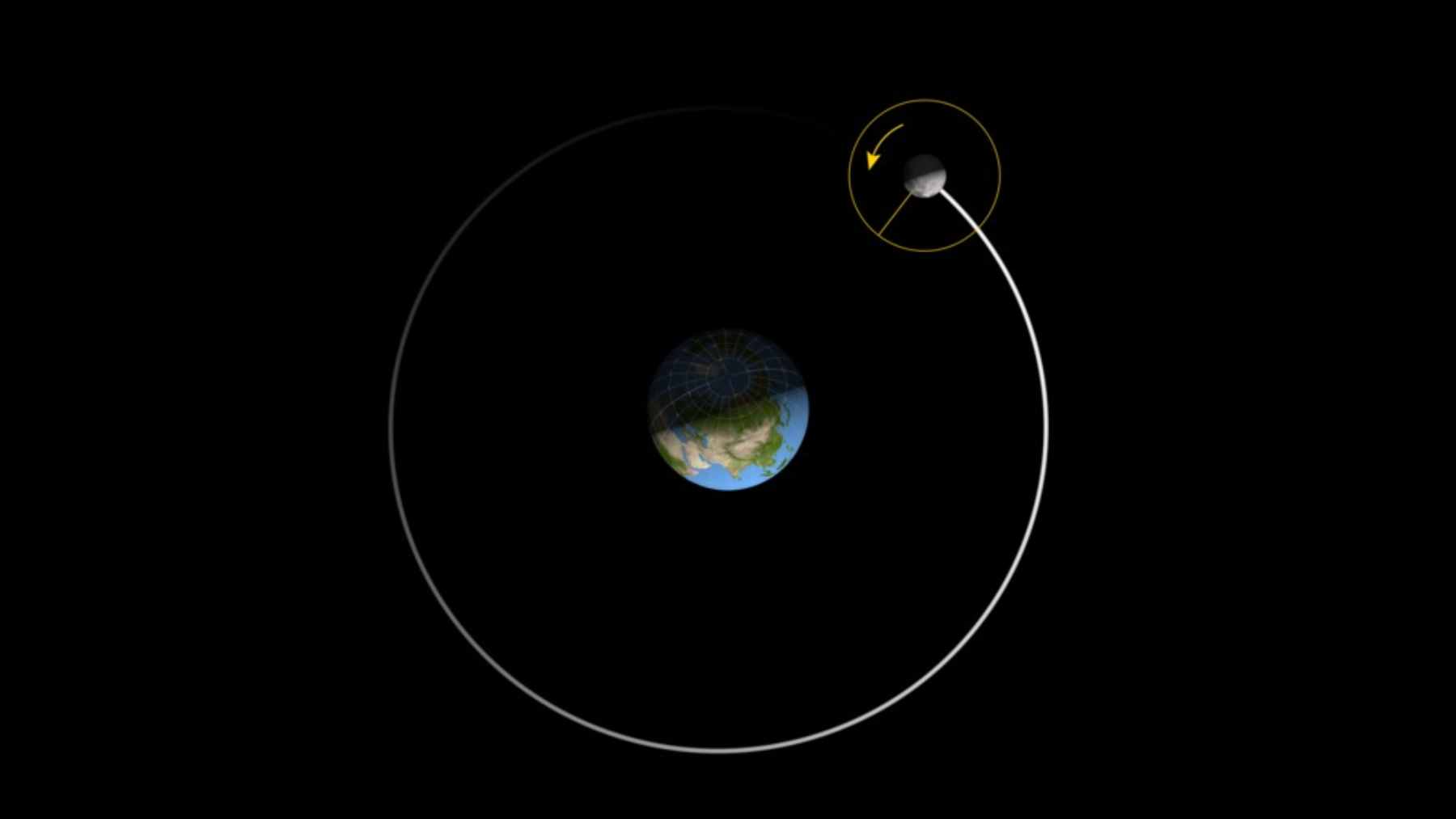
The biggest long-term brake is the Moon. NASA’s eclipse and Earth rotation explainer says ocean tides, raised mainly by the Moon, create friction as Earth turns beneath them. That friction transfers angular momentum from Earth to the Moon, slowing Earth’s spin while the Moon gradually moves away.
By NASA’s estimate, the Moon is receding by about 1.5 inches per year, a value measured with Apollo-era laser reflectors left on the lunar surface. The same source says Earth’s day is currently lengthening by about 2.3 milliseconds per century, although the rate is not perfectly steady.
So when do we get 25 hours? Not soon. The European Commission’s CORDIS service notes that historical measurements suggest an average lengthening of about 1.8 milliseconds per century, and that a 25-hour day would not arrive for another 2 million centuries if the trend did not change. That is roughly 200 million years.
How scientists can tell
Nobody can feel a millisecond change while pouring coffee or catching a train. Scientists see it by comparing precise calculations with long records of eclipses and other astronomical events. CORDIS reports that researchers used about 3,000 years of celestial records, including observations from 720 BC to 2015, to track how Earth’s spin has changed.
Modern timekeeping adds another layer. The National Institute of Standards and Technology (NIST) explains that leap seconds are used to keep Coordinated Universal Time aligned with astronomical time, because Earth’s rotation is irregular and gradually slowing when averaged over long intervals.
The International Earth Rotation and Reference Systems Service says leap seconds are designed to keep UT1 and UTC within 0.9 seconds of each other.
That may sound like a problem for clock nerds only, but it is not. GPS, communications networks, satellites, financial systems, and scientific instruments all depend on timekeeping so precise that Earth’s tiny wobbles and slowdowns matter.
Climate is joining the clock
The Moon is still the ancient drumbeat, but climate is now part of the story, too. NASA-funded research found that since 2000, days have been getting longer by about 1.33 milliseconds per 100 years because melting glaciers, ice sheets, groundwater shifts, and rising seas move mass around the planet.
In practical terms, it works a bit like a skater slowing a spin by spreading out their arms. When ice melts near the poles and more water shifts toward lower latitudes and the equatorial ocean, Earth’s rotation can decelerate slightly. You will not notice it at breakfast, but high-precision technology might.
NASA also reported that Earth’s spin axis moved about 30 feet between 1900 and 2023, and that about 90% of recurring polar motion from 1900 to 2018 could be explained by changes in groundwater, ice sheets, glaciers, and sea level. That is a small movement on a planetary scale, but it is a sharp reminder that climate change is not just about heat waves and coastlines.
Earth once had a strange pause
There is another twist. A University of Toronto team found that Earth’s day stayed close to 19.5 hours for a huge stretch of geological time, from about 2 billion years ago until 600 million years ago. During that period, a solar-driven atmospheric tide appears to have countered the Moon’s braking effect.
Without that billion-year pause, the researchers say today’s 24-hour day could have stretched beyond 60 hours. Imagine a Monday with that much room in it. It sounds useful until you realize the entire climate, biology, and rhythm of the planet would be different.
Norman Murray, one of the astrophysicists linked to the work, compared the process to “pushing a child on a swing.” When the timing lines up, a small push can have a much bigger effect. In this case, the timing involved Earth’s atmosphere, temperature, resonance, and the push and pull of the Sun and Moon.
What to keep in mind
The headline “goodbye to the 24-hour day” is not entirely wrong, but it skips the part that matters most. Earth is slowing, yes. A 25-hour day is expected eventually, yes. But it is not a coming schedule change, and it is not a near-term threat to calendars, clocks, or daily life.
The real news is more subtle. The length of a day is shaped by tides, the Moon, Earth’s interior, ancient climate, modern melting ice, and the precision systems that quietly run our world. At the end of the day, literally, our planet is not a perfect spinning top.
The study was published on Science Advances.