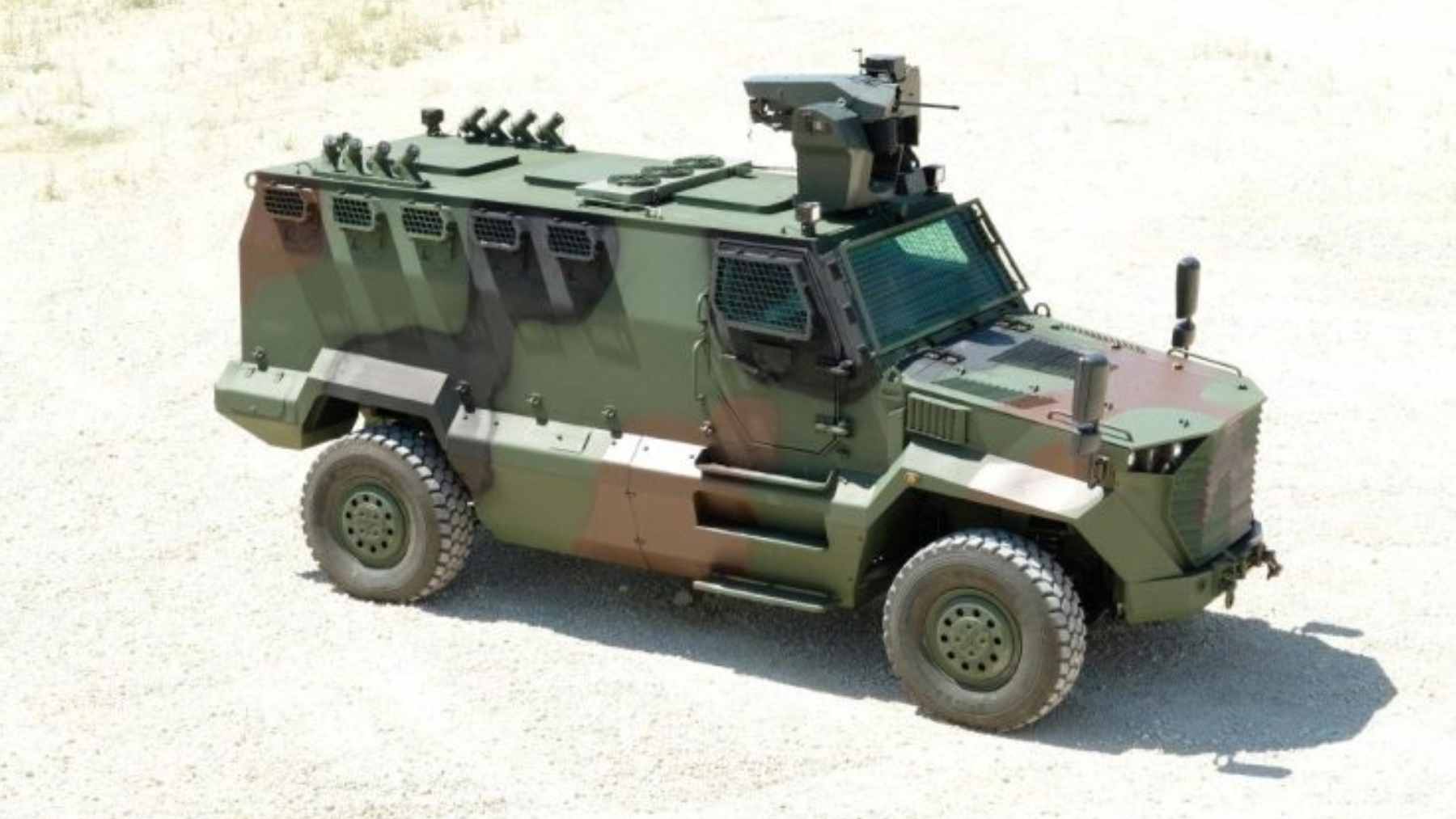
What does an armored vehicle need to survive the modern battlefield? It is no longer just thick steel and a big engine. Today’s armies are looking for protection against mines, ambushes, drones, rough terrain, urban fighting, long supply lines, and even the growing pressure to explain the environmental footprint behind defense production.
That is where Turkey’s HIZIR 4×4 armored vehicle family, also rendered as “Khader” in some translated material, is trying to make its mark.
Built by Katmerciler, the mine-resistant and ambush-protected platform has become one of the clearest examples of Turkey’s push to combine domestic defense engineering, export ambitions, crew protection, and climate-aware industrial reporting in one story.
Built for hard roads
The HIZIR 4×4 MRAP is officially described by Katmerciler as a vehicle designed for high performance in extreme rural and urban conditions.
The company says the platform is made for 9 personnel and offers high ballistic and mine protection, while also being adaptable for combat, command control, CBRN, ambulance, border security, reconnaissance, and weapons-carrier roles.
Under the hood, the platform boasts an 8.9-liter turbocharged engine. It can generate 400 horsepower and roughly 1,143 ft.-lbs. of torque, with a top speed near 75 mph and an operating range of more than 620 miles. Its ground clearance is about 16 inches, and it can climb a 70% grade, which is roughly a 35° incline.
That matters more than it sounds. On paper, speed and range look like numbers. In the field, they can mean fewer fuel stops, fewer recovery operations, and more time moving before a convoy becomes a target.
A second generation
Katmerciler’s HIZIR II builds on that base with practical upgrades, not just a tougher-looking body.
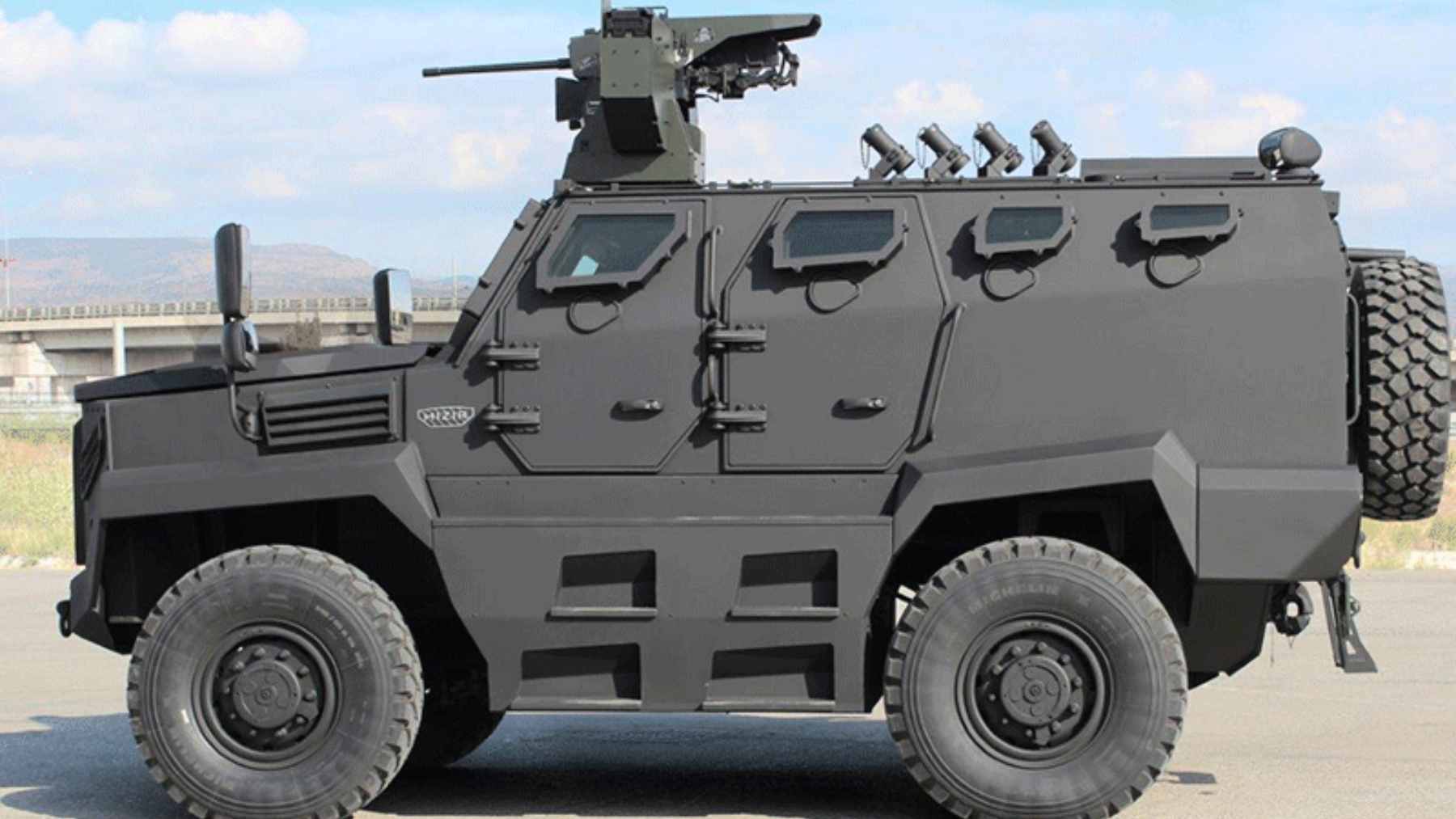
The official HIZIR II product information lists increased crew capacity up to 14, an under-belly spare tire position for a lower center of gravity, a ramp-type rear door for faster operations, improved air conditioning, face-to-face seating, a single-piece windshield, and a longer driving range through an extended fuel tank.
There is some nuance here. Anadolu Agency reported that the latest delivered HIZIR configuration for the Turkish Armed Forces uses a three-door layout and can carry up to five personnel, showing that the platform can vary depending on mission fit and customer requirements. In other words, this is not a one-size-fits-all armored box.
The newer vehicles were delivered under a Turkish National Defense Ministry procurement program, according to Anadolu Agency. Katmerciler said production is continuing and remaining deliveries under the project are planned to be completed by the end of the year.
Weapons stay remote
One of the most important battlefield trends is simple to understand: keep the crew protected inside the vehicle for as long as possible. The HIZIR can be fitted with a remotely controlled weapon station, allowing operators to engage threats without exposing themselves directly.
That station can support several weapon options, including a 0.50-caliber heavy machine gun, a 0.30-caliber machine gun, and a 40-millimeter grenade launcher. It is the kind of flexibility armies want when one vehicle may be asked to patrol a road one day and support a convoy the next.
The vehicle also carries support systems aimed at survival, not just firepower. The provided briefing describes GPS, internal communications, a rescue winch, automatic fire suppression, central tire inflation, and filtration protection against chemical, biological, radiological, and nuclear threats.
Exports are the other front
For Turkey, HIZIR is also a business story. The vehicle entered service domestically and quickly moved toward overseas sales, including a first export contract reported in 2019 worth $20.7 million with an African country.
Katmerciler Executive Vice Chairman Furkan Katmerci told Anadolu that demand for the HIZIR platform from abroad continues to rise. “Strong interest, particularly from friendly and allied countries, is bringing new cooperation opportunities,” he said, adding that the company aims to sign new international contracts this year.
That is not just marketing language. Defense buyers often look beyond armor thickness and engine power–they want spare parts, training, local support, and a supplier that can keep delivering during a crisis. That’s the part that does not fit neatly into a spec sheet.
Climate enters the story
Here is the uncomfortable part. A 400-horsepower armored diesel vehicle is not a “green” machine, and there is no official fuel-burn figure in the available product information, while the defense industry is being pulled into the same climate-accountability world as other heavy manufacturers.
Katmerciler’s 2024 sustainability report says the company tracks environmental management and climate-related risks under board oversight. It also identifies physical risks such as flooding, wildfire, drought, and water scarcity, while setting targets around emissions, energy, resource efficiency, and renewable power.
By the company’s own figures, Katmerciler reported Scope 1 emissions of about 414 tons of CO2-equivalent and Scope 2 emissions of about 890 tons of CO2-equivalent. The company says it aims to cut those categories by 10% by 2035 and raise renewable energy use to 10% by the same year.
The same report says Katmerciler produced 142 land vehicles in the aerospace and defense category in 2024. That number helps put the HIZIR story in context. These are not just battlefield tools, they are industrial products made inside factories that now face energy, carbon, and supply-chain scrutiny.
What to watch next
The next test is not only whether HIZIR can handle rough ground or survive blasts. It is whether Katmerciler can keep production steady, complete the remaining Turkish Armed Forces deliveries, and turn foreign interest into signed contracts.
For soldiers, the priority is survival. For governments, the calculation is broader. Cost, domestic production, export credibility, maintenance, logistics, and climate reporting are all part of the same package now.
At the end of the day, the HIZIR family shows where armored vehicles are heading: more protection, more electronics, more mission flexibility. And increasingly, more questions about the industrial footprint behind the metal.
The official product information was published on Katmerciler’s website.