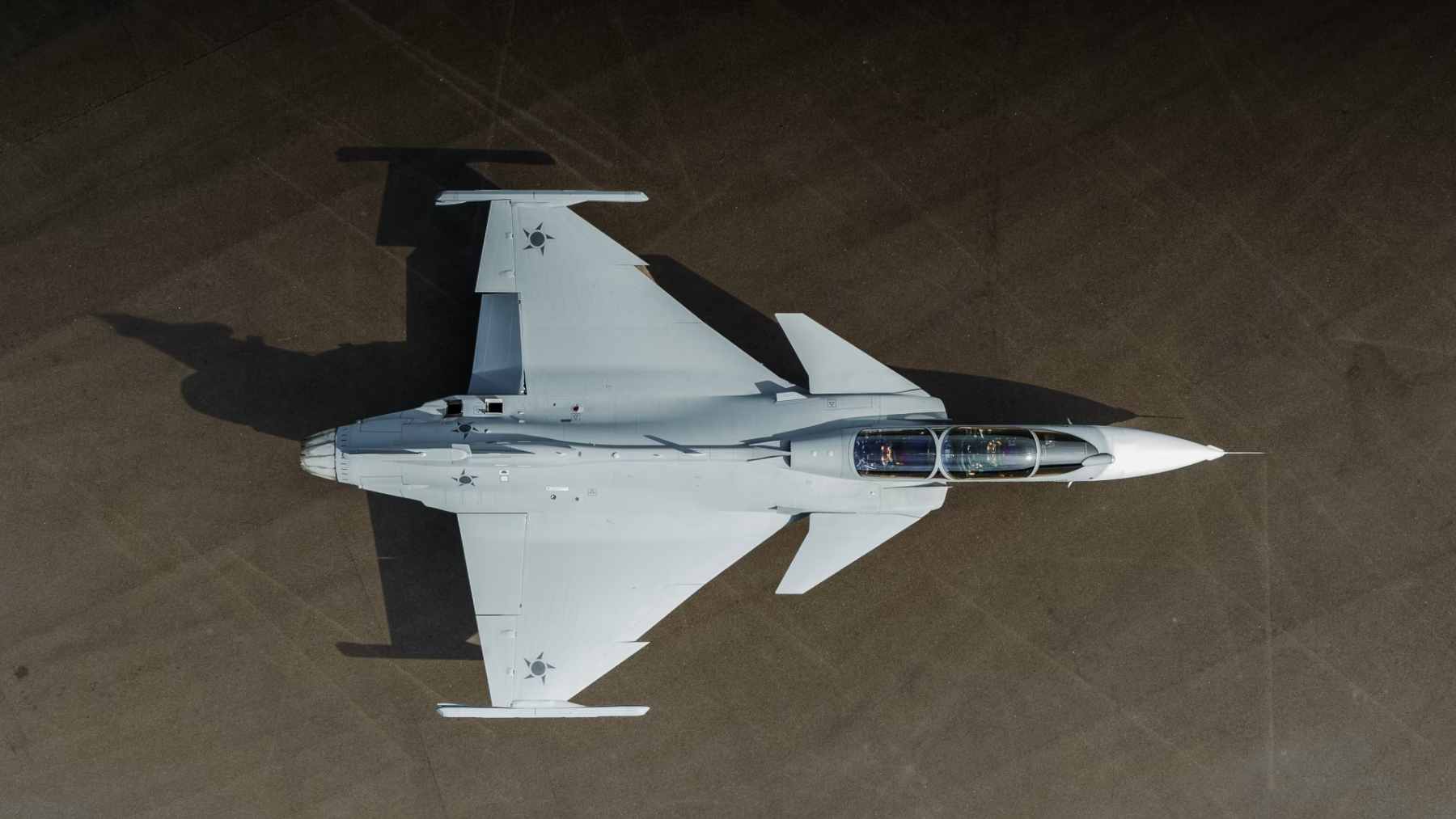
Brazil is considering a major expansion of its Gripen fighter fleet, a move that could lift its Swedish-made combat aircraft program from 36 jets to as many as 56.
The plan was confirmed in a joint Sweden-Brazil statement after Brazilian Defense Minister José Múcio visited Sweden from June 1 to June 4, 2026, and it puts Saab, Embraer, and Brazil’s Air Force at the center of one of Latin America’s most closely watched defense industrial projects.
At first glance, this is a military story. Look closer, though, and it is also a business, technology, and environment story, because the next generation of defense programs will be judged not only by range, sensors, and jobs but also by supply chains, carbon reporting, and how long expensive aircraft can be upgraded instead of replaced.
In practical terms, Brazil is asking a hard question that more governments now face: how do you modernize national defense without treating the environmental footprint as someone else’s problem?
A larger Gripen fleet
Brazil already has an order for 36 Saab Gripen E/F fighter aircraft, signed in 2014, to modernize its air force. The new official statement says both governments discussed an amendment to the current contract and the possible acquisition of 20 additional Gripen E/F aircraft to meet Brazil’s defense requirements.
Swedish Defense Minister Pål Jonson told reporters that Brazil wants to go beyond the 36 Gripens and consider another 20. He also said the added aircraft would be made in Brazil, keeping the focus on local industry rather than a simple import deal.
For Brazil, that is critical. A fighter jet is not just an aircraft on a runway. It is a chain of engineers, software teams, test pilots, factory workers, maintenance crews, and parts suppliers that can shape an aerospace sector for decades.
Why Brazil chose Sweden
Brazil’s Gripen decision dates back more than a decade, when Brasília chose Saab’s aircraft over Boeing’s F/A-18 Super Hornet and France’s Rafale to replace older fighters. That choice later drew scrutiny in Brazil, but Reuters reported in 2024 that Brazilian and Swedish investigations had been closed without indicating wrongdoing by Saab.
The political history still hangs in the background. Even so, the program has kept moving, and that is the point Brazilian officials are now trying to underline. Múcio said the additional aircraft show “the strength of our alliance.”
What changed the story from a purchase into a partnership was technology transfer. Reuters reported in March that 15 of the 36 aircraft under the contract were to be produced at Embraer’s Gavião Peixoto plant in São Paulo State, making Brazil the first Latin American nation to build a supersonic fighter jet.
Made in Brazil
Saab, Embraer, and the Brazilian Air Force unveiled the first Gripen E produced in Brazil on March 25, 2026. Embraer said the aircraft came from its Gavião Peixoto industrial complex and that 14 more jets under the current contract will follow the same production model.
The numbers show why this matters. Embraer said 10 aircraft had already been handed over by late March, while the Brazilian Gripen program includes 28 single-seat Gripen E jets and eight two-seat Gripen F jets.

On June 2, Saab also rolled out the first Gripen F for Brazil in Linköping, Sweden. Saab described the F version as a two-seat aircraft developed with Brazilian industry for training and operational missions, and said Brazil’s role in the program has trained hundreds of engineers and technicians.
The green defense test
No one should pretend that fighter jets are green products. They burn fuel, require specialized materials, and sit inside a defense sector whose emissions remain hard to compare across countries.
That is where the environmental question becomes serious. The Conflict and Environment Observatory warned in 2025 that military emissions reporting to the United Nations climate system remains voluntary, patchy, and inconsistent, with its researchers estimating militaries are responsible for about 5.5% of global emissions.
For the Gripen expansion, the immediate public documents focus on defense needs, industrial cooperation, and innovation. They do not present the possible extra 20 aircraft as a climate measure.
Still, an aircraft built to be maintained, upgraded, and supported locally can become part of a greener industrial conversation if governments require transparent data and hold suppliers to measurable targets.
Saab’s climate pledge
Saab says its climate targets have been approved by the Science-Based Targets initiative. The company shoots for a 42% reduction in Scope 1 and Scope 2 emissions by 2030 from a 2020 baseline, a 25% reduction in applicable Scope 3 categories by 2030, and a long-term net-zero target by 2050.
Those targets matter because Scope 3 can include supply chains, transport, business travel, and the use of products by customers. In plain English, the environmental impact does not stop at the factory gate.
Will that be enough? Not by itself, but it gives Brazil, Sweden, and Saab a measurable frame that can be checked over time, especially if a larger fleet leads to more production, more maintenance, and more exports from Brazil.
A new innovation center
The joint statement also points to an Innovation Center in Brazil dedicated to systems and equipment for operating, maintaining, and modernizing Gripen aircraft. That may be technical, but it is where the long game sits.
Modern fighter programs depend heavily on software, sensors, electronic warfare, logistics, and upgrades. The greener route, to a large extent, is not buying a new aircraft every time threats change. It is keeping existing platforms useful for longer, with better components and smarter maintenance.
At the end of the day, Brazil’s possible Gripen expansion is about sovereignty and industrial ambition. But it also shows how defense deals are being pulled into a wider conversation about climate accountability, local production, and technology that lasts.
The official statement was published on the Swedish Government website.