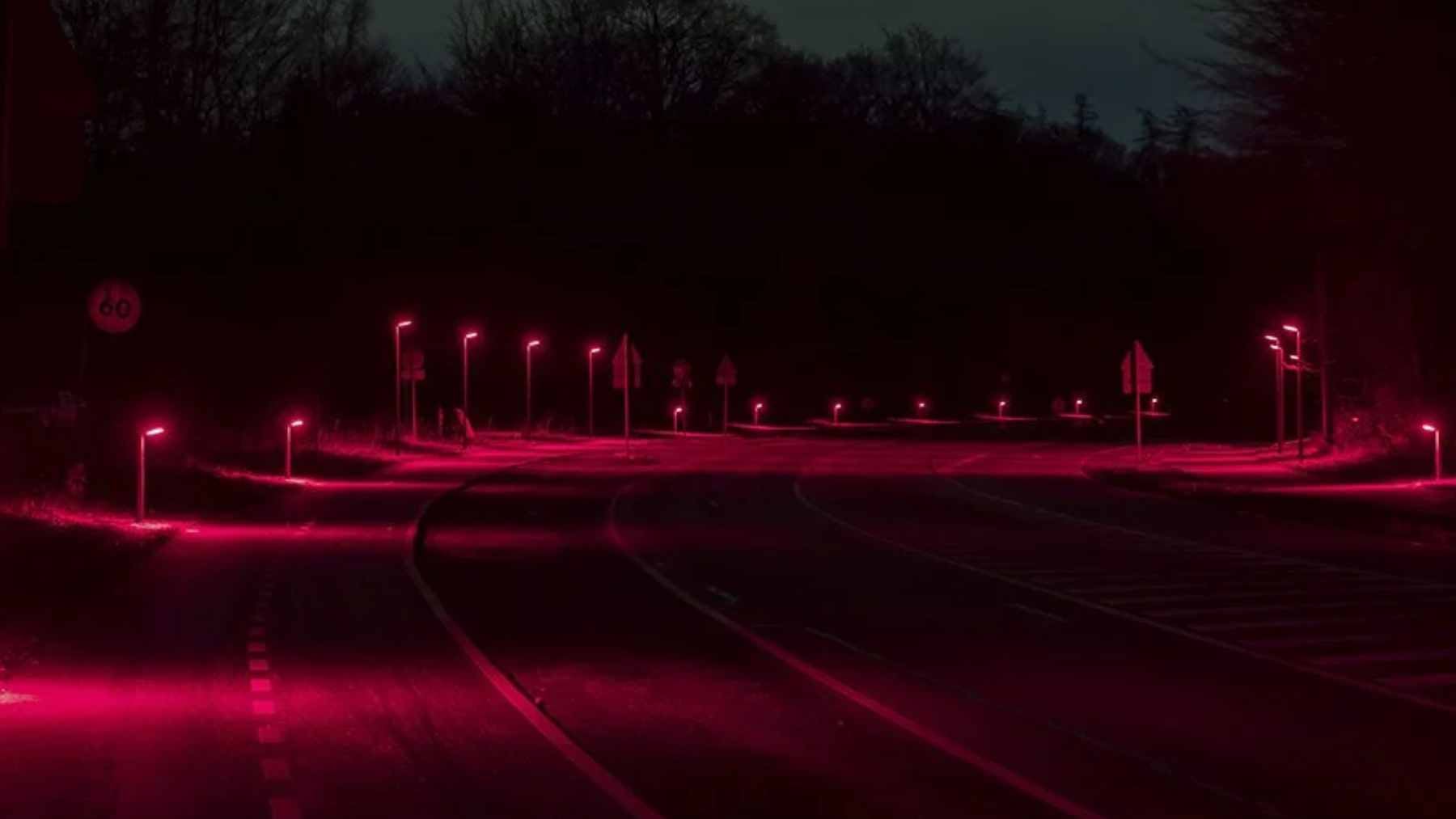
At first glance, the red glow on Frederiksborgvej in Gladsaxe looks like a warning, or maybe the set of a science fiction movie. But the strange color has a practical purpose.
The municipality outside Copenhagen has used red-spectrum LED lighting along a busy road and cycle route because ordinary white streetlights can break up the dark corridors bats use to move and feed.
That small change carries a bigger lesson. Cities spend millions making nights safer for people, but those same lights can quietly turn parks, tree lines, and road edges into obstacles for wildlife. In Gladsaxe’s case, the answer is not darkness everywhere. It is smarter light, placed carefully, toned down, and colored red where nature needs a little breathing room.
A road that turned red
The project focuses on Frederiksborgvej near Skovbrynet, where suburbia meets a greener area used by roosting and foraging bats. Light Bureau, part of AFRY, describes the installation as a compromise between people and animals on a roughly 0.4-mile stretch of road and the Farum cycle superhighway.
Instead of flooding the whole corridor with white light, the design uses 30 red bollards. Each one is roughly 3.3 feet high, and they are placed about 98 feet apart. That spacing matters because it leaves darker gaps between pools of red light, giving light-shy animals a better chance to cross without being fully exposed.
Safety was not ignored. At places where cyclists and pedestrians cross the road, the project uses 12 taller poles, each roughly 11.5 feet high, to create better visibility and awareness. In practical terms, that means the project is not asking people to navigate blind. It is asking the lighting to do less damage while still doing its job.
Why bats are central
The official Gladsaxe release says seven bat species have been recorded near Frederiksborgvej. None of them is listed as threatened or red-listed, according to the municipality, but some are considered more vulnerable to the effects of roads.
Why would a streetlamp matter so much? For many bats, darkness is not just a preference. It is part of the route map they use every night, like the sidewalk someone takes to get home after work.
Bright, open areas can make slower-flying bats feel more exposed to predators, and that can change where they feed or how they move. A road may look unchanged to a driver, but to a bat, a line of white lights can become a wall. Quietly, habitat shrinks.
The science behind red light
The idea is backed by research on how bats respond to different light colors. In 2017, a field experiment led by Kamiel Spoelstra at the Netherlands Institute of Ecology tested bat activity under white, green, and red LED conditions over five years at eight forest-edge sites in dark parts of the Netherlands.
Spoelstra said “We’ve found these bats to be equally active in red light and in darkness.” White and green light, on the other hand, substantially reduced activity among slow-flying, light-shy bats.
There is a twist here. Some more agile bats may take advantage of white or green streetlights because insects gather around them, almost like a late-night food truck. But that does not mean the ecosystem is working normally. Red light attracts fewer insects, so the nighttime scene stays closer to what bats would encounter in the dark.
More than decoration
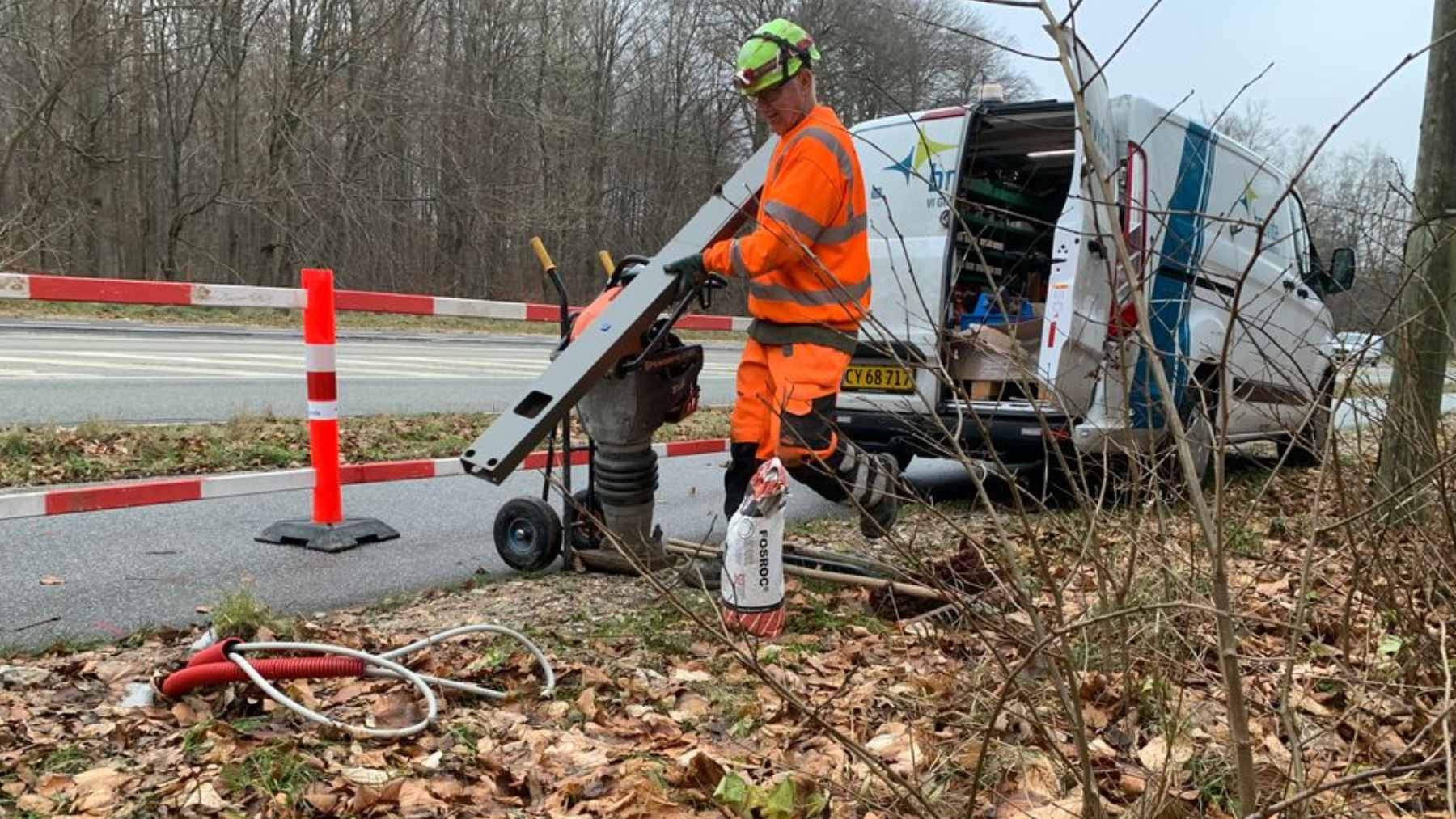
Gladsaxe’s red road is eye-catching, but it is part of a larger lighting modernization effort. The municipality said it is replacing around 5,000 fixtures with more sustainable options in cooperation with Light Bureau, Andel Lumen, and the EU-funded Lighting Metropolis program.
The broader Lighting Metropolis effort was designed to speed up LED adoption in the Øresund region. A project summary said participants expected energy savings of at least 7.2 million kilowatt-hours, and it noted that only about 20 percent of municipal light sources had been switched to energy-saving LED technology at the time of reporting.
That energy piece matters. The United Nations Development Programme says 4.2 billion people, or 55 percent of the world’s population, lived in cities in 2018, while cities occupy just 3 percent of Earth’s land but account for 60 to 80 percent of energy consumption and at least 70 percent of carbon emissions.
Streetlights are not the whole climate story, of course. But they are everywhere, they run every night, and cities control them directly.
What cities should learn
The lesson is not that every avenue should suddenly glow red. That would be too simple, and probably wrong. The smarter takeaway is that urban lighting needs to be designed around place, not just brightness.
Near parks, wetlands, tree lines, rivers, and known wildlife routes, cities can choose warmer colors, redder spectra, shields, dimming, motion controls, and better spacing. At bus stops, crossings, and busy intersections, brighter light may still make sense. The point is balance.
For city leaders, this is also a budget question. LEDs are often sold as a way to cut power bills and maintenance costs, and that is true for the most part. But the Gladsaxe project shows that the next step is more thoughtful than swapping one bulb for another. The trouble is, nature notices the details.
Red lights and future streets
At the end of the day, the red glow in Gladsaxe is a signal. It tells drivers, cyclists, and pedestrians that they are passing through a shared landscape, not just a traffic corridor. That small message may matter more as cities grow and the edges between built-up neighborhoods and wildlife habitat get thinner.
It is also a reminder that technology does not have to be louder, brighter, and more intrusive to be modern. Sometimes the better invention is the one that steps back a little. Less glare. More dark. A road that works for people without blocking the animals that were already there.
The official press release was published on Via Ritzau.