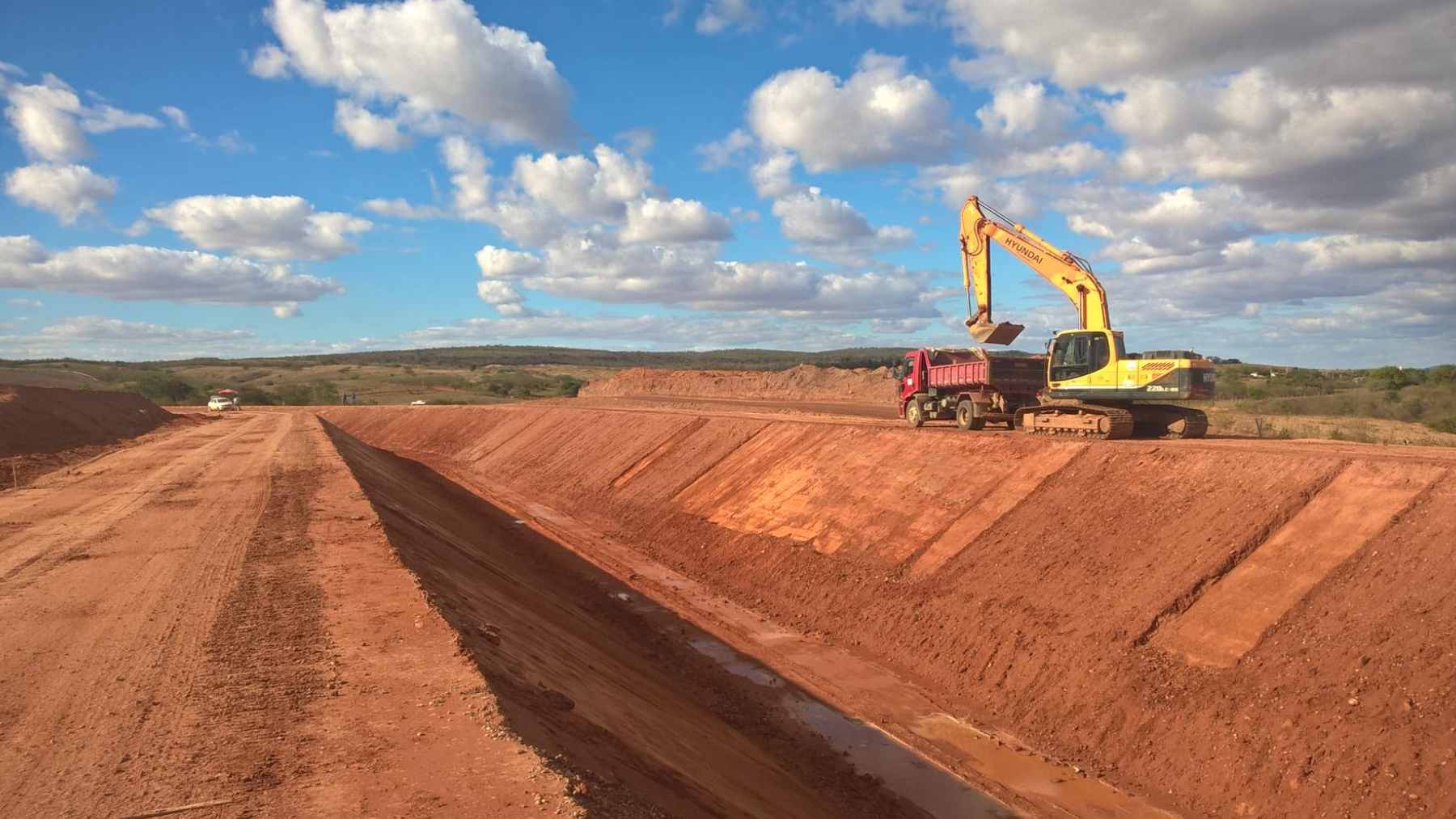
Brazil is moving ahead with one of the most ambitious water infrastructure projects in South America, a 90.3-mile artificial water corridor designed to carry São Francisco River water into Ceará, one of the driest states in the country’s northeast.
The project, known as the Ceará Water Belt, is no longer just a plan on paper. According to the state’s Secretariat of Water Resources, it reached 92% completion after another 9.3-mile section was cleared to receive water on March 30, 2026.
The idea is simple, even if the engineering is not. Water captured at the Jati dam travels through open channels, tunnels, and siphons toward the headwaters of the Cariús River in Nova Olinda, giving the Cariri region a stronger buffer against drought. In a place where waiting for rain can shape everything from farming to family routines, that matters.
A river built by engineers
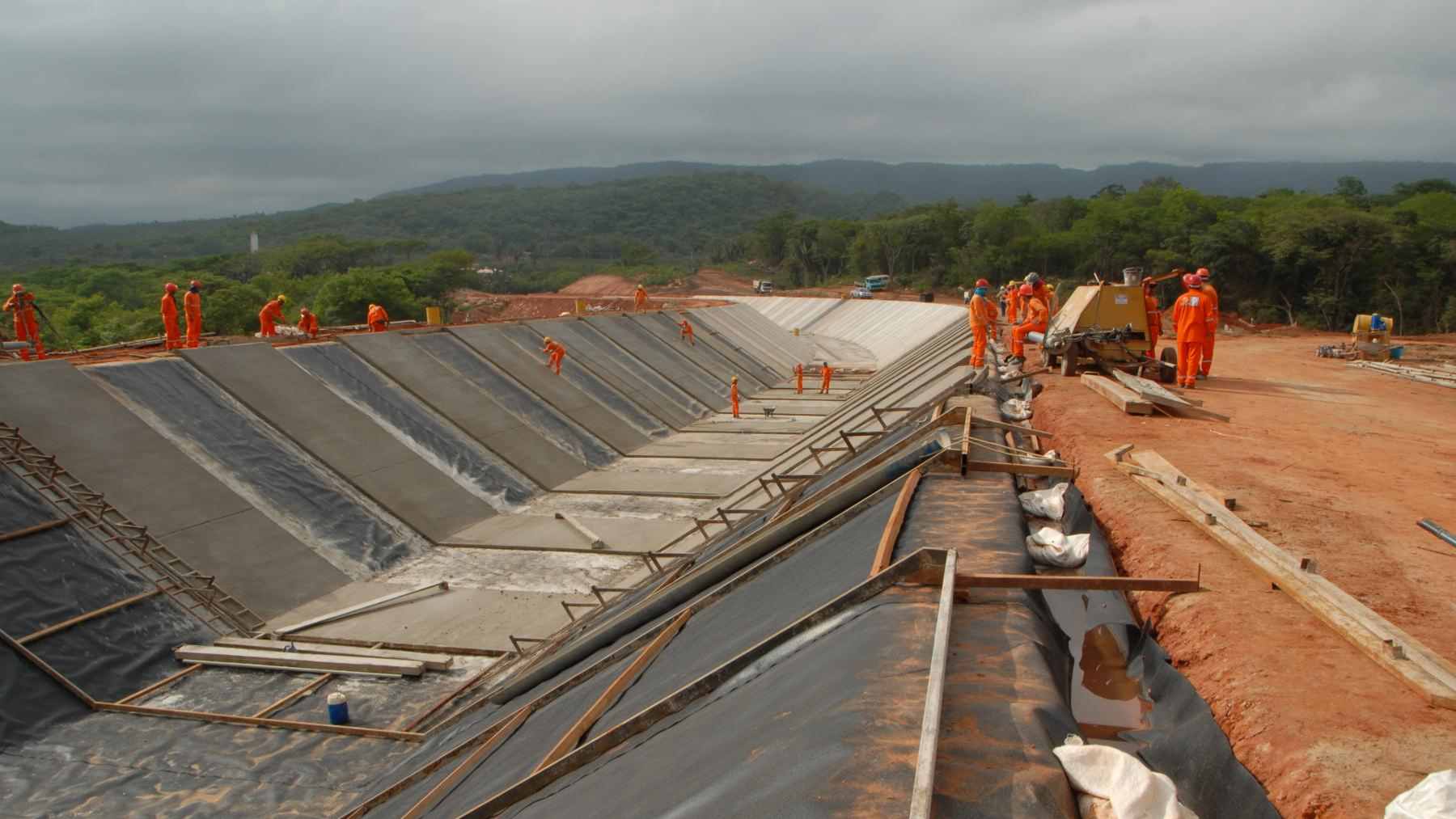
The Ceará Water Belt is often described as an artificial river, but in practical terms it is a gravity-fed water transfer system. It uses channels, siphons, and tunnels to move water without relying on constant pumping along the entire route.
That may sound like a small technical detail, but it is central to the project’s long-term value. A system that leans on gravity can reduce operating pressure once construction ends, which is important for a public work meant to serve cities, farms, industry, tourism, and livestock watering.
The project begins at the Jati dam, connected to the northern axis of the São Francisco River Integration Project. From there, the water line heads toward Nova Olinda and the Cariús River area, placing São Francisco water closer to communities that have lived for generations with irregular rainfall.
Why Ceará needs it
Ceará sits in Brazil’s semi-arid “sertão,” where average rainfall is often below 31.5” a year. The World Bank has also noted that rainfall in the state is highly variable, with most of it falling in the first half of the year while the second half is generally dry.
That rhythm creates a hard question: what happens when reservoirs fall, wells are strained, and cities keep growing?
For the most part, Ceará’s answer has been to build a more connected water network. The Water Belt fits that strategy by linking transferred water to regional basins and reducing dependence on isolated local sources, especially in Cariri, the state’s second most important population and economic center.
What has changed
The latest official update from Ceará’s Secretariat of Water Resources says the project is now 92% complete and should be finished in 2026. That update followed the release of an additional 9.3-mile stretch between the CE-060 siphon and the São Francisco Salamanca siphon.
A previous state government statement, published in December 2025, had placed the project at 91% completion and forecast final delivery for June 2026. It also said the works were already moving faster than expected at that point.
“The expectation was to end the year with 85%, but we already reached 91% before year’s end,” Ceará’s water resources secretary Fernando Santana said in that statement. For residents watching construction crews, heavy machinery, and dry channels slowly turn into operating infrastructure, that percentage is more than a bureaucratic milestone.
The people in its path
Once complete, the Water Belt is expected to directly influence 24 municipalities and immediately benefit around 561,000 people. With a future connection toward the Fortaleza metropolitan region through the Eixão das Águas system, state officials say its reach could extend to more than 5 million residents.
The priority is human consumption. That is key, because major water projects often raise a familiar concern. Will households come first, or will business users take the front seat?
The official plan places drinking water ahead of other demands, followed by industry, tourism, animal watering, and irrigated agriculture. At the end of the day, what the system is trying to do is give Ceará more room to manage dry periods before they become emergencies.
A costly bet on water security
The investment figures show the scale of the gamble. Ceará’s government listed total joint state and federal investment at about $159 million, based on the recent mid-market exchange rate of about 5.04 Brazilian reais per U.S. dollar.
But there is a wrinkle. The same official statement said the global value of lots 3 and 4 alone had reached about $215 million, with roughly $63 million for lot 3 and about $152 million for lot 4. That reflects how technically demanding the unfinished sections have become.
The work has also become a short-term economic engine in its own right. More than 1,500 direct workers and about 500 heavy machines have been mobilized, feeding local supply chains while the system is still under construction.
The hard part comes next
Finishing concrete channels is only part of the story. Once the Water Belt is fully delivered, Ceará’s Water Resources Management Company (Cogerh) is expected to operate, maintain, and monitor the system, including monthly checks on the volume of raw water delivered.
That is where the project will face its real test. A 90-mile water corridor can change the map, but it still depends on careful management, maintenance, and fair allocation when drought pressure rises.
Still, for Ceará, the Water Belt is a sign of how climate pressure is reshaping infrastructure. It is not just a canal. It is a bet that engineering, planning, and public water management can make everyday life less fragile in a region where the sky does not always cooperate.
The official statement was published on the Ceará Secretariat of Water Resources website.