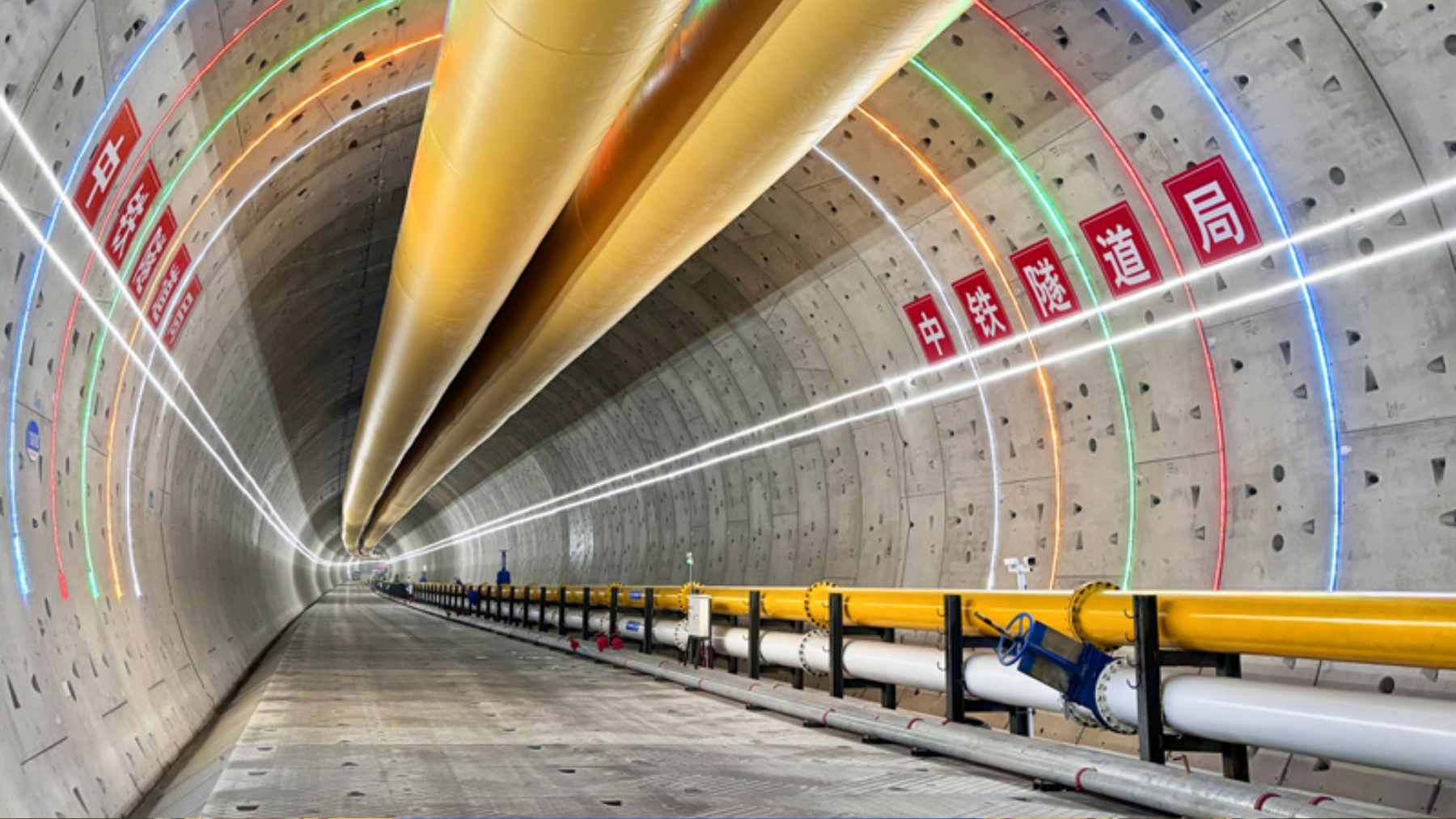
China has finished a difficult piece of underwater engineering beneath one of Asia’s most important rivers. On March 29, China’s domestically developed “Linghang” shield tunneling machine completed an 7-mile underwater section of the Chongming-Taicang Yangtze River tunnel and reached Taicang in Jiangsu province, according to China’s Ministry of Transport.
The headline number is hard to ignore. Once the tunnel opens, high-speed trains are expected to cross beneath the Yangtze at 350 km/h (217 mph) without slowing down. That makes this project more than another railway milestone. It is also a test of whether huge infrastructure, with all its steel and concrete, can still help build a cleaner transport system.
A tunnel built for speed
The Chongming-Taicang Yangtze River tunnel is almost 9 miles long and forms a key part of the Shanghai-Chongqing-Chengdu high-speed rail corridor. It connects Chongming District in Shanghai with Taicang in Jiangsu, helping knit together the already crowded and economically powerful Yangtze River Delta.
What makes the tunnel unusual is not just that it passes under the river. China Railway Group says the route is designed so trains can cross the Yangtze “without slowing down,” instead of treating the tunnel like a speed bump in the middle of the journey.
That means the tunnel has to be smooth, stable, and extremely precise. At 217 mph, even small shifts in alignment can affect safety and passenger comfort, especially in a waterlogged environment where pressure and settlement never take a day off.
The machine below the river
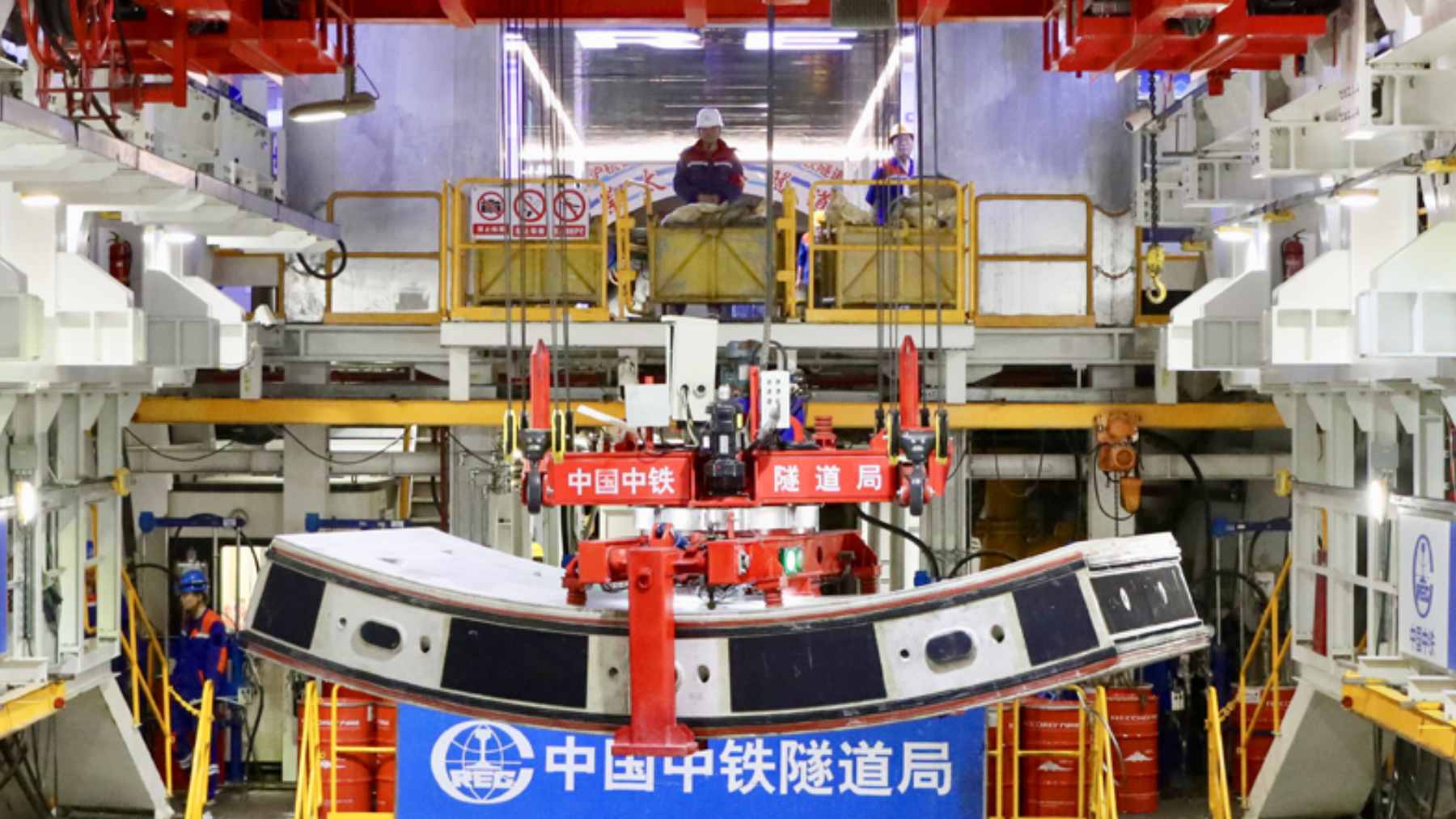
The star of the project was “Linghang,” a giant shield tunneling machine measuring 148 meters long and weighing about 4,000 tons. China’s Ministry of Transport said the machine used an intelligent I-TBM control system, high-pressure sealing equipment, long-life bearings, and a wear-resistant cutterhead while operating under the Yangtze.
China Railway Group described the tunnel as one of the world’s most challenging high-speed rail shield projects. The company said the shield drive reached a maximum depth of 89 meters beneath the Yangtze’s water surface, with a 15.4-meter cutterhead and a single-drive excavation distance of 11.325 kilometers (roughly 7 miles).
That may sound like a spec sheet, but the everyday meaning is simple. Engineers had to keep a massive machine moving through wet, unstable ground while protecting the river above and the future passengers below.
Why it matters for transport
China is not building this tunnel in isolation. The country aims to expand its operating high-speed rail tracks to around 37,000 miles by 2030, up from 30,000 miles at the end of 2024, according to data cited by China’s State Council website.
That scale matters because rail can change how people move between cities. A fast, reliable train can replace some car trips and short flights, cutting traffic jams, noise, and exhaust fumes in places where millions of people are trying to get to work, school, or home.
There is a climate argument here, too, although it should not be oversold. The International Energy Agency says rail is the least emissions-intensive mode of passenger transport, and that rail carries a share of global passenger and freight activity while accounting for only about 1% of transport emissions.
The green trade-off
Still, no tunnel is impact-free. Projects like this consume vast amounts of concrete, steel, energy, and labor before a single passenger buys a ticket. That is the part of the clean transport story that often gets left out.
The environmental benefit depends, to a large extent, on what the railway replaces. If it pulls travelers away from cars and short flights, the payoff can be meaningful over time. If it simply creates more travel demand without reducing dirtier transport, the picture becomes less tidy.
That’s why the Yangtze tunnel is both impressive and complicated. It shows how technology can make rail faster and more useful, but it also reminds us that green infrastructure still begins with heavy construction.
A strategic bet
For China, the project is also about business and industrial power. A single shield tunneling machine contains more than 20,000 parts, and China Daily reported that such machines are widely seen as a marker of advanced manufacturing capability.
The tunnel also strengthens a region that already drives a large share of China’s economy. Faster rail links can move people, goods, capital, and services more efficiently, which is why transport infrastructure often becomes a national strategy, not just a public works project.
At the end of the day, the Chongming-Taicang tunnel is a bet on speed, precision, and cleaner mobility. The hard part comes next, when China has to prove that this engineering achievement can deliver practical gains for passengers, cities, and the environment.
The official statement was published on China’s Ministry of Transport.