Two Russian satellites have moved to within roughly 10 feet of each other in low Earth orbit, a close encounter that space trackers say was no random flyby. COMSPOC reported that COSMOS 2581 and COSMOS 2583 reached a closest approach of about 3 meters on April 28, with near-zero relative velocity and fine maneuvers by COSMOS 2583 to hold the formation.
The mystery is not only what Russia is testing. The bigger concern is what this kind of precision maneuvering means for an orbital neighborhood already packed with working satellites, dead hardware, and debris. In space, a traffic jam has no honking horns or exhaust fumes, but one bad bump can leave everyone paying the price.
A close pass that looked planned
COMSPOC put it plainly. “This wasn’t a coincidental pass,” the company said, adding that COSMOS 2583 “performed several fine maneuvers” to maintain the tight configuration. The tracking came from radar data gathered by LeoLabs and processed through COMSPOC’s SSA Suite.
The setup was not just a two-satellite act. COMSPOC said COSMOS 2582 trailed the formation at less than 60 miles, while Object F passed within 9 miles of COSMOS 2582 and within 6 miles of COSMOS 2581, with neither of those two objects maneuvering. “Whatever Russia is testing, it’s sophisticated,” COMSPOC added.
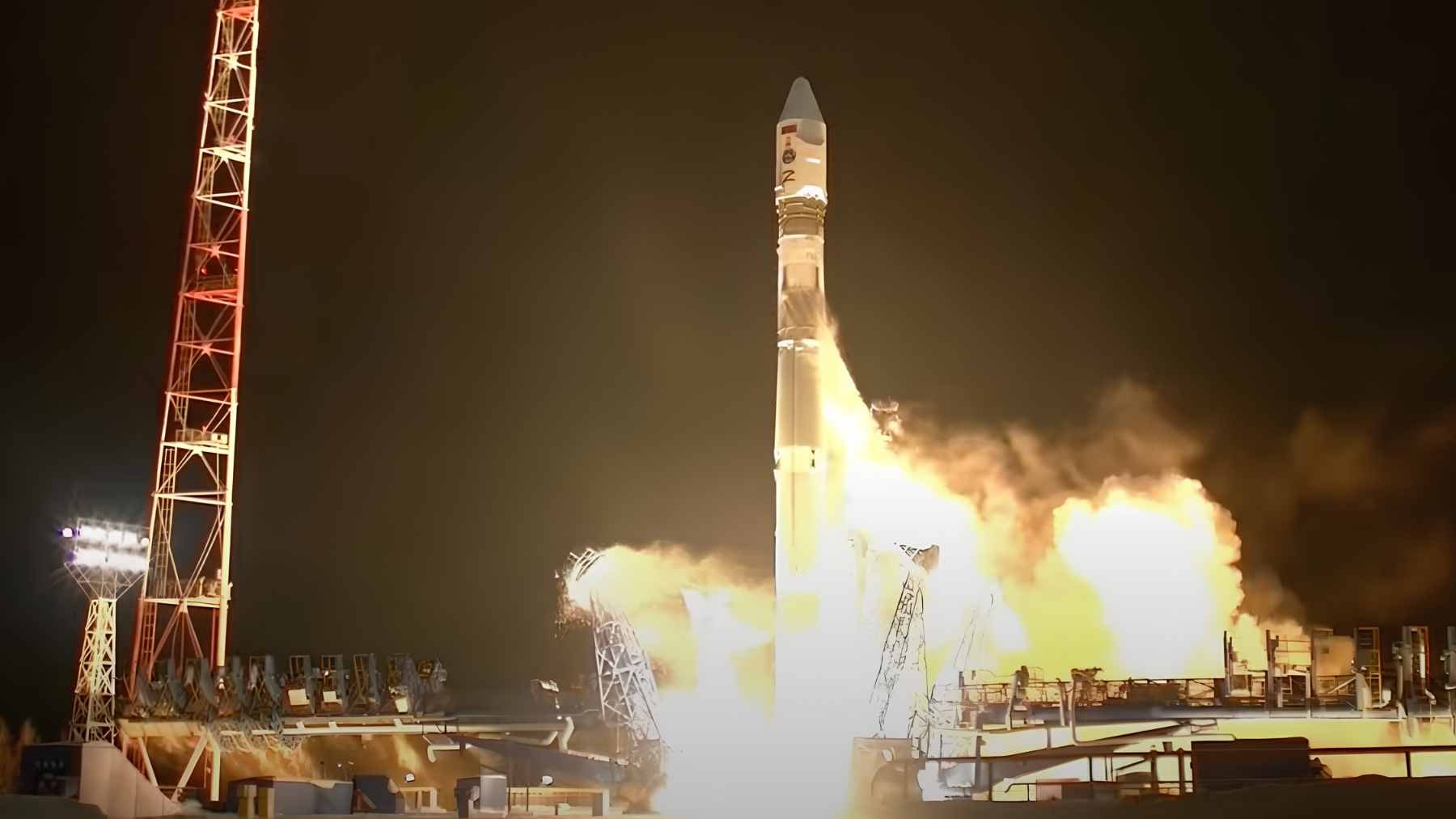
The three COSMOS spacecraft were launched into low Earth orbit in February 2025 on a Soyuz rocket, and Object F was previously released by COSMOS 2583. The purpose of the mission has not been publicly disclosed, which is why outside observers are watching the pattern instead of relying on official explanations.
Orbit is a shared environment
That shared environment is already under strain. ESA’s latest public statistics, last updated April 21, 2026, list about 44,870 tracked objects in Earth orbit, including about 17,610 satellites still in space and about 15,200 still functioning.
Those are only the objects we can reliably catalog. ESA estimates 1.2 million debris pieces between 1 and 10 centimeters, plus 140 million pieces between 1 millimeter and 1 centimeter, enough to turn tiny fragments into serious hazards at orbital speeds.
At home, a dropped screw is annoying. In orbit, a small uncontrolled object can become part of the environment for years, crossing paths with active spacecraft and adding another layer of risk. That is why an unexplained close pass is more than a military curiosity.
Precision can help or hurt
Rendezvous and proximity operations are not automatically weapons. The same kind of technology can inspect broken spacecraft, refuel satellites, extend missions, support assembly in orbit, and eventually help remove debris.
Secure World Foundation says these capabilities can support civil and commercial activities, but can also be used for intelligence or offensive space missions.
That is the uncomfortable part. When one satellite gets very close to another, intent matters as much as distance, and intent is hard to prove from the ground. Is it inspection, training, a stress test, or something more aggressive?
Experts warn that uncoordinated close approaches by U.S., Russian, and Chinese satellites are now regular enough to create a real risk of misunderstanding. The trouble is, space does not offer much room for roadside explanations once two objects are already close.
A small error could linger
ESA’s 2025 Space Environment Report warned that low Earth orbit is getting more crowded and that at around 330 miles altitude, debris posing a threat is now in the same order of magnitude as active satellites. The Russian satellites have been operating in a nearby low-orbit regime around the high 300-mile range, according to tracking reports.
That does not mean this maneuver caused debris. It means the margin for error is becoming slimmer in the very part of space where governments and companies want to operate. No one sends a cleanup crew after an orbital fender bender.
ESA also says the chance of collision regularly forces spacecraft in busy orbits to take evasive action, and that stronger space traffic coordination is needed. In practical terms, that means better tracking, clearer warnings, and fewer surprises.
What readers should keep in mind
Russia is not alone in developing close-approach capabilities. Space.com noted that American and Chinese satellites have also been observed inspecting spacecraft high above Earth, while Secure World Foundation has documented proximity operations across major space powers.
For the most part, the danger is not a single dramatic moment. It is the slow build-up of risk as more countries and companies learn to move hardware close together in an already crowded orbital lane. The compass should be simple enough: keep space usable before it becomes another polluted commons.
The official statement was published on COMSPOC Operations on X.