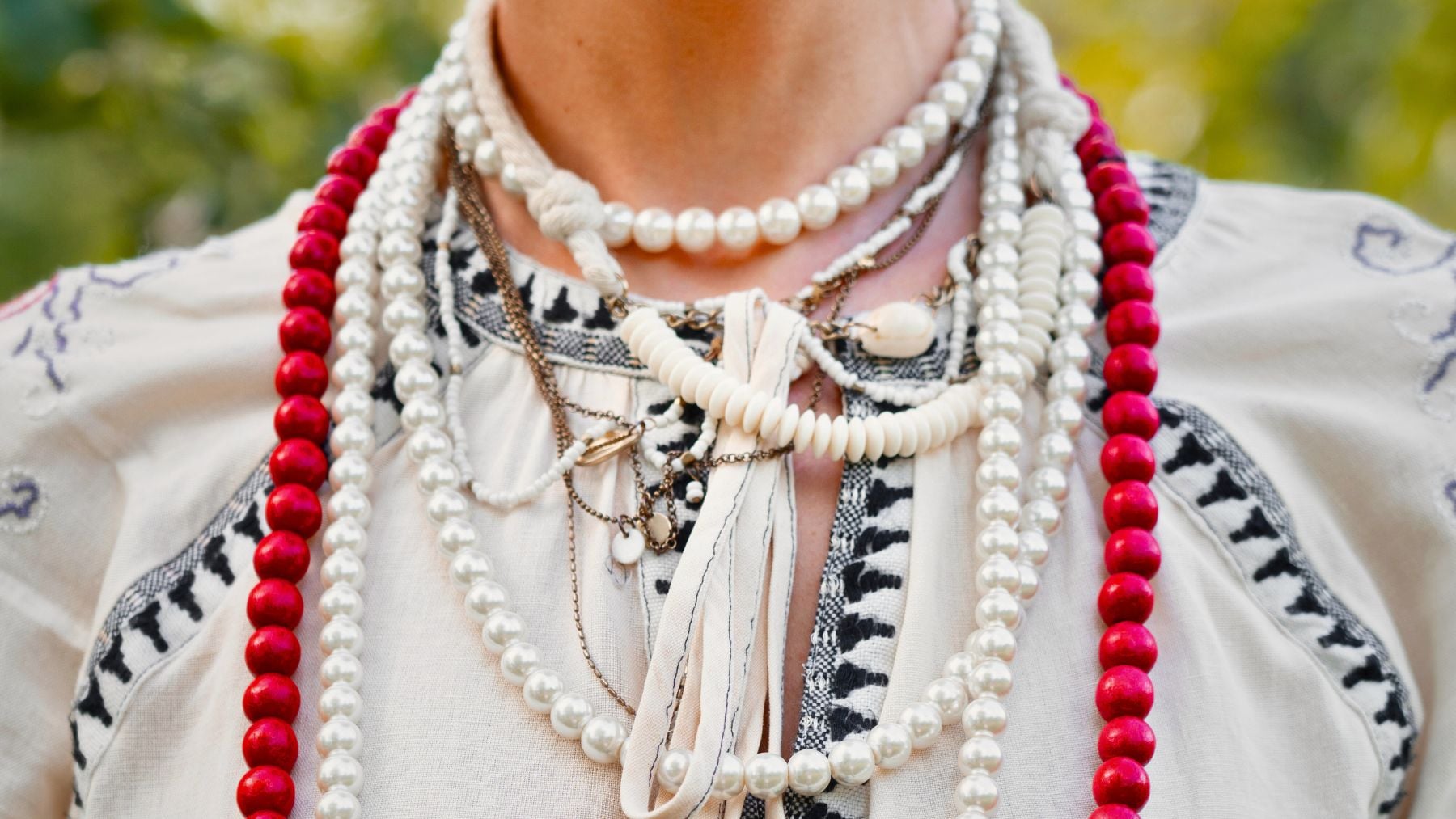
Wearing multiple pendants can be an expressive way to showcase your personal story. Each pendant can serve as a small emblem that hints at your personality, carries significant memories, or reflects important life narratives.
Here, we’ll explore the rich symbolism of layered jewelry and how each piece, whether a cherished heirloom or a trendy accessory, can mirror your individuality, core values, and emotional states. Discover how these meaningful adornments create a unique tapestry that connects you to your past, enriches your present, and inspires your future.
The meaning behind wearing multiple pendants
Wearing several pendants creates a distinct statement about the wearer. Each piece can reflect a personal belief, a cherished memory, or self-expression. Below, we’ll break down the common messages associated with this intriguing trend.
Personal identity
Multiple pendants often indicate a multifaceted identity. Those who opt for several pieces tend to embrace various aspects of their personality. One pendant may symbolize a cherished memory, while another might reflect a connection to family heritage or cultural traditions. This layering of symbols communicates that the wearer treasures their personal history and is unafraid to reveal their authentic self.
Emotional connections
Every pendant carries the potential to hold a special memory. Whether gifted by loved ones or acquired as a memento from significant events, the pieces infuse your look with deep emotional resonance. This style signifies that the wearer values sentiment and personal history over mere decoration, serving as a subtle tribute to the past and a way to keep close those who matter most.
Bold self-expression
Layered pendants embody a creative and fearless form of self-expression. These accessories can be a declaration of individuality. The eclectic mix of pieces defies uniformity, sparking curiosity and signaling that the wearer values both art and personal flair.
A sense of freedom
For many, wearing multiple pendants symbolizes a liberating sense of nonconformity. This look can suggest an openness to change and an adaptable nature, blending classic motifs with modern designs. Such a mix typically reflects the wearer’s readiness to merge time-honored traditions with innovative styling and a willingness to challenge conventional norms.
Connection to community
For some, every pendant is a component of a broader narrative woven from community ties, family heritage, or cultural influences. These pieces might represent shared beliefs, social causes, or regional customs.
Wearing multiple pendants signals layered identities connected not only to personal experiences but to the society and culture that shape them. Cultural reasons play an important role in this trend, as different societies often ascribe unique historical, religious, or social significance to layered jewelry.
Multiple pendants create a visible tapestry of ideas and memories, offering a unique way to share the many layers of your life. This style blends diverse narratives, cultural influences, and eclectic designs into a singular personal statement, weaving a story rich with memories, creativity, and core beliefs. It makes a lasting impression and evokes sentiments of nostalgia, boldness, or nonconformity.
Whatever the interpretation, layered pendants invite a closer look, reminding us that fashion often holds deeper meanings.