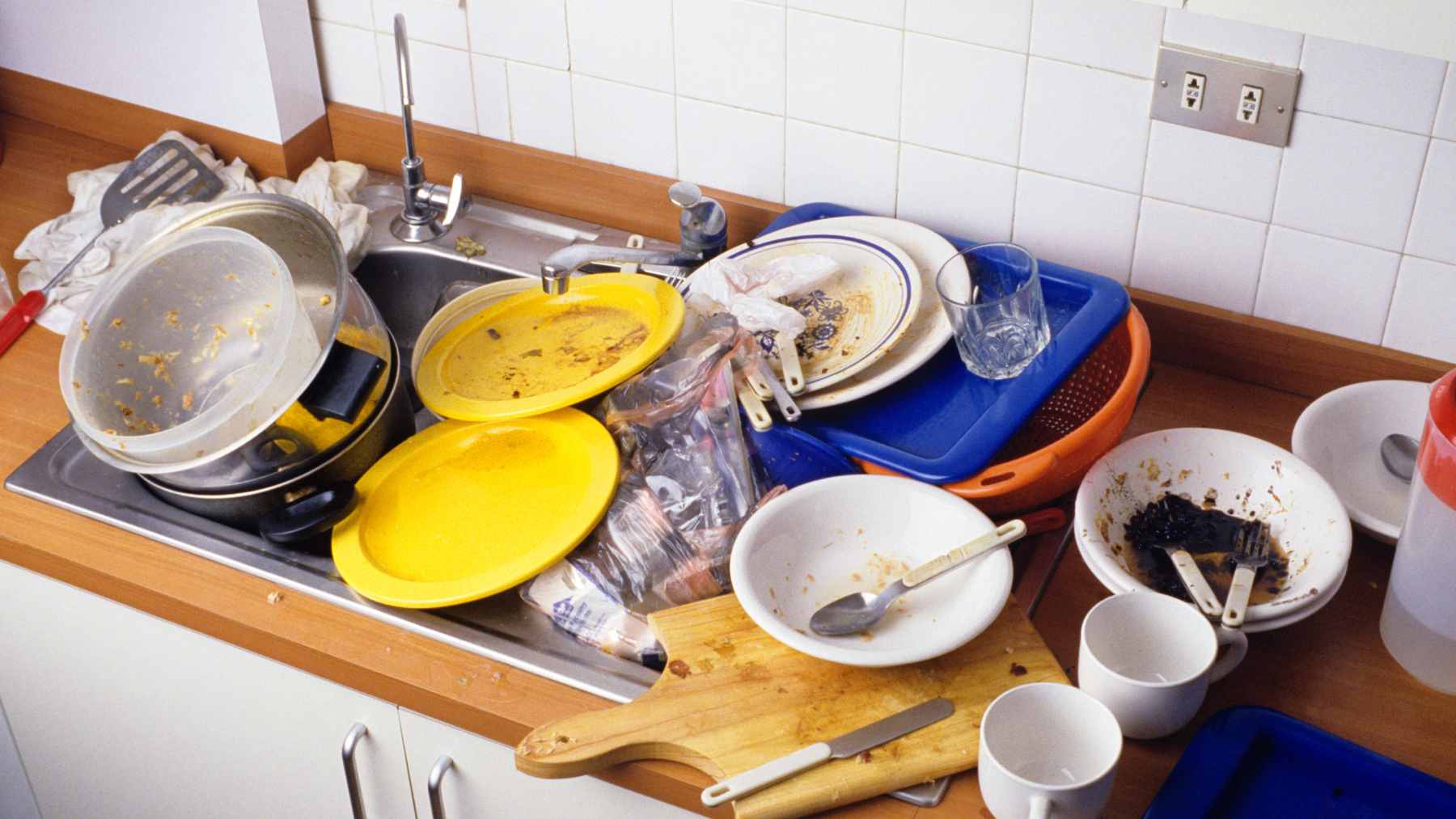
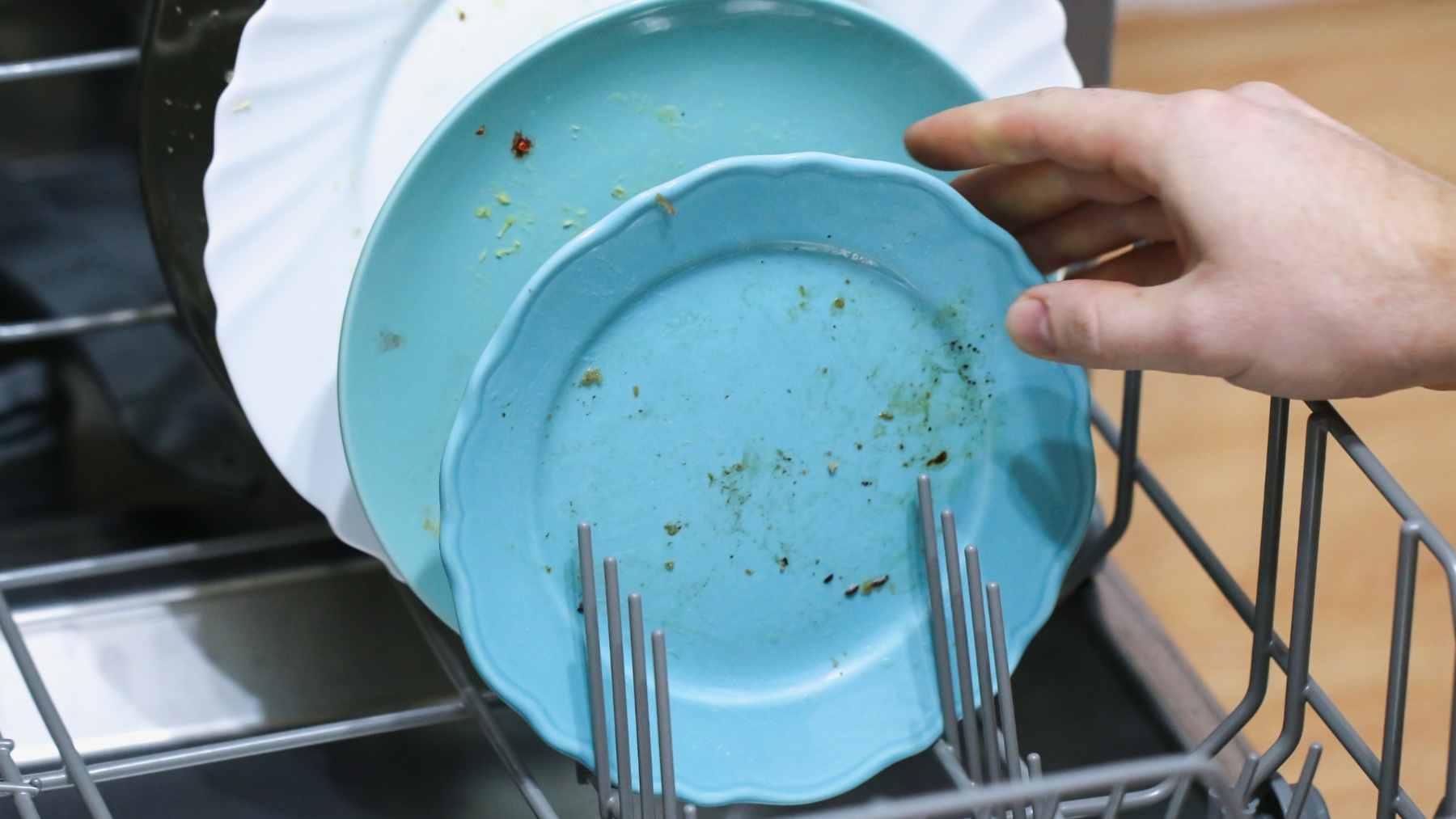
A pile of dirty dishes can feel oddly personal. One person sees the sink and thinks, “This would only take ten minutes.” The other person sees the same plates, cups, and forks and feels something heavier than a chore.
Psychology suggests that this familiar household fight may not be about laziness at all.
In many homes, unfinished chores are a visible sign of invisible strain, especially when decision-making, childcare, work pressure, and the constant planning of daily life have already drained the energy needed for “one more thing.”
Why small chores fail first
Washing dishes is not hard in the usual sense. It does not take special training, and most people know exactly how to do it. That is why the mess can feel so insulting when someone leaves it behind.
The problem is that small chores still require a push. You have to notice the mess, decide to get up, pause whatever recovery you were trying to get, and start. On a normal day, that push barely registers. On a depleted day, it can feel like climbing a hill.
Social psychologist Roy Baumeister helped popularize the idea of “ego depletion” in 1998, arguing that self-control may draw on a limited mental reserve.
That model has been challenged, including by a large 2016 replication project that found only very small evidence for a standard ego-depletion effect, so the science is not as tidy as the original theory sounded.
The hidden work behind the sink
Still, the broader point is hard to ignore. People often struggle more with ordinary tasks when their attention, patience, and planning systems are already overloaded. That is where the household “mental load” comes in.
Mental load means the thinking work behind family life. It is remembering appointments, checking whether there is dish soap, planning dinner, noticing when a child needs new shoes, and keeping track of what has to happen next. The work is quiet, but it does not stop just because the kitchen is quiet.
Lucia Ciciolla and Suniya Luthar studied this invisible labor in mothers and found that many women reported carrying the main responsibility for organizing schedules, routines, and children’s needs.
The work, published in Sex Roles, linked heavier invisible labor with lower well-being and relationship satisfaction.
Mothers carry more of the planning
Newer research sharpened the picture. Darby Saxbe and Lizzie Aviv at the University of Southern California reported in 2024 that mothers carried about 73 percent of the cognitive household labor in their sample, compared with 27 percent for partners.
They also reported doing about 64 percent of the physical household labor.
That distinction matters. Physical chores are the work everyone can see, like scrubbing dishes or folding laundry. Cognitive chores are the background work of anticipating, planning, delegating, and remembering.
In the USC study, cognitive labor was tied to higher depression, stress, relationship dissatisfaction, and burnout among mothers. Physical work mattered too, but the invisible thinking work appeared to carry a deeper mental health cost.
A mess can be a message
So what is the sink really saying? Not always, “Someone does not care.” Often, it says, “Someone ran out of usable energy before the dishes made it to the top of the list.”
That shift in interpretation changes the conversation. The dirty plates are still real. Someone still has to wash them. But the pile becomes information, not a moral verdict.
A better first question may be, “What was the hardest part of your day?” That does not excuse every repeated imbalance, and it does not mean one person should quietly carry the home forever. It simply opens the door to context before blame takes over.
What couples can do instead
The practical fix is not just telling exhausted people to try harder. That can make the problem worse, because effort is exactly what may already be missing. In practical terms, the household needs a better system.
Couples can start by separating visible chores from invisible planning. Who notices the dishes? Who decides when they must be done? Who remembers that the dishwasher detergent is running low? Those small questions often reveal a bigger pattern.
The goal is not a perfect kitchen every night. Some days, especially with a baby, illness, long work hours, or poor sleep, the healthiest answer may be a lower standard and a clearer plan for tomorrow. That is not failure. That is triage.
Beyond the kitchen
Dirty dishes are only one example. The same pattern can show up in unread emails, laundry left on a chair, a text you meant to answer, or a doctor’s appointment you keep postponing.
These unfinished tasks can look like poor discipline from the outside. From the inside, they may be the visible edge of an invisible deficit. Sleep loss, emotional labor, job stress, depression, caregiving, and constant decision-making can all turn a simple task into something strangely heavy.
The next time the sink is full, the most useful response may not be anger first. It may be curiosity. Are the dishes the problem, or are they the first thing in the room honest enough to show how tired someone really is?
The main research has been published in Archives of Women’s Mental Health.