Is life after 70 mainly about holding on to what remains? Two long-term studies suggest that picture is too narrow. Many adults in their 70s, 80s, 90s, and beyond kept imagining new versions of themselves instead of relying only on goals formed decades earlier.
A second study found that older people who felt they were contributing to others had lower odds of developing more difficulty with daily activities or dying during the next decade. The findings do not prove that feeling useful is medicine, but they turn a poetic idea about hidden potential into something researchers could measure.
New futures after 70
In a 2002 study, Jacqui Smith and Alexandra M. Freund, then at the Max Planck Institute for Human Development, tracked 206 participants from the Berlin Aging Study. Participants ranged from 70 to more than 100 years old, and researchers repeatedly asked about hoped-for and feared “possible selves” over four years.
A possible self is simply the person someone thinks they might become. It could involve health, relationships, personal qualities, or another area of life. The key question was whether those future images stayed fixed in old age.
They did not. Seventy-two percent added at least one new area of hope, and 53 percent added a new area of fear. Across a sample that included people over 100, the future was still being revised.
Reinvention is not achievement
That result matters because it challenges the assumption that future-oriented thinking naturally fades when fewer years remain. The study found an active system of hopes and fears, not a mental filing cabinet that closes at retirement.
But imagining a new self is not the same as becoming that person. The researchers measured changing hopes and fears, not whether participants eventually achieved those goals or what happened when a hoped-for identity never arrived.
More future thinking was not automatically better, either. Some participants who focused on maintaining health while adding few new areas of hope also showed declining life satisfaction. The pattern was more complicated than “set more goals and feel better.”
Contribution and survival
The 2012 study used data from 1,353 adults who were 60 to 75 at the start of the national Midlife in the United States study. Tara L. Gruenewald at the University of Southern California worked with Diana H. Liao and Teresa E. Seeman at the University of California, Los Angeles, to compare baseline attitudes with disability and mortality about ten years later.
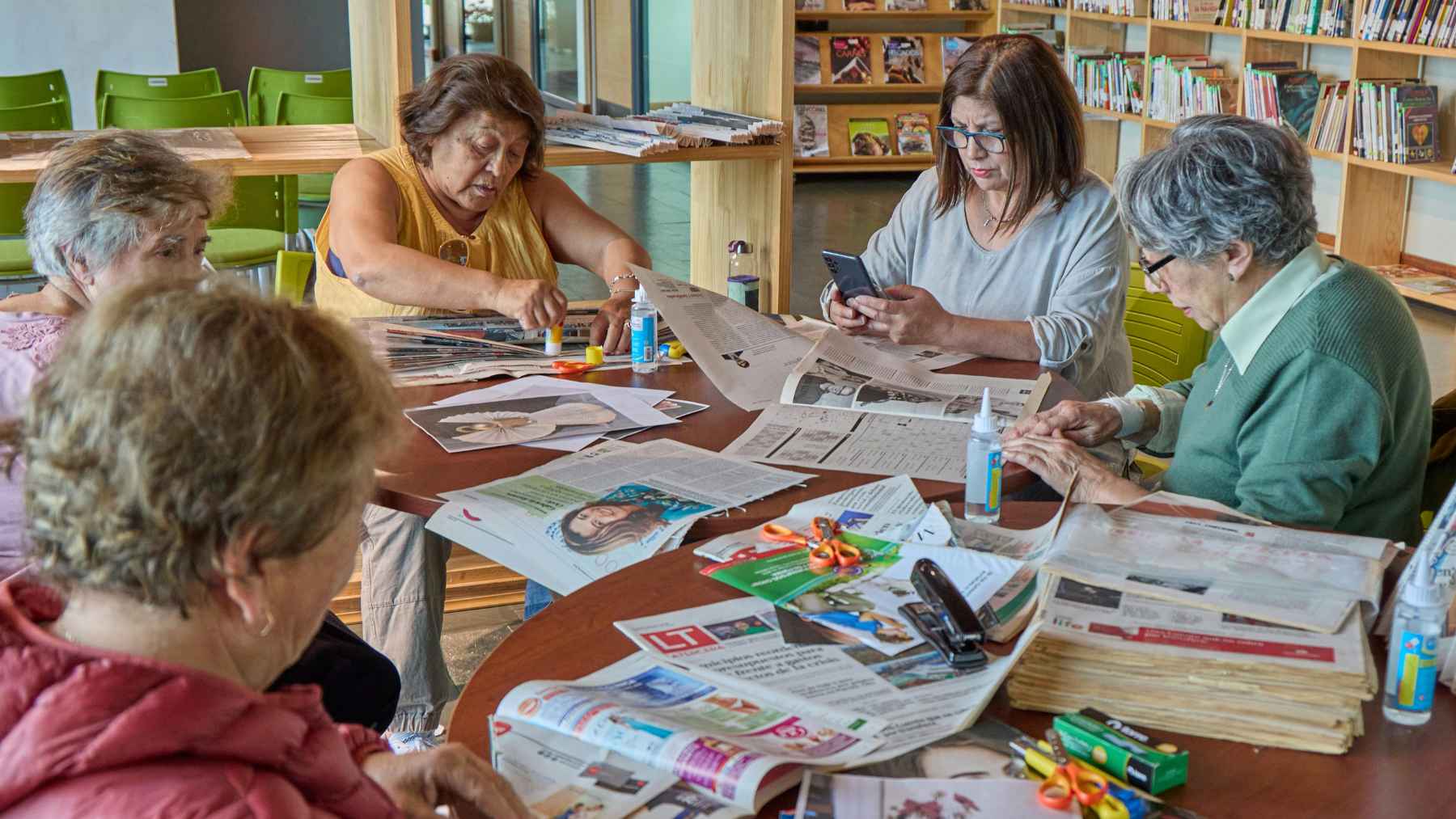
Researchers measured “generativity,” a term for caring about and contributing to people who will come after you. The questions were down-to-earth. Did participants feel needed, have useful skills to pass on, teach others, give advice, or help family, friends, and the community?
Higher scores were associated with lower odds of developing difficulty in at least two additional areas of daily life and lower odds of death. Across the two scales, each one-point increase was associated with roughly 6 to 12 percent lower odds of death and 7 to 13 percent lower odds of added disability, depending on the measure.
The pattern remained after accounting for age, education, existing health, and other factors.
A link, not a guarantee
This was an observational study, which means researchers watched what happened rather than assigning people to increase their sense of contribution. Healthier adults may have had more energy and opportunity to help others in the first place. The study therefore cannot prove that generativity caused the difference in survival.
The sample also had limits. People at the highest and lowest incomes and racial and ethnic minorities were underrepresented, so the exact size of the link may differ in other communities. The Berlin work was also based on one local cohort, even though it was designed to represent older residents of western Berlin.
Still, the pattern did not appear from nowhere. An earlier U.S. study found that older adults who felt more useful to friends and family also had lower risks of disability and death over seven years. Different studies are not proof of one biological pathway, but they make the question harder to dismiss.
What growing older can contain
The practical message is not that everyone must launch a business, master a language, or stay busy every minute. The measures themselves included teaching, giving advice, passing on skills, and helping family, friends, or the community. Ordinary life counts.
At the end of the day, the studies push back against a flat picture of aging. Aging can bring real losses, but that is not the whole story. People can keep looking ahead while also adapting to change.
That may be the most useful evidence-based version of the “golden shadow.” It is not a hidden force waiting to be unlocked, but a continuing capacity to imagine who comes next and to feel that someone else may benefit.
The official studies were published in The Journals of Gerontology Series B.