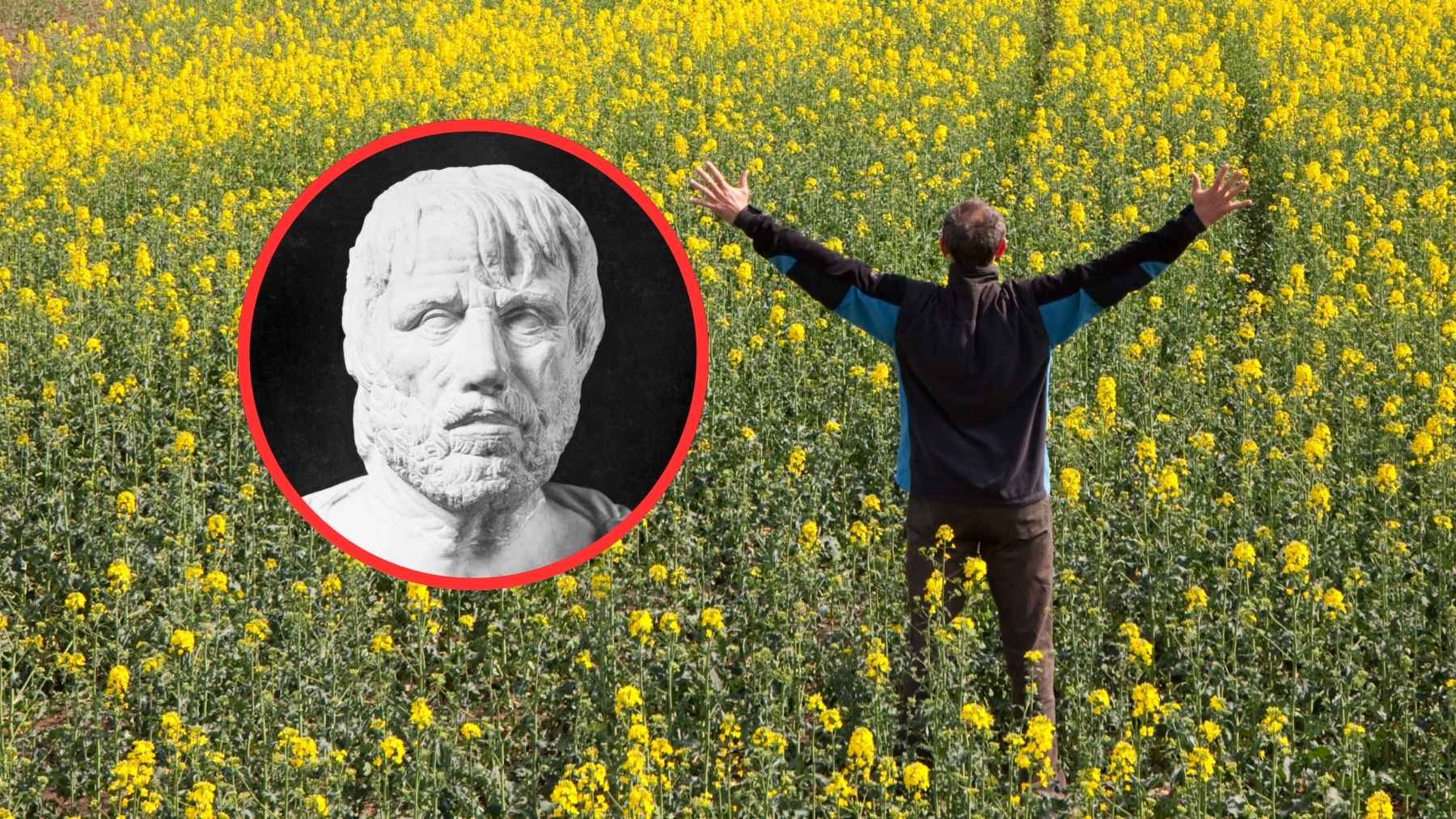
A delayed train, a sharp comment at work, or one worrying notification can follow us for hours. The event may last seconds, but the mind keeps replaying it until it fills the whole day. Nearly 2,000 years ago, Marcus Aurelius argued that this inner commentary matters deeply.
The Roman emperor’s famous line, “The happiness of your life depends upon the quality of your thoughts,” comes from Jeremy Collier’s 1701 English translation of Book 3, section 9 of Meditations.
The sentence often paired with it about the mind taking the shape of what it frequently contemplates reflects a different passage in Book 5, section 16, so the two should not be presented as one continuous quotation.
The wording has a history
Translations of ancient Greek can sound dramatically different. In George Long’s version of Book 5, Marcus writes that habitual thoughts shape the character of the mind and that “the soul is dyed by the thoughts.”
That difference matters because the popular version can turn a precise Stoic argument into generic positive thinking. Marcus was not saying cheerful thoughts guarantee a cheerful life. He was telling himself to examine the judgments his mind accepts and keep them aligned with reason and virtue.
An emperor writing to himself
Marcus Aurelius ruled the Roman Empire from 161 to 180 CE. His reign included military attacks, rebellions, and a major plague, while at least part of Meditations was written during the final years of his campaigns.
This was not a polished self-help book designed for sale. The work was written to and for himself, more like a private set of reminders from someone trying to steady his own mind under pressure.
Even the familiar title Meditations came from a later editor. The notes move between irritation, duty, death, justice, and self-control, often returning to the same concerns. It reads less like a lecture and more like a person trying to steady his own mind.
The Stoic idea behind the quote
Stoicism is often summarized as focusing on what you can control. More precisely, it separates external events from the judgments and actions that follow them. For Stoics, virtue makes a life good in the deepest sense, while wealth, reputation, comfort, and misfortune do not determine moral worth.
Think about a traffic jam, an overflowing inbox, or a careless insult. You cannot instantly clear the road or pull spoken words back, but you can question whether a delay is truly a disaster or whether one criticism defines your value.
That pause does not erase the problem. It can, however, stop the mind from turning one difficult event into a second problem through hours of rumination. That is where the ancient advice becomes practical.
Why modern psychology sounds familiar
Modern psychology reaches some similar territory, although philosophy and clinical therapy are not the same thing.
The National Institute of Mental Health explains that cognitive behavioral therapy helps people notice automatic thoughts that may be inaccurate or harmful, question them, and understand how they affect emotions and behavior.
A 2023 review led by Andrea E. Cavanna in Neurological Sciences identified parallels between Roman Stoicism, cognitive behavioral therapy, and mindfulness. The authors also noted that modern therapy pioneers Albert Ellis and Aaron Beck acknowledged Stoicism as a philosophical influence.
Evidence shows that examining thoughts can be part of effective treatment, not merely an inspirational slogan. A 2018 meta-analysis of 41 randomized placebo-controlled studies found moderate benefits for anxiety-related disorders, with the odds of a treatment response nearly three times those seen with placebo.
Still, that does not mean Marcus invented modern psychology, since the methods, evidence standards, and clinical goals are different.
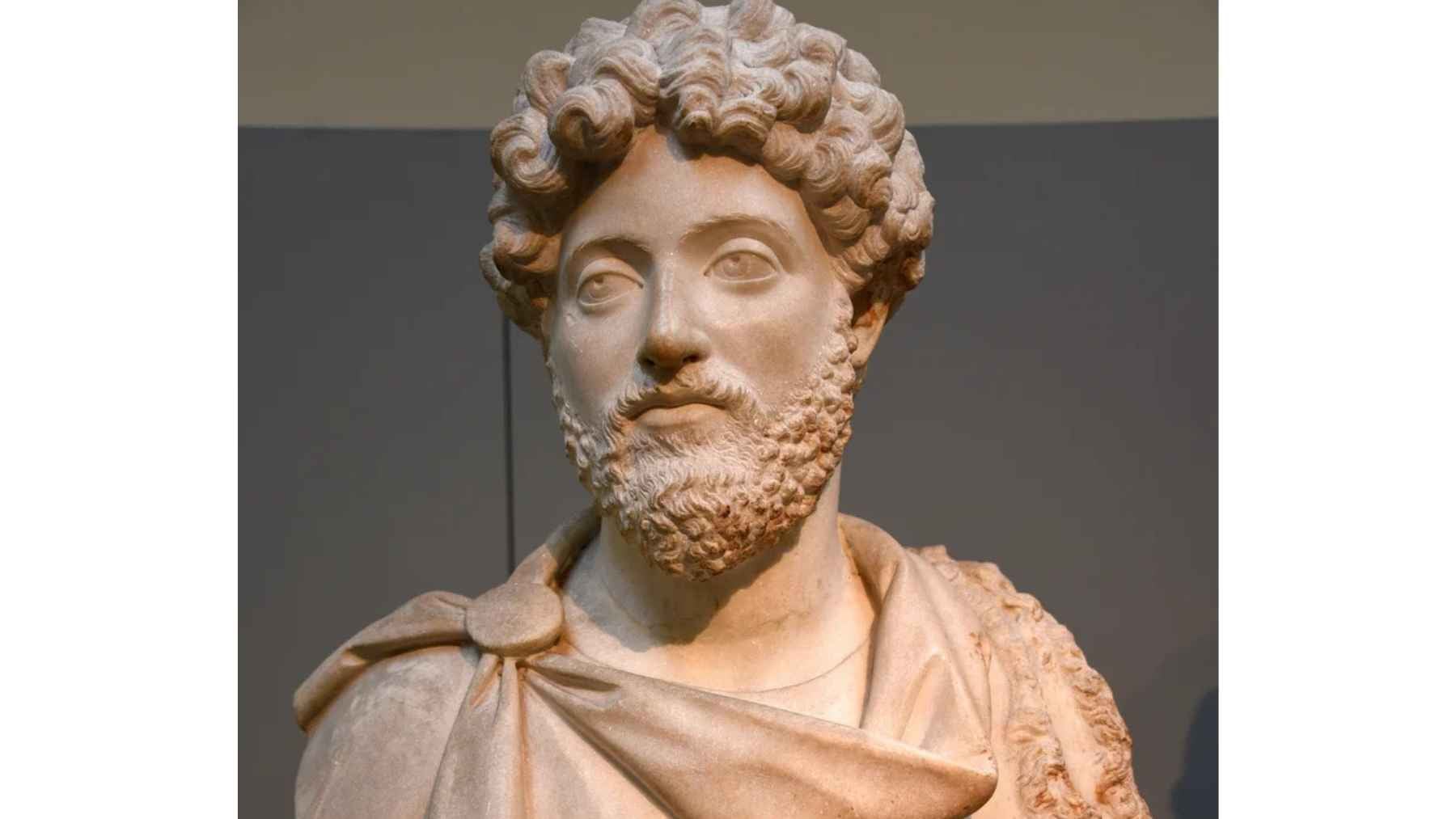
A marble bust of a Roman emperor illustrates the ancient Stoic ideas about thought, judgment, and happiness explored in the article.
What the quote does not mean
The famous line can easily be turned into blame. People do not choose illness, grief, discrimination, poverty, or severe stress, and external conditions can powerfully shape mental health. Thoughts are part of human experience, not the whole explanation for happiness or suffering.
Cognitive behavioral therapy is also not forced optimism. It examines thoughts against evidence and works on behavior, while treatment should be tailored to the person and guided by qualified professionals when mental health problems are involved.
A second-century reflection can offer a useful lens. It is not a diagnosis, a cure, or a reason to tell someone in distress to “just think better.”
A practical lesson for daily life
Marcus Aurelius’s useful question is not “Am I positive enough?” It is “What judgment am I adding?” After a difficult moment, separating the basic fact from the story around it can reveal where the mind has raced ahead.
“My presentation contained errors” describes an event. “I ruin everything” is a sweeping conclusion. The first can lead to correction, preparation, or an apology, while the second often traps attention in shame without producing a useful next step.
Another Stoic question is what action remains available now. Fix the mistake, ask for help, make a plan, rest, or accept what cannot be changed. Thoughts are not the whole of life, but what we repeatedly rehearse can become the mind’s familiar path.
The main work appears in Marcus Aurelius’s Meditations, especially Book 3, section 9, and Book 5, section 16.