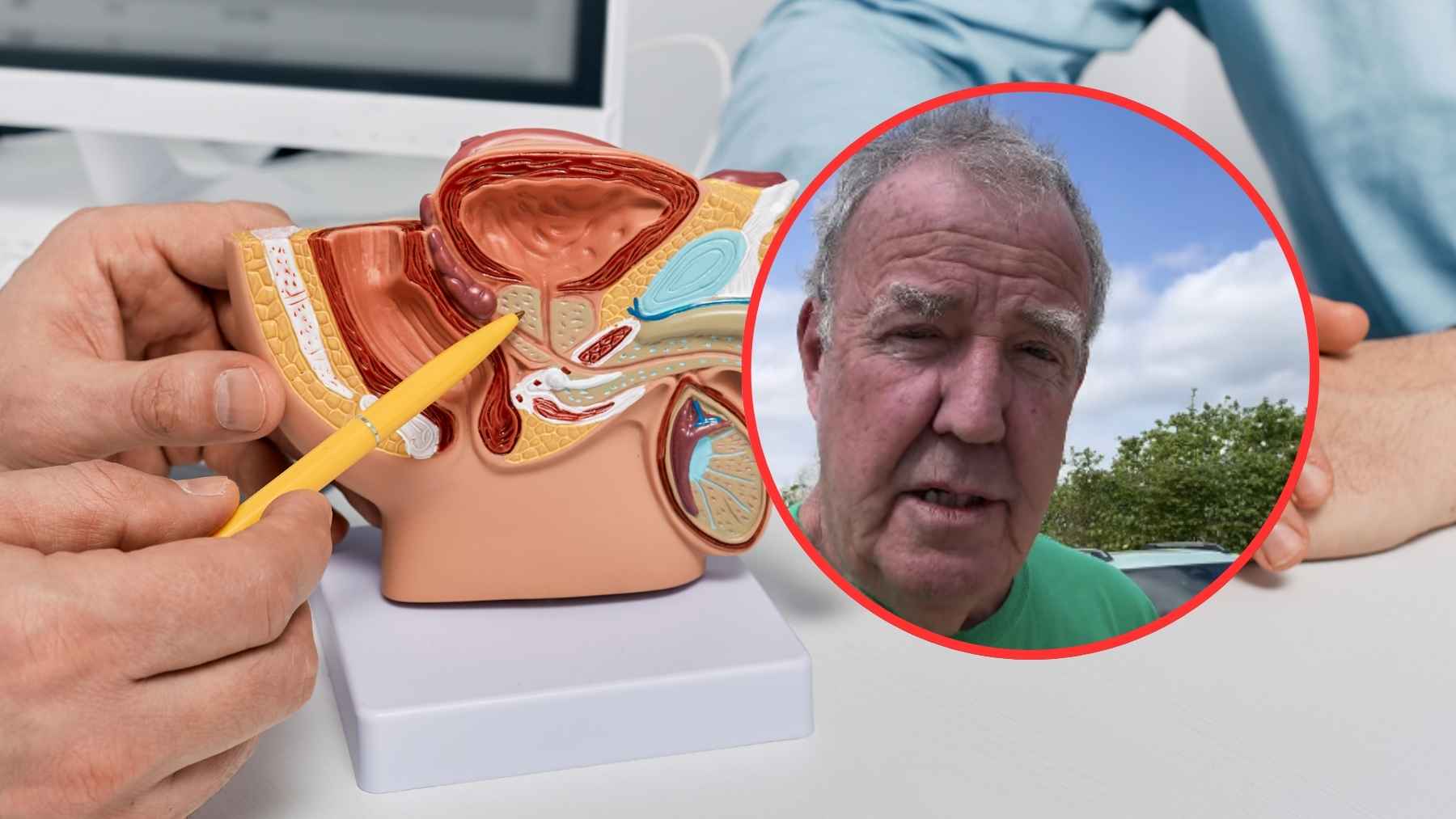
A targeted prostate cancer treatment used by Jeremy Clarkson has delivered encouraging 10-year results in the largest U.K. study of its kind.
Among 3,477 men treated with focal therapy, only two died from prostate cancer within a decade, while 3.3% developed metastases, meaning the disease spread beyond the prostate.
The findings suggest that carefully selected men may achieve cancer control broadly comparable with surgery or radiation therapy while reducing the risk of life-changing complications.
But this was a registry study, not a randomized head-to-head trial, so it does not prove that focal therapy is identical or superior to established treatments.
What focal therapy changes
Focal therapy destroys only the part of the prostate containing clinically important cancer. Doctors can use high-intensity focused ultrasound, known as HIFU, to heat the tumor or cryotherapy to freeze it, while leaving much of the gland untouched.
That differs from radical prostatectomy, which removes the prostate, and radiation therapy, which treats the whole gland. By sparing nearby tissue, doctors may better protect the nerves and muscles involved in erections, urination, and bowel function.
Previous evidence has linked focal therapy with a roughly fivefold lower risk of serious urinary, sexual, and rectal side effects. The new paper focused on cancer control, however, and did not report long-term functional outcomes. That gap still matters.
A decade of patient data
Dr. Alexander Light led the analysis with researchers from Imperial College London and Imperial College Healthcare NHS Trust. The team used prospective HEAT and ICE registry data from men treated with HIFU or cryotherapy at 14 U.K. hospitals between 2004 and 2024.
At 10 years, the estimated prostate cancer death rate was 0.13% and the metastasis rate was 3.3%. Those figures resemble results reported for surgery and radiation in the separate ProtecT trial, although differences between the studies mean this is context rather than direct proof of equality.
Light called the results “really encouraging” and said men with more aggressive disease also appeared to benefit. That is notable because focal therapy has often been viewed mainly as an option for lower-risk or narrowly located tumors.

The trade-off patients should know
Focal therapy is not always a one-and-done procedure. In the main analysis, about one-third of patients received another local treatment and 30% eventually underwent radical treatment such as surgery or radiation within 10 years.
A secondary analysis allowed up to two focal sessions before counting the approach as unsuccessful. Under that definition, fewer than 9% later required radical treatment. Some men may avoid whole-gland therapy, but close monitoring remains essential.
Professor Hashim Ahmed said the findings make “a compelling case for more centers to offer this treatment.” Even so, eligibility depends on the tumor’s location, grade, size, and whether cancer is present in several parts of the prostate.
Why NHS access remains limited
Public interest grew after Clarkson and former British prime minister Lord Cameron disclosed that they had received focal therapy after prostate cancer diagnoses. Both obtained treatment privately, highlighting an option that many NHS patients still cannot access locally.
Around half to two-thirds of localized prostate cancers could be suitable for focal therapy, representing as many as 15,000 U.K. patients each year. Yet only about 1,000 men currently receive it annually, with most NHS providers concentrated in London and southeast England.
The limited rollout reflects uncertainty over long-term outcomes and the lack of routine approval from the National Institute for Health and Care Excellence.
On June 2, 2026, the U.K. government announced capital funding to expand focal therapy alongside the TRANSFORM research program. For now, though, access can still depend heavily on where a patient lives.
Screening remains a separate question
More than 64,000 men are diagnosed with prostate cancer in the U.K. each year, and over 12,000 die from it. A PSA test measures a protein produced by the prostate, but a raised result does not always mean cancer and can lead to unnecessary investigations or treatment.
The U.K. National Screening Committee now recommends PSA testing every two years for men aged 45 to 61 who carry a harmful BRCA2 variant and have a relevant family history.
It does not recommend population-wide screening or targeted screening for other groups because the balance between earlier detection, overdiagnosis, and treatment harm remains uncertain. The targeted program is expected to begin rolling out in 2027.
Could a treatment with fewer side effects eventually change that calculation? Possibly, but experts still need randomized trials, reliable patient-selection tools, and long-term quality-of-life data. Focal therapy looks like a promising additional choice, not a universal replacement for surgery or radiation.
The main study was published in European Urology.