
Bruce Lee’s famous warning about 10,000 kicks sounds like martial arts advice, but its real target is scattered effort. The lesson is simple. One skill practiced with attention and correction can become far more reliable than dozens of skills tried only once.
Modern research mostly supports that idea, with an important catch. Repetition helps the brain and body learn, but mindless drilling is not enough. Useful practice needs feedback, rising difficulty, and time, while coaching, health, opportunity, and individual differences also shape performance.
What the quote really means
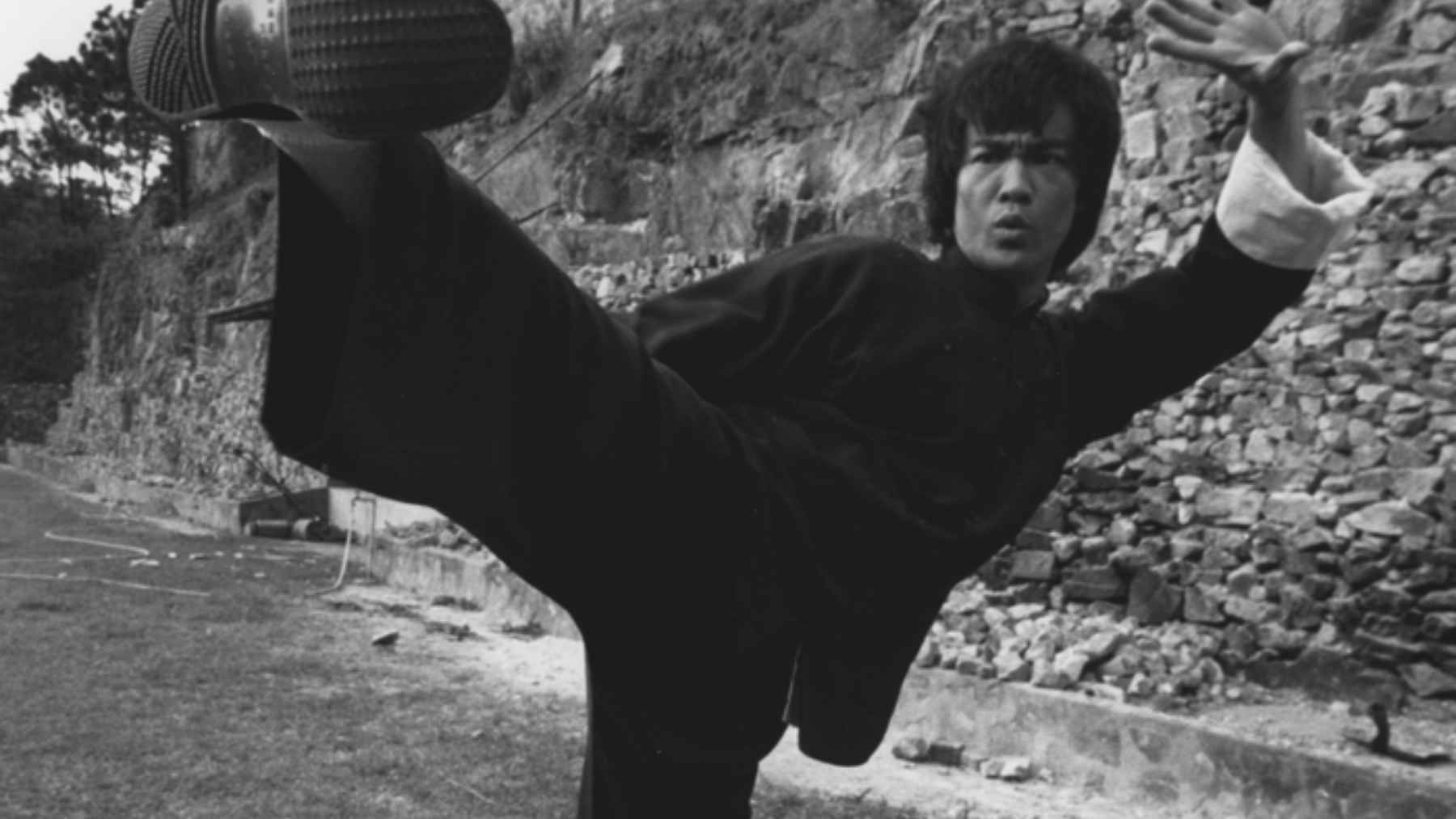
“I fear not the man who has practiced 10,000 kicks once, but I fear the man who has practiced one kick 10,000 times,” Lee said in a line that the Bruce Lee Foundation has traced to its family archive. The contrast is not really about a magic number. It is about depth versus shallow exposure.
A person who repeats one movement carefully begins to notice timing, balance, breathing, distance, and small errors. Those details can be almost invisible to a beginner. Under pressure, however, they often decide whether a skill works or falls apart.
Repetition changes the learner
Focused repetition builds coordination by giving the nervous system repeated chances to improve the same action.
Researchers Eran Dayan and Leonardo Cohen described how motor learning involves changes in the brain’s function and structure. Scientists call this ability neuroplasticity, which simply means the brain can reorganize as a person learns.
That does not mean the body becomes a machine after enough attempts. Each useful repetition should answer a small question. Was the movement accurate, where did it fail, and what should change next time?
Science adds an important catch
In 2014, psychologist Brooke Macnamara led a meta-analysis, which combines findings from many earlier studies. Deliberate practice explained 26 percent of performance differences in games, 21 percent in music, and 18 percent in sports.
The figure fell to 4 percent in education and below 1 percent in professions, showing that practice mattered but was never the entire story.
Another study led by Lasse Christiansen at the University of Copenhagen followed 24 adult men through six weeks of a precise finger-control task. Participants whose difficulty increased with their ability performed about twice as well on an advanced version as those who kept practicing at the same level.
The small study also found changes in brain-to-muscle pathways linked to learning.
Practice must stay conscious
This is where the phrase “deliberate practice” matters. It means structured work aimed at improving a specific weakness, usually with clear goals and useful feedback. Repeating the same mistake 10,000 times may only make that mistake more familiar.
Think of a teenager learning guitar. Playing the whole song from start to finish can feel productive, but slowing down the difficult four measures may produce more improvement. It is less glamorous, but it works on the part that actually needs work.
Focus is not the enemy of variety
Lee’s quote should not be read as an order to learn only one move forever. His martial art and philosophy, Jeet Kune Do, emphasized simplicity, directness, freedom, and personal expression rather than rigid loyalty to a fixed system. Deep foundations and adaptability can exist together.
Variety is useful when it expands a solid base. The trouble begins when novelty becomes an escape from discomfort. Opening five online courses, buying three notebooks, and switching goals every week can create plenty of motion without much progress.
Consistency requires patience
Why is steady practice so difficult? Progress often hides for a while. A cleaner kick, a stronger paragraph, or a smoother piano passage may emerge only after many sessions that seemed ordinary.
That is why a routine can be more dependable than motivation. For a busy student, 20 focused minutes on most days may accomplish more than one exhausting weekend followed by a month of silence. The work is not dramatic, but it keeps the skill alive long enough to grow.
The lesson reaches far beyond fighting
The 10,000 kicks idea applies to studying, writing, sports, art, public speaking, coding, and everyday communication. In practical terms, it means choosing a useful skill, breaking it into smaller parts, noticing errors, and returning often enough to improve them.
Still, focus is not a guarantee of greatness, and the number 10,000 should not be taken literally. Lee’s deeper point is more grounded, since excellence usually comes from staying with the work after the excitement fades and correcting what repetition reveals.
The supporting research on deliberate practice, motor learning, and progressive training was published in Psychological Science, Neuron, and Scientific Reports.