Could dementia begin with trouble outside the brain? Research increasingly suggests that blood sugar, insulin resistance, and damaged blood vessels may help shape what happens to memory as people age.
In Slovakia, the National Health Information Center recorded 348,362 people under diabetes care in 2024, while a Slovak Academy of Sciences analysis counted 84,774 treated dementia patients in 2023.
Those totals describe separate patient groups, so they do not show how many people had both conditions. In a 2025 explainer, Craig Beall, an associate professor of experimental diabetology, and Natasha MacDonald, a doctoral researcher in biochemistry, both at the University of Exeter, organized the evidence into 10 connections.
Their message is clear, although not simple, because diabetes can affect the brain while changes linked to dementia may disturb the body’s control of glucose.
Blood sugar reaches the brain
The first connection is overall risk. A 2024 meta-analysis covering more than 10 million people found that diabetes was associated with a 59% higher risk of dementia. Hypoglycemia, meaning dangerously low blood sugar, was linked to a 56% higher risk.
That does not mean dementia is inevitable for someone with diabetes, it means the odds are higher across large groups, and serious blood sugar swings may matter. Risk is not destiny.
The second and third connections involve insulin and fuel. Insulin resistance happens when cells stop responding properly to the hormone that clears glucose from the blood, and brain insulin research suggests this can disrupt learning and memory.
The brain is only about 2% of body weight but uses roughly 20% of the body’s energy, so poor glucose use in Alzheimer’s can matter greatly, a pattern sometimes called “type-3 diabetes” even though that is not a medical diagnosis.

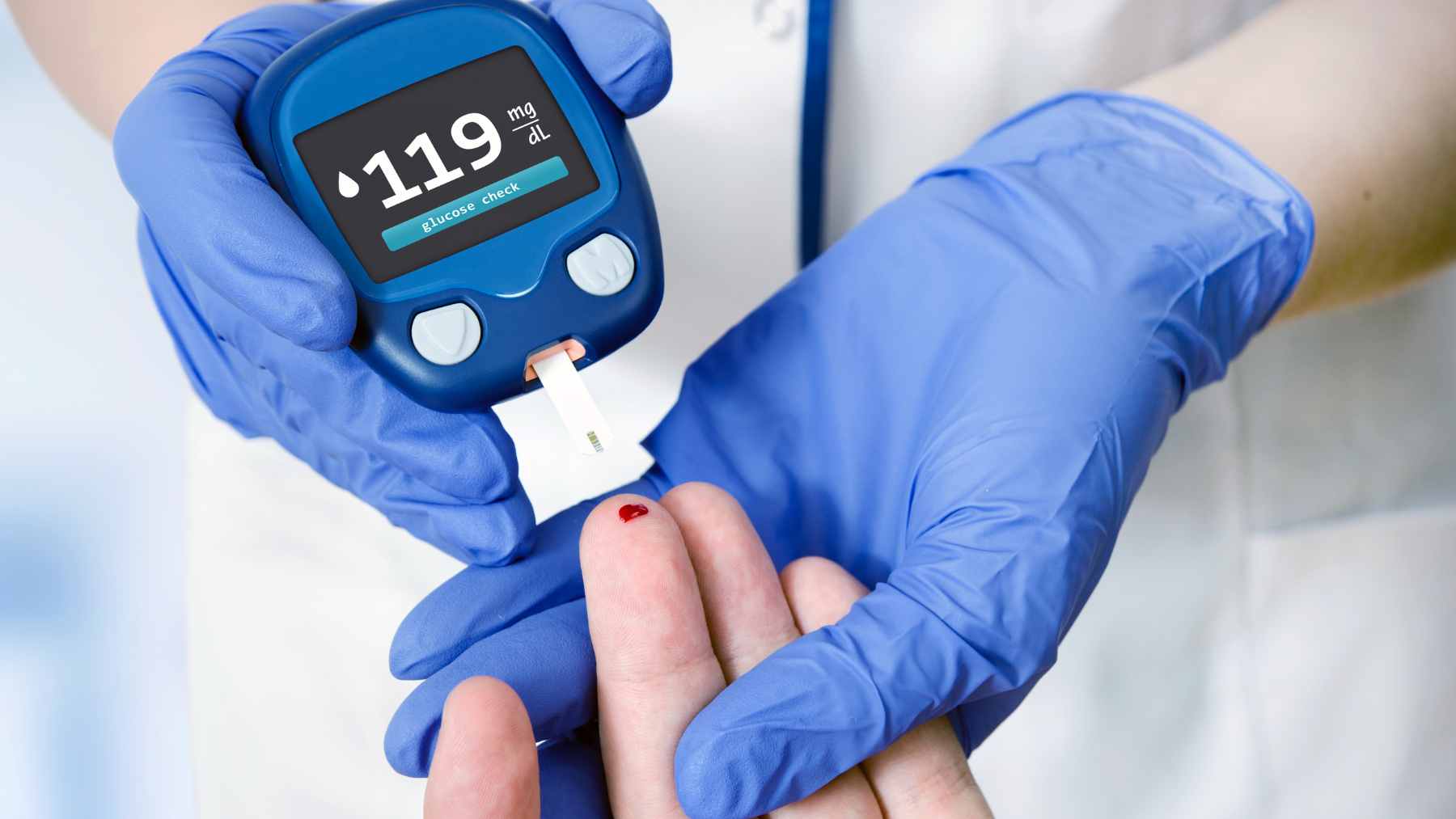
A blood glucose monitor and sugar cubes represent the growing body of research linking diabetes, insulin resistance, and blood sugar control to long-term brain health and dementia risk.
The link may run both ways
The fourth connection turns the usual story around. People with Alzheimer’s can have higher fasting glucose without diagnosed diabetes, while an animal study found that Alzheimer’s-like brain changes could push blood sugar upward. Animal results do not prove that Alzheimer’s causes diabetes in people, but they suggest a two-way relationship.
Genes may add another layer. APOE4, a version of a gene tied to higher Alzheimer’s risk, can trap insulin receptors inside brain cells and make those cells less responsive. Picture a light switch stuck behind a wall, where the signal exists but the cell has trouble using it.
The fifth connection is blood-vessel damage. High or sharply changing glucose can injure the brain’s small vessels, reduce oxygen delivery, and weaken the blood-brain barrier, the protective filter that keeps many harmful substances out. That can encourage inflammation and vascular injury, two processes closely linked to dementia.
Old drugs opened new doors
The sixth connection comes from an unlikely drug history. Memantine, now used to treat symptoms of moderate to severe Alzheimer’s disease, was first studied as a diabetes medicine but did not lower blood sugar well enough. Researchers later discovered that it could act on brain signaling instead.
Science sometimes takes the scenic route. Memantine does not cure Alzheimer’s or stop the disease, but its journey shows how work in one field can unexpectedly help another. A failed diabetes idea became a treatment that can ease dementia symptoms.
The seventh connection involves metformin, a widely used type-2 diabetes drug. A 2023 cohort study of 41,346 users found that people who stopped metformin for reasons unrelated to kidney problems had a 21% higher rate of dementia diagnosis. Because this was an observational study, it cannot prove that metformin protected the brain.
Weight-loss drugs meet a reality check
The eighth connection has drawn attention because it involves GLP-1 medicines such as semaglutide, sold under brands including Ozempic and Wegovy. These drugs control blood sugar and appetite, and health-record studies have linked them to lower dementia rates among people with diabetes. Could the same medicine slow Alzheimer’s itself?
The answer is not yet encouraging. In the EVOKE and EVOKE Plus phase 3 trials, oral semaglutide did not slow worsening memory and thinking in people with early Alzheimer’s, although some biological markers changed. Preventing a disease and treating it after symptoms begin are very different tests.
The ninth connection is insulin delivered through the nose, a route meant to carry the hormone toward the brain without sharply lowering blood sugar throughout the body.
Early work looked promising, but a randomized trial of 289 adults found no cognitive or functional benefit in its main analysis, and delivery-device problems complicated the results. Interesting, yes, but proven, no.
Newer pills may offer another clue
The tenth connection involves SGLT2 inhibitors, pills that help the kidneys remove extra glucose through urine. In a 2025 comparison study with 221,883 matched patient pairs, dementia was recorded in 2.7% of SGLT2 users and 3.6% of GLP-1 users. The researchers called for randomized trials before drawing firm conclusions.
For now, good diabetes care may help protect more than the heart and kidneys. Avoiding severe low blood sugar and limiting vessel damage may also support brain health, but no diabetes drug is a guaranteed shield and medications should not be changed for dementia prevention without medical advice.
The original expert article has been published in The Conversation.