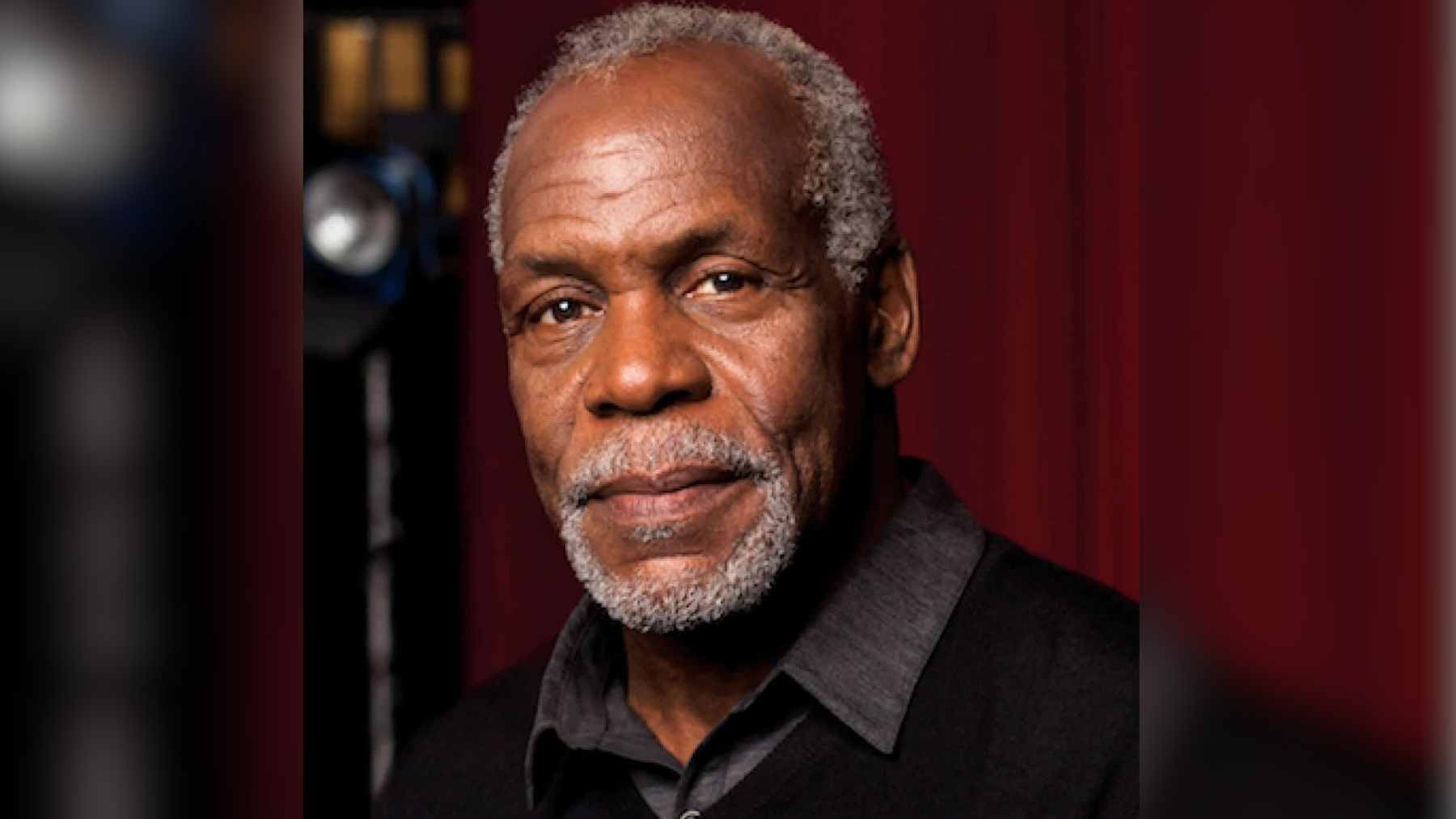
Danny Glover has revealed that he is living with Alzheimer’s disease, bringing a private diagnosis from 2023 into public view. The 79-year-old actor said the illness has slowed his movement, speech, and memory, but he remains active and supported by the people closest to him.
The announcement is about more than a famous diagnosis. It also shows what Alzheimer’s can look like before the most advanced stages, when someone may still recognize old memories, follow daily routines, and speak about what lies ahead.
What happens next? For Glover, the answer begins with family, medical care, and the decision to tell his own story.
Glover speaks publicly
In an interview with Lester Holt, Glover said, “I could live with it, in a sense,” while acknowledging that the disease will bring changes as it advances. His comments were measured rather than dramatic, reflecting both his present independence and the uncertainty built into a progressive brain disease.
A separate People profile reported that he received the diagnosis in 2023. His daughter, Mandisa Glover, said she began noticing changes a year earlier, especially when familiar family stories started losing details that he once remembered with remarkable precision.
The actor’s support network includes his daughter, his younger brother Marty, caregivers, and friends. “They’ve got my back,” he said. It is a short line, but it captures one of the most important realities of dementia care.
What Alzheimer’s does
Alzheimer’s is the most common cause of dementia, a broad term for memory and thinking problems that interfere with everyday life.
The Alzheimer’s Association explains that the disease gradually damages the brain, affecting memory first in many people and later disrupting language, judgment, behavior, and basic tasks.
It is not a normal part of getting older, even though age is the largest known risk factor. Symptoms usually worsen over years, but the pace is different for each person. On average, people live 4 to 8 years after diagnosis, while some live as long as 20 years.
There is currently no cure. However, the National Institute on Aging says medicines can help manage some symptoms, and newer treatments may modestly slow decline in certain people with early Alzheimer’s.
Those drugs carry risks and require medical testing, so they are not a simple answer for every patient.
Why his story matters
An estimated 7.4 million Americans age 65 and older are living with Alzheimer’s dementia in 2026, according to a new national report.
Older Black Americans are about twice as likely as older White Americans to have Alzheimer’s or another dementia, although researchers have not identified one single cause for the difference.
That disparity gives Glover’s disclosure added public weight. His decision could encourage families to take changes seriously, whether that means repeated questions, missed appointments, trouble finding words, or pieces disappearing from stories everyone has heard around the dinner table.
Early evaluation cannot stop the disease, but it can help rule out other medical problems and give families more time to discuss treatment, finances, transportation, and future care. Those conversations are not easy.
Still, having them before a crisis can preserve more choice for the person at the center of the diagnosis.
A career larger than one role
For many viewers, Glover will always be Detective Roger Murtaugh, the veteran police officer he played opposite Mel Gibson in four “Lethal Weapon” movies.
His career is far broader, with major performances in “The Color Purple,” “Places in the Heart,” “Witness,” “To Sleep with Anger,” and the television film “Mandela.”
His work also moved well beyond movie sets. The Academy of Motion Picture Arts and Sciences presented him with the Jean Hersholt Humanitarian Award in 2022, recognizing decades of advocacy for human rights, economic justice, health care, and education.
That history helps explain why he chose to speak now. Glover said in the same profile that he does not see the diagnosis as the end of his life, adding, “There’s work to do.” For the most part, his message is not that Alzheimer’s can be brushed aside, but that a diagnosis does not erase a person’s voice overnight.
Family support shapes what comes next
Glover’s family said they are working with his doctor to consider treatment options and help him maintain the fullest daily life possible. His mornings may include reading or watching news programs, while relatives and caregivers provide the structure that becomes increasingly important as memory changes.
He will turn 80 on July 22, 2026. No interview can predict how quickly his condition will progress, and his experience should not be treated as a timetable for anyone else. Alzheimer’s follows different paths, which is why care plans often need to change along with the person.
For now, Glover is choosing visibility over silence. His disclosure puts a familiar face on a disease affecting millions of households, where the work of care often happens quietly, one reminder, ride, meal, and conversation at a time.
The official interview was broadcast by NBC’s TODAY.